







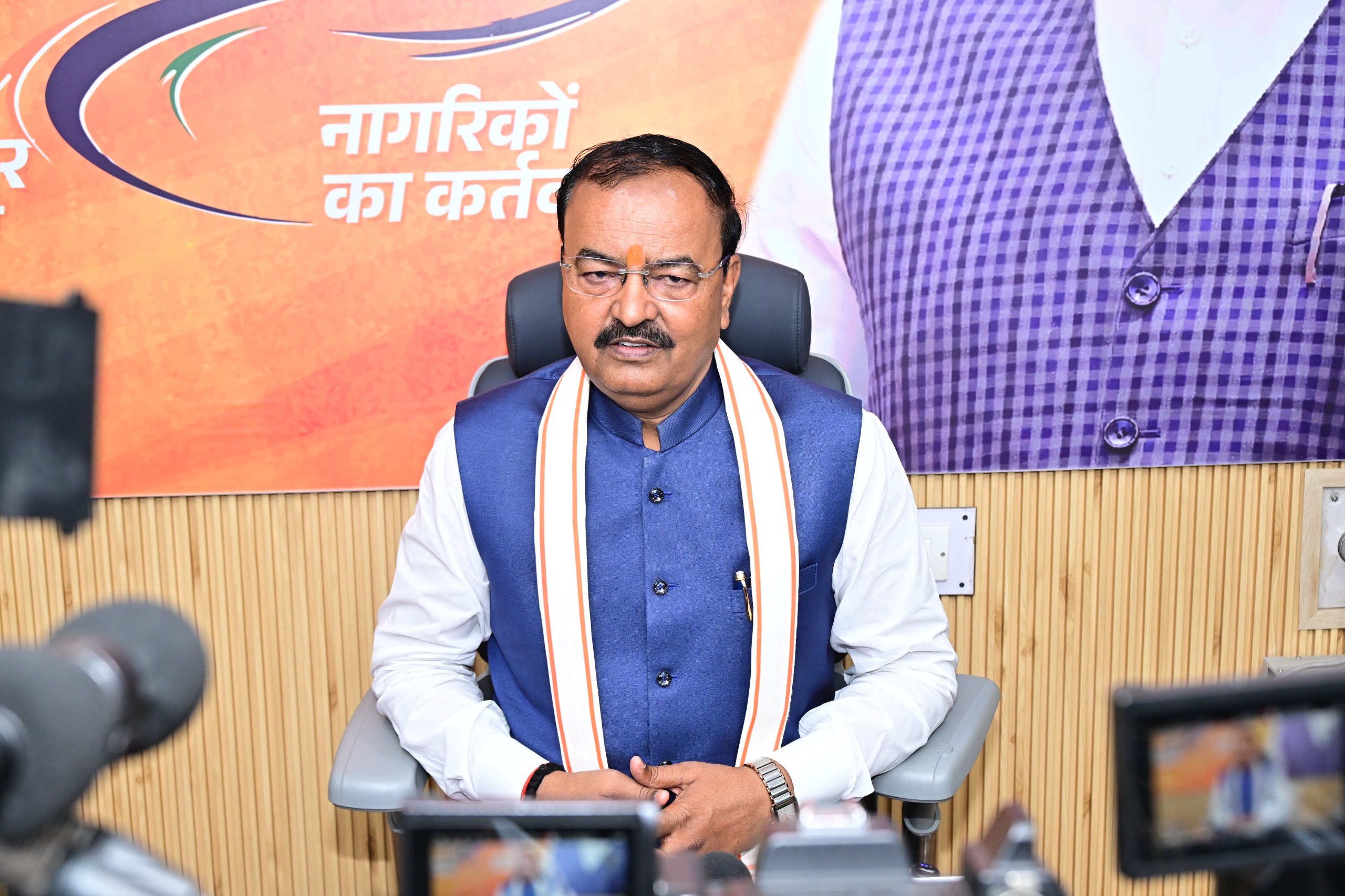
If the Congress and the SP abandon their opposition to the Women's Reservation Bill and extend their support instead, perhaps the coming generation might forgive them: Mr. Maurya
Welcoming the Union Cabinet’s approval of the 132nd Constitution Amendment Bill on November 27, 2026—under the chairmanship of Prime Minister Shri Narendra Modi—Keshav Prasad Maurya described it as a historic step of far-reaching significance toward building a developed and self-reliant India. He stated that this decision is a vital initiative to make the nation’s democratic system more comprehensive, inclusive, and participatory, while also ensuring that 'Nari Shakti' (women's power) secures its rightful place in political leadership. The Deputy Chief Minister noted that this proposal would also have profound implications for the politics and democratic framework of Uttar Pradesh. The increase in the state’s Lok Sabha seats from 80 to 120, and its Legislative Assembly seats from 403 to approximately 605, will provide an opportunity to expand political representation. This will allow for greater representation in the legislature for local issues, developmental needs, and matters of public interest concerning regions such as Bundelkhand, Purvanchal, Awadh, Western Uttar Pradesh, and others. A larger number of public representatives will also create new avenues for dialogue between the citizenry and democratic institutions.
Shri Maurya remarked that under the leadership of Prime Minister Shri Narendra Modi, women in the country are no longer viewed merely as beneficiaries of government schemes; rather, consistent efforts are being made to ensure their active participation in decision-making processes, leadership, and nation-building. The 132nd Constitution Amendment Bill—which includes provisions for women’s reservation, a 50 percent increase in Lok Sabha and Legislative Assembly seats, and the preservation of the current ratio of state representation until the year 2051—serves as a significant move toward strengthening democratic empowerment, 'Nari Shakti,' and the federal balance.
The Deputy Chief Minister added that the proposal for a uniform 50 percent increase in the number of seats across the Lok Sabha and all State Legislative Assemblies is a crucial step toward making the nation’s democratic institutions more representative. The proposal includes provisions to increase the maximum number of members in the Lok Sabha from 550 to 850, and—through an amendment to Article 170 of the Constitution—to raise the maximum number of members in the Legislative Assemblies from 500 to 650. This will increase the number of public representatives in the nation’s legislative bodies, providing more regions, communities, and social groups with the opportunity to have their voices heard on democratic platforms.




