







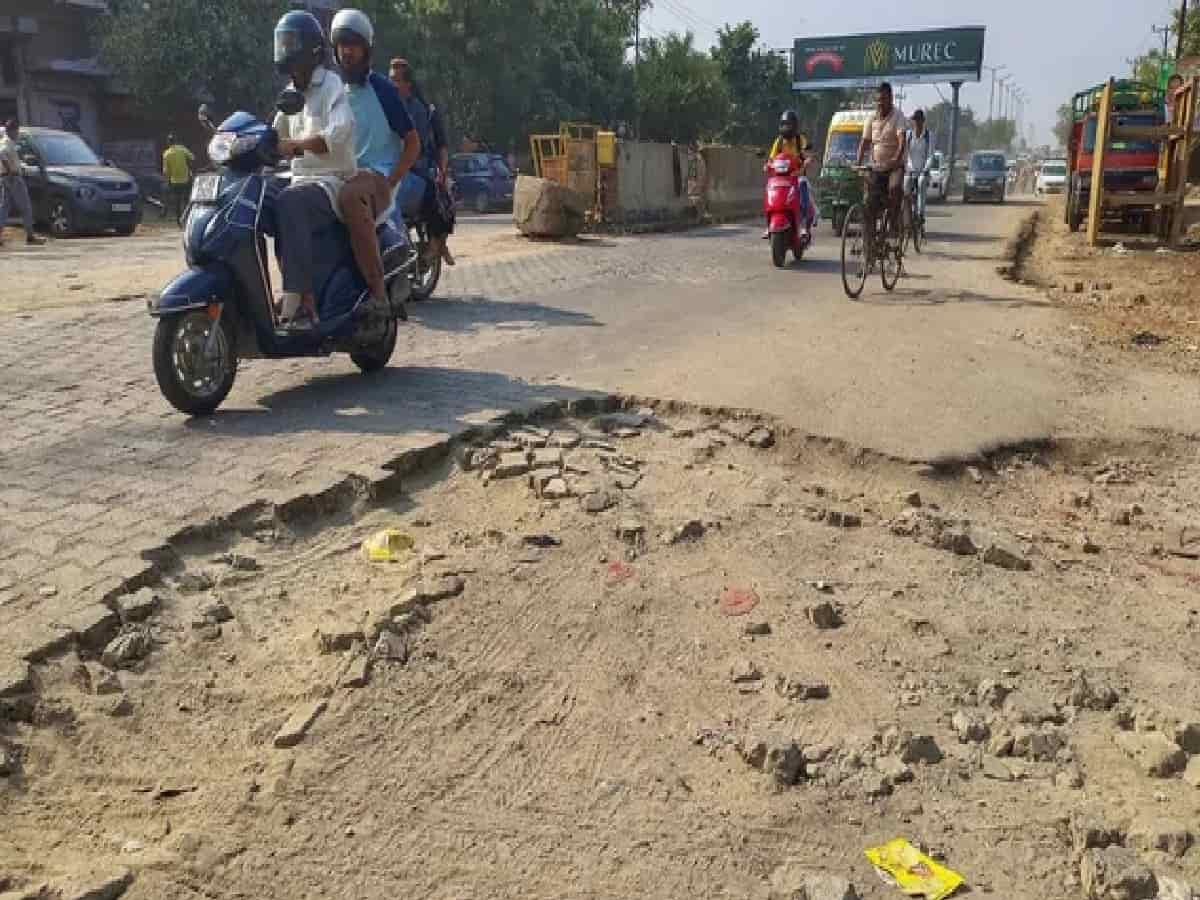
Ghaziabad Choked by Toxic Potholes as CM's 60-Day Order Lags
The post-monsoon reality across Ghaziabad has transformed into a harrowing commuter hazard and an escalating environmental crisis, as cratered arterial routes and broken road surfaces continue to blanket the National Capital Region (NCR) hub under choking plumes of airborne dust. With vehicles forced to crawl through deep depressions and broken asphalt, endless traffic jams and sustained vehicular idling are worsening the city's already deteriorating air quality, compounding the health risks for daily travelers. Despite Chief Minister Yogi Adityanath issuing explicit orders in September 2026 mandating relevant civic bodies and public works departments to execute a comprehensive, pothole-free road campaign within a strict two-month deadline, ground evaluations reveal that with the completion deadline now at hand, key commercial and transit corridors across the district remain in severe disrepair, leaving commuters and local traders questioning the pace of administrative enforcement.
Ground Zero Check: GT Road and South Side Industrial Area Turn Into Dust Traps
An on-ground inspection of prominent traffic stretches reveals acute structural degradation that threatens commuter safety every hour of the day. Along the Grand Trunk (GT) Road leading toward Bulandshahr, the corridor situated directly opposite the Loha Mandi Gate has devolved into a battered obstacle course filled with expansive potholes that pose severe accident risks during downpours and turn into treacherous blind spots after dark, creating daily nightmares for pedestrians while sending dense clouds of dust into the atmosphere that make breathing difficult. The situation is equally critical along the roadway serving the South Side GT Road Industrial Area, which has laid fractured for months; here, the perpetual transit of heavy freight trucks and commercial cargo haulers kicks up relentless dust storms, throwing two-wheeler riders into constant danger of slipping, triggering agonizing traffic jams, and causing immense distress to school children and elderly citizens navigating the chaotic industrial corridor.
Meerut Road Nightmare: Overflowing Sewage and Gridlocked Ambulances at Guldhar
The civic breakdown extends deep into the Meerut Road transit spine, where an enormous crater has formed in the center of the road near Lakshmi Dharam Kanta in Guldhar-2, generating flying dirt throughout the day that severely harms roadside commercial establishments, inconveniences passersby, and creates persistent traffic bottlenecks where emergency ambulances ferrying critical patients regularly get trapped. Further up along Meerut Road, an approximately 200-meter stretch spanning between rapid transit pillars 701 and 711 has deteriorated into sharp loose gravel and dangerous craters, complicated by overloaded tractors, heavy multi-axle trailers, and contaminated sewage water overflowing directly onto the road surface, forcing daily commuters to wade through unsanitary effluent. While local residents struggle against severe dust exposure and waterlogging, civic authorities have sought to reassure the public by stating that structured efforts are currently being arranged, maintaining that departmental repair tenders will be officially floated shortly to initiate ground-level reconstruction work across all damaged zones.




