







Amit Shah to Camp in UP 7 Days a Month; BJP Finalizes 2027 Blueprint
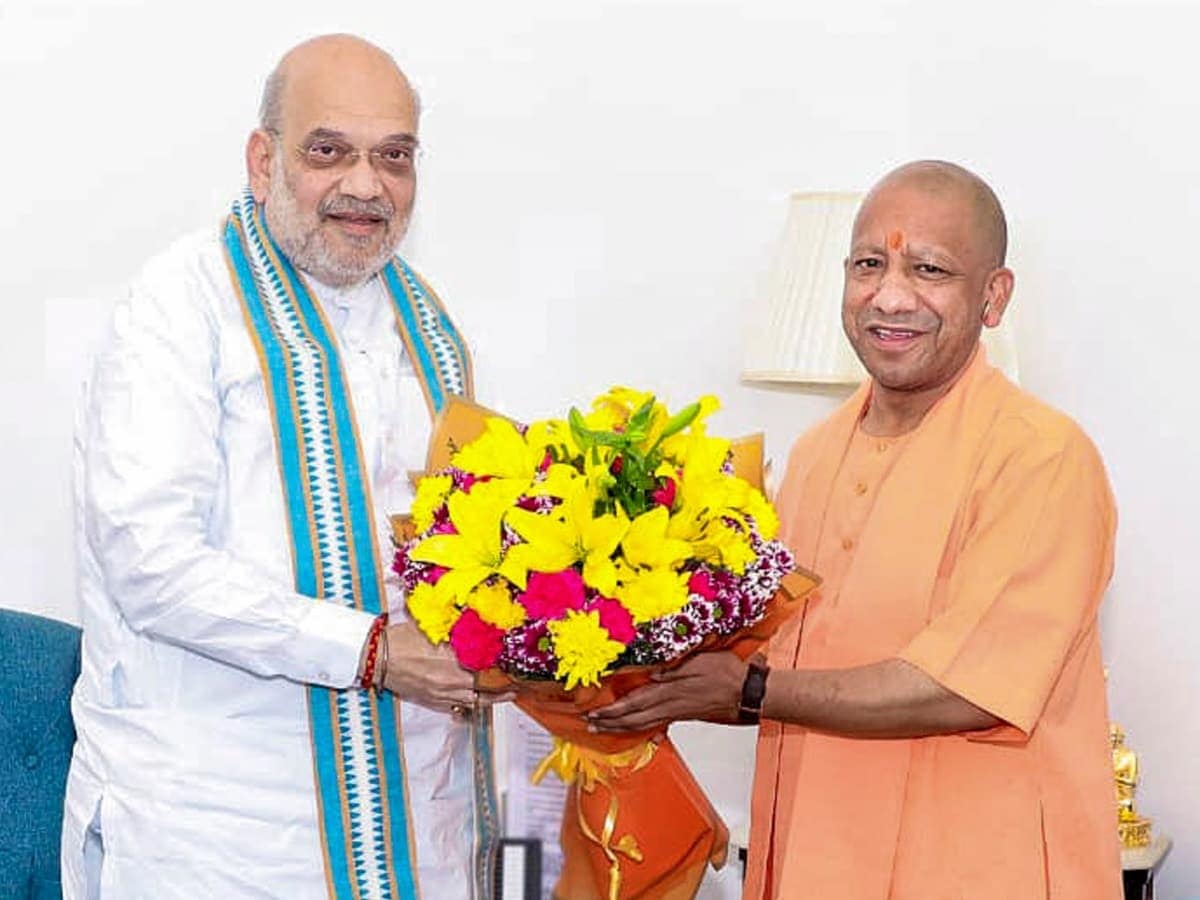
With Uttar Pradesh Assembly elections expected to be held in February or March 2027 alongside polls in Uttarakhand, Punjab, Goa, and Manipur, the Bharatiya Janata Party (BJP) has finalized a high-intensity organizational blueprint placing India's most populous state at the center of its national political calendar. According to party sources and media reports published on Friday, November 20, 2026, Union Home Minister Amit Shah will personally dedicate seven days every month to touring and camping across Uttar Pradesh—reviewing public welfare delivery, assessing ground-level coordination between the state government and party cadre, and mentoring district units across all 403 Assembly constituencies. The operational plan took shape during a late-night strategy huddle in New Delhi on Wednesday, November 18, 2026, involving Amit Shah, BJP National President Nitin Nabin, and National General Secretary (Organization) B.L. Santosh, immediately following a two-day Chintan Shivir (brainstorming session) in Mathura on November 16–17 and separate consultations with Chief Minister Yogi Adityanath, with Prime Minister Narendra Modi also briefed on the deliberations. Under the newly approved structure, senior Union ministers and six organization ministers from outside states will be deployed across Uttar Pradesh's administrative divisions to bolster booth management, address worker feedback, and counter potential anti-incumbency as the Yogi Adityanath government seeks a third consecutive term. For voters, party workers, political observers, and citizens across Unnao, Lucknow, Kanpur, Mathura, Ayodhya, Varanasi, Gorakhpur, Meerut, and New Delhi, the blueprint signals an early, full-scale mobilization across both cultural heritage and socio-economic development planks.
BJP's 2027 Uttar Pradesh Election Blueprint (Nov 2026): Key Pillars & Leaders
To bring together the core organizational decisions, leadership roles, and campaign themes emerging from the Mathura Chintan Shivir and New Delhi strategy meetings, the table below summarizes the party's operational plan:
| Strategic Element | Reported Plan & Leadership Involvement | Stated Political & Organizational Objective |
| Amit Shah's Monthly UP Deployment | Union Home Minister Amit Shah to spend seven days every month in Uttar Pradesh, holding divisional reviews and field consultations. | Directly monitors welfare scheme reach, resolves grassroots grievances, and energizes booth-level workers—mirroring the intensive state-camping model used in West Bengal. |
| Top-Level Coordination & Oversight | Strategy finalized in New Delhi on Nov 18 by Amit Shah, BJP President Nitin Nabin, and Organization General Secretary B.L. Santosh after the Nov 16–17 Mathura Chintan Shivir and talks with CM Yogi Adityanath; PM Narendra Modi briefed. | Aligns central leadership, state cabinet, and organizational machinery well ahead of the early-2027 election schedule. |
| External Ministers & Organizational Secretaries | Deployment of senior Union ministers alongside six organization ministers from other states across UP's regional divisions. | Provides neutral feedback on incumbent performance, coordinates candidate evaluation, and strengthens weak booths across Western UP, Braj, Awadh, Bundelkhand, Kashi, and Gorakhpur. |
| Core Campaign Themes & Outreach | Combines cultural and heritage issues in Ayodhya and Mathura with employment, education, law and order, infrastructure, and 12 years of central-state governance achievements, backed by the statewide Jan Chaupal drive launched by CM Yogi in Gorakhpur on Nov 19. | Aims to offset two-term anti-incumbency after winning 312 seats in 2017 and 255 seats in 2022, while countering opposition alliances in a state that sends 80 MPs to Parliament. |
How the Mathura Chintan Shivir and Delhi Talks Shaped the UP Strategy
While Assembly elections are also scheduled in Manipur, Goa, Uttarakhand, and Punjab in 2027, BJP strategists view Uttar Pradesh as decisive for national political momentum ahead of 2029. At the two-day Mathura brainstorming session on November 16–17, roughly fifty senior leaders—including Chief Minister Yogi Adityanath, Deputy Chief Ministers Keshav Prasad Maurya and Brajesh Pathak, and state BJP president Pankaj Chaudhary—reviewed constituency feedback and flagged the importance of addressing grassroots cadre concerns promptly. Following the Mathura conclave, CM Adityanath met Nitin Nabin, B.L. Santosh, and Amit Shah in New Delhi, setting the stage for Shah, Nabin, and Santosh to finalize the monthly seven-day camping schedule and brief Prime Minister Narendra Modi on the roadmap.
Balancing Cultural Heritage, Welfare Delivery, and Opposition Challenges
According to party leaders familiar with the blueprint, the BJP's messaging for 2027 will pair cultural themes centered on Ayodhya and Mathura with tangible governance metrics—highlighting twelve years of central welfare schemes, state infrastructure expansion, law-and-order enforcement, and initiatives in employment and education. Drawing on the organizational template Amit Shah previously applied in West Bengal—where he spent 15 days a month building booth-level coordination—the party is deploying senior Union ministers and six organization ministers from outside states to audit beneficiary outreach and support the statewide Jan Chaupal campaign launched on Thursday. At the same time, political analysts note that the ruling party faces a competitive field in 2027, with Samajwadi Party chief Akhilesh Yadav actively touring the state via his PDA Rath Yatra and the Congress appointing Priyanka Gandhi Vadra to lead seat-sharing negotiations with the SP, setting up a high-stakes contest across Uttar Pradesh.




