







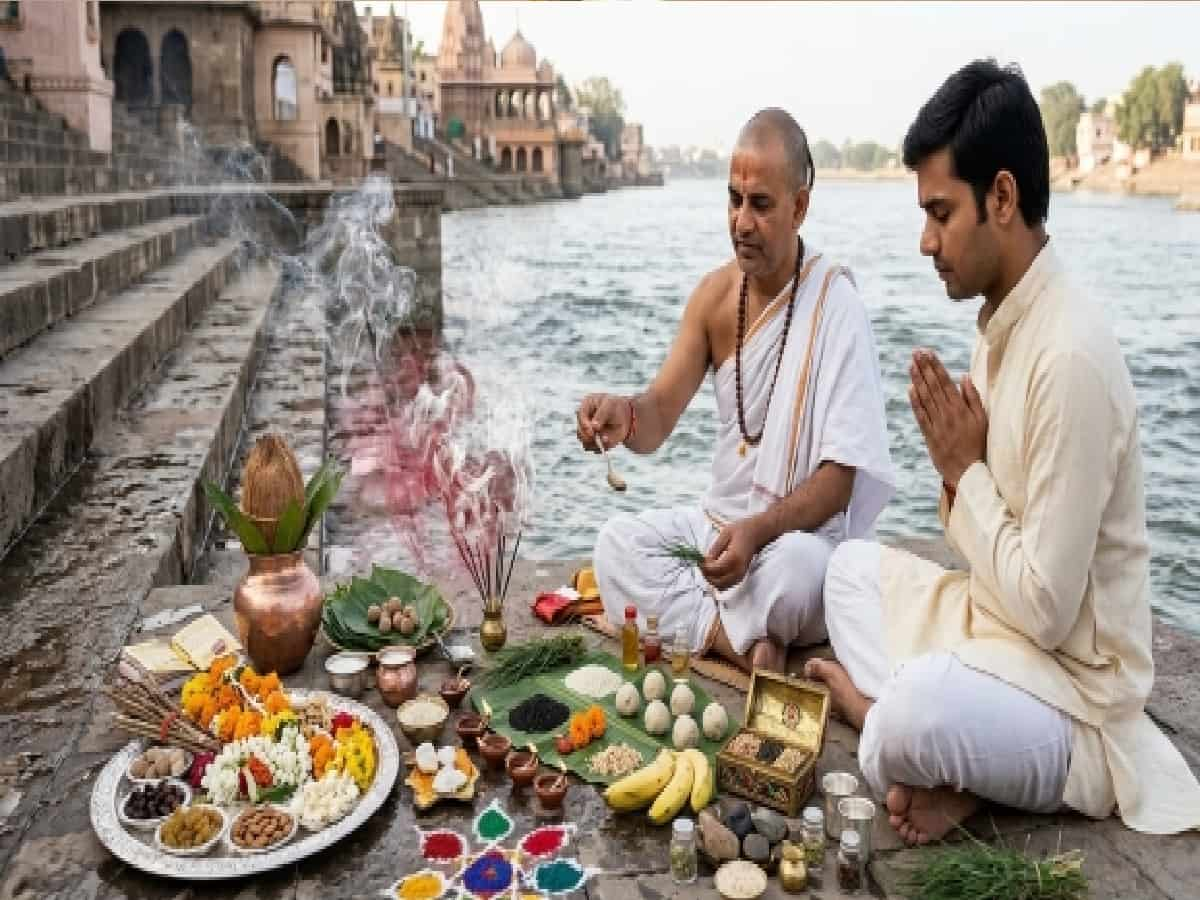
Why Pind Daan at Naimisharanya Brings Peace to Ancestors
Nestled along the tranquil banks of the Gomti River in Uttar Pradesh's Sitapur district, Naimisharanya Dham (Neemsar) stands among the oldest and most spiritually potent pilgrimage centers of Sanatan Dharma. Revered across ancient scriptures as "Nabhi Gaya", this sacred forest sanctuary holds an importance comparable to Gaya Ji and Badrinath for performing ancestral rites (Shraddha), Pind Daan, and Tarpan. Explaining why offerings made here bring profound contentment to departed forebears, Naimisharanya's Vyas Peethadheeshwar Anil Kumar Shastri Vyas points to the Puranic legend of Gayasur: after the demon Gayasur was vanquished, sacred portions of his form rested across three principal ancestral shrines—Kapal Gaya in Badrinath, Charan Gaya in Gaya Ji, and Nabhi Gaya in Naimisharanya. According to scriptural belief and the Skanda Purana, offering Pind Daan (prepared with barley, black sesame seeds, rice, and sacred oblations) and Tarpan (water offerings symbolizing gratitude) around Chakratirtha and Kashikund satisfies ancestral hunger, liberates departed souls, and invites blessings of peace and prosperity upon descendants. Beyond ancestral rituals, Naimisharanya is celebrated in Hindu lore as the sacred penance ground (tapobhoomi) of 88,000 sages, the abode of 330 million deities, and the historic seat where Maharishi Ved Vyas and Sutaji narrated the Puranas. Its centerpiece, Chakratirtha, marks the exact spot where the rim (nemi) of Lord Brahma's divine wheel (chakra) struck the earth to designate an unblemished sanctuary for meditation. For pilgrims, spiritual seekers, and families traveling from Lucknow, Sitapur, Hardoi, Kanpur, Ayodhya, Varanasi, Prayagraj, Agra, New Delhi, and across India, Naimisharanya offers a deeply serene destination for both ancestral reverence and temple darshan.
Spiritual Significance, Must-Visit Temples, and Best Seasons to Visit Naimisharanya
Whether planning a dedicated ancestral ritual or a multi-day spiritual circuit around Sitapur and Misrikh, the table below organizes the key sacred shrines, auspicious calendar occasions, and travel connections for Naimisharanya Dham:
| Pilgrimage Dimension | Verified Sites, Festivals & Travel Details | Spiritual & Practical Significance |
| Ancestral Rites (Nabhi Gaya) | Chakratirtha and Kashikund (Pind Daan with barley, sesame, rice & Tarpan water offerings). | Recognized in the Skanda Purana alongside Gaya Ji and Badrinath for bringing peace and satisfaction to ancestors; consult a qualified local priest beforehand. |
| Major Shrines & Sacred Sites |
• Maa Lalita Devi Temple (revered Shakti Peetha & presiding deity) • Chakratirtha (holy tank formed by Brahma's chakra) • Vyas Gaddi (seat of Maharishi Ved Vyas) • Hanuman Garhi (shrine of Sankat Mochan) • Dadhichi Kund (Misrikh) (site of Sage Dadhichi's sacrifice) • Devdeveshwar Temple (ancient Lord Shiva shrine) |
Allows pilgrims to combine ancestral Shraddha with darshan across Shakta, Shaiva, Vaishnava, and Rishi traditions in a single visit. |
| Best Festivals & Auspicious Days |
• Pitru Paksha & Pitru Visarjani Amavasya • Somvati Amavasya • 84 Kosi Parikrama (Phalguna month tradition) • Guru Purnima (dedicated to Maharishi Ved Vyas) • Kartik & Mauni Amavasya / Purnima bathing days |
While accessible year-round, these lunar dates draw heightened devotional gathering for sacred bathing, charity (daan), and ancestral peace. |
| How to Reach Naimisharanya |
• By Air: Chaudhary Charan Singh International Airport, Lucknow (~90–107 km; ~2 to 2.5 hours by cab/taxi). • By Rail: Connected via Sitapur Junction (~25–40 km), Balamau Junction, and Lucknow Railway Station (~93 km). • By Road: Well linked via NH 30 / Sitapur Road – Sidhauli – Misrikh (~90–110 km from Lucknow) via state buses, taxis, and private cars. |
Smooth highway connectivity from Lucknow makes same-day or weekend pilgrimages convenient for families and senior citizens. |
Why Pitru Paksha, Amavasya, and the 84 Kosi Parikrama Hold Special Sanctity
Although Naimisharanya welcomes devotees throughout the year, spiritual activity peaks during Pitru Paksha, Somvati Amavasya, and Pitru Visarjani Amavasya, when families gather along Chakratirtha and Kashikund to perform Tarpan and Pind Daan. Equally iconic is the annual 84 Kosi Parikrama, during which thousands of saints and householders circumambulate the sacred forest circuit, as well as Guru Purnima, celebrated with special reverence at Vyas Gaddi in honor of Maharishi Ved Vyas.
Essential Travel and Ritual Tips for Pilgrims Visiting from Lucknow and Beyond
Located roughly 90 to 110 kilometers northwest of Lucknow via the Sidhauli–Misrikh corridor, Naimisharanya is best explored by hiring a private cab or boarding regular road transport from Lucknow or Sitapur. Devotees intending to perform Pind Daan or Tarpan are advised to coordinate with an experienced local teerth purohit in advance so that all samagri and Vedic procedures are arranged smoothly, leaving ample time for peaceful darshan at Maa Lalita Devi Temple, Vyas Gaddi, Hanuman Garhi, and Dadhichi Kund.




