







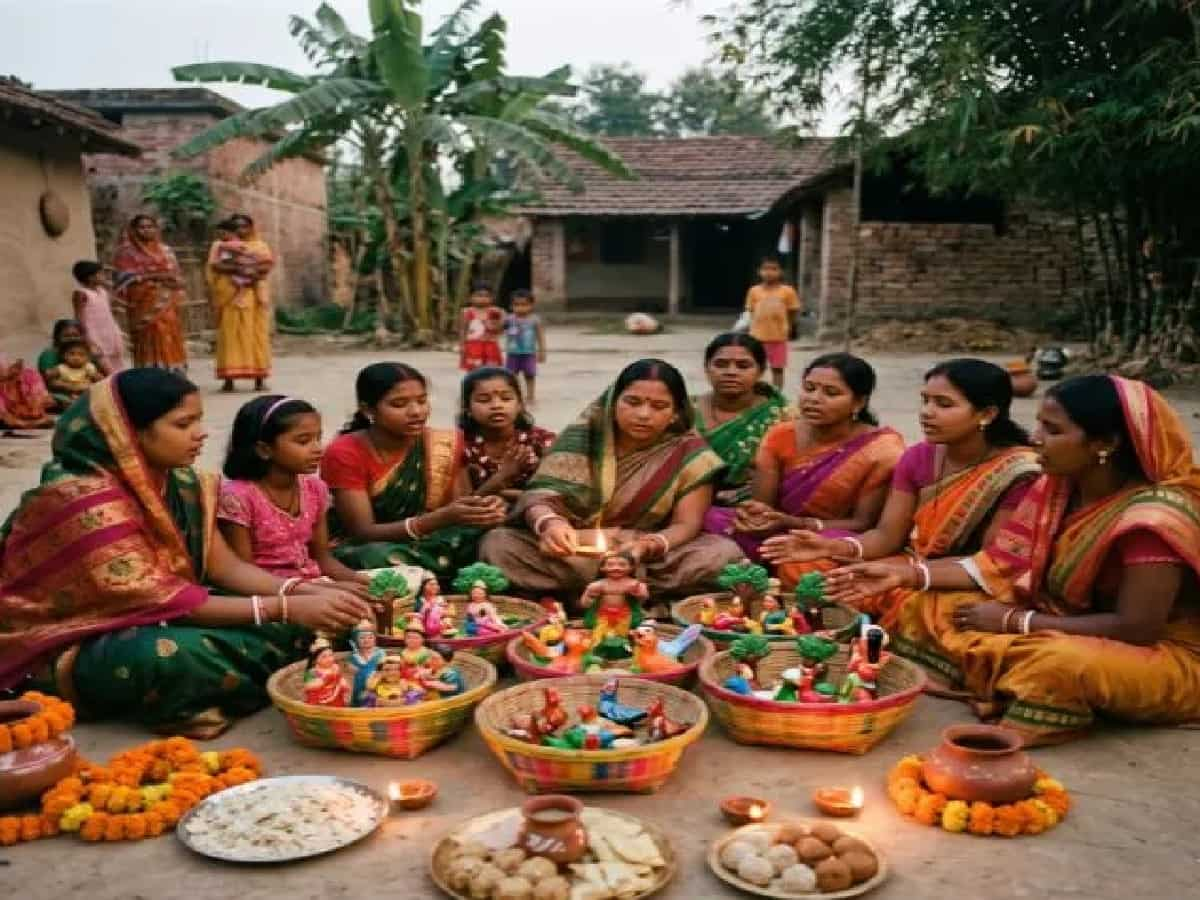
Bihar's Sama-Chakwa Festival: Why Sisters Burn the 'Chugala' Effigy
No sooner do devotees conclude the sacred sunrise offerings (Usha Arghya) of Chhath Puja across Bihar's culturally rich Mithila region than courtyards, village lanes, and open fields come alive with the melodious folk songs and colorful clay artistry of Sama-Chakwa (also spelled Sama-Chakeva). Observed every year from the seventh lunar day of the bright fortnight of Kartik (Kartik Shukla Saptami)—which commenced in 2026 on Monday, November 16 according to the Mithila calendar—until Kartik Purnima, this eight-day folk festival celebrates the unbreakable bond between brothers and sisters alongside the triumph of truth over malicious gossip. At the heart of Sama-Chakwa lies one of Mithila's most captivating and theatrical rituals: sisters symbolically scorching the tongue of an effigy called 'Chugala' (the backbiter or rumor-monger) with a lamp flame and striking it with footwear to ward off negativity, slander, and envy that could ever drive a wedge between siblings. Rooted in the Puranic legend of Lord Krishna's daughter Sama and her devoted brother Chakeva (Samba), the festival blends handcrafted terracotta figurines, traditional Maithili ballads like Samada and Bhagavata, seasonal harvest delicacies made from fresh chuda (flattened rice), and a poignant full-moon farewell ritual modeled after a bride's vidaai. For cultural enthusiasts, diaspora communities, and readers across Darbhanga, Madhubani, Saharsa, Purnia, Muzaffarpur, Begusarai, Patna, Lucknow, Varanasi, Kolkata, and New Delhi, Sama-Chakwa offers a living window into Mithila's timeless social wisdom.
Mythology, Clay Figurines, and Key Rituals of Mithila's Sama-Chakwa Festival
To capture how folklore, craftsmanship, and family affection intertwine across the eight days of Sama-Chakwa, the table below summarizes its mythological origin, key characters, and culminating rituals:
| Festival Aspect | Verified Details & Folk Traditions (November 2026) | Cultural & Social Significance |
| Festival Window & Region | Begins Kartik Shukla Saptami (Monday, November 16, 2026) and concludes on Kartik Purnima across Mithila (Darbhanga, Madhubani, Saharsa, Koshi & Seemanchal). | Follows immediately after Chhath Puja's Usha Arghya, uniting harvest gratitude with sibling devotion. |
| Mythological Origin (Sama & Chakeva) | A malicious gossiper (Chugala) falsely accused Lord Krishna's daughter Sama of wrongdoing, provoking Krishna to curse her into becoming a bird. Her brother Chakeva undertook penance and devotion to restore her human form, while Chugala was punished. | Commemorates how selfless brotherly love overcomes injustice and false accusations. |
| Handcrafted Clay Figurines & Baskets | Women craft and paint clay idols of Sama, Chakeva, Chugala, Vrindavan, Batgamni, trees, and migratory birds, arranging them in vibrant bamboo baskets (daura / changera). | Celebrates local Mithila folk art and welcomes seasonal migratory birds arriving in the plains during early winter. |
| Burning 'Chugala's' Tongue | During evening gatherings in courtyards and fields, sisters sing folk songs, scorch the mustache and tongue of the Chugala effigy with a diya flame, and playfully beat it with shoes. | Symbolizes collective social rejection of rumor-mongering, backbiting, and divisive negativity. |
| Harvest Offerings & Kartik Purnima Vidaai | Sisters feed brothers curd and chuda from the newly harvested paddy; on Kartik Purnima, they offer five handfuls (panchmutthi) of chuda, madhi, and sweets in a sekhari before immersing the idols with bridal farewell gifts and Samada songs. | Honors the fresh autumn harvest while bidding an emotional farewell to Sama as a beloved daughter returning to her marital home. |
Why Burning 'Chugala's' Tongue Sends a Timeless Social Message
While Sama-Chakwa is celebrated with joyous laughter, evening moonlit circles, and playful banter, its centerpiece ritual carries an unmistakable ethical warning. By setting fire to the Chugala figurine's tongue every evening throughout the festival, Mithila's women dramatize the harm caused by baseless rumors and slander—reminding the entire community that those who poison relationships with lies ultimately face social disgrace, while truth and familial loyalty endure.
From Fresh Harvest 'Chuda' to the Emotional Kartik Purnima Farewell
Food and music form the emotional heartbeat of Sama-Chakwa's closing chapter. Sisters welcome the season's new rice crop by serving brothers freshly harvested chuda with yogurt, culminating on Kartik Purnima when they fill a traditional basket (sekhari) and present five handfuls of chuda, madhi, and sweets to their brothers. That same full-moon night, accompanied by soulful Samada and Bhagavata melodies, women carry the decorated bamboo baskets to rivers or ponds—bidding Sama a tender farewell complete with symbolic gifts of attire, food, and ornaments, while praying for their brothers' long life and prosperity.




