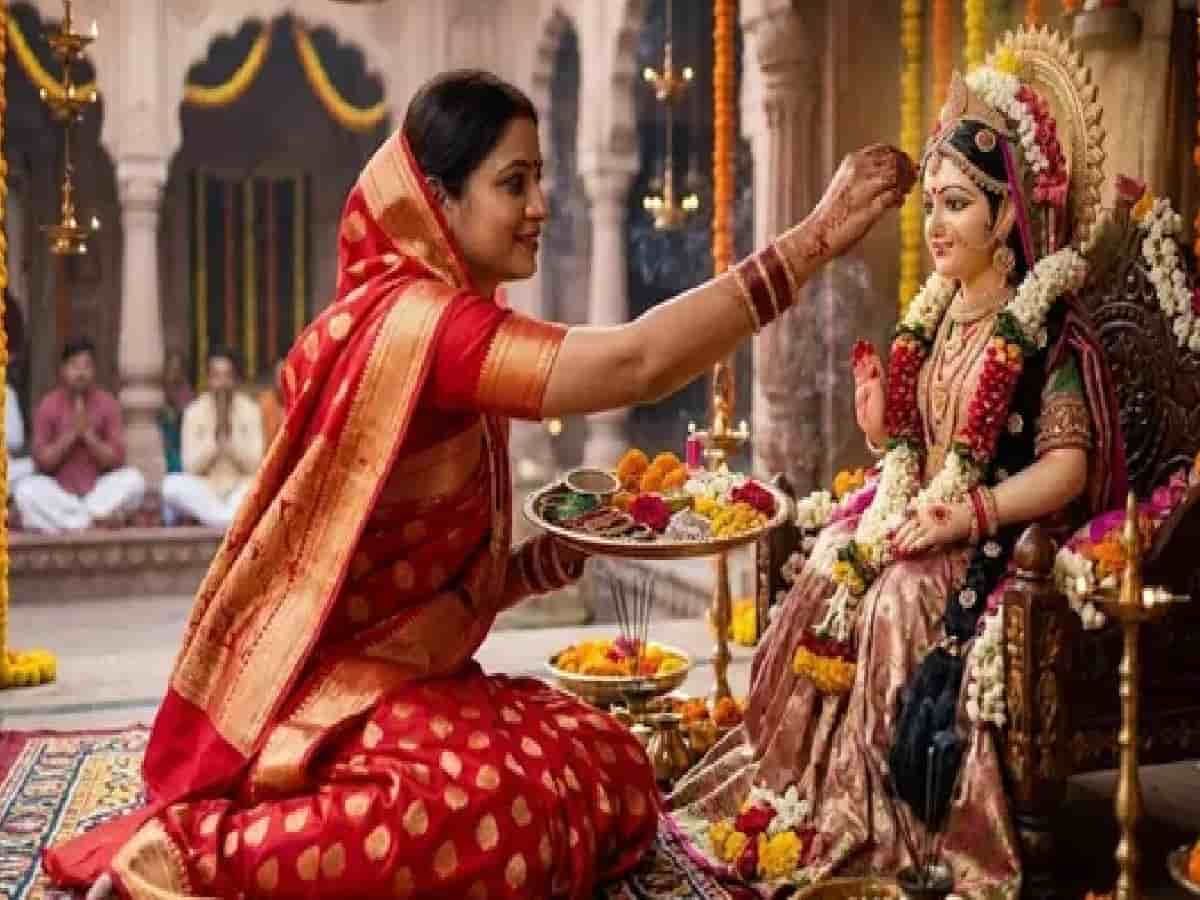
Why Offer 16 Adornments to Radha Rani? Secret Spiritual Meaning of Kishori Ji's Solah Shringar
The holy land of Braj Bhoomi, encompassing Barsana, Vrindavan, and Mathura, is bathed in spiritual joy today, September 19, as millions of devotees celebrate Radha Ashtami. Arriving exactly fifteen days after Shri Krishna Janmashtami, this sacred tithi marks the divine appearance day of Shri Radha Rani. Across grand temples and consecrated home shrines, devotees engage in elaborate rituals, with the ritual presentation of Solah Shringar—the sixteen sacred items of adornment and Suhaag Samagri—standing out as the crowning ceremony of the festival. According to sacred lore, offering these items to Kishori Ji invokes boundless peace, eliminates domestic conflicts, and secures the unified grace of Radha and Krishna.
The Dwapar Yuga Legacy: Why Krishna Personally Adorned Kishori Ji
The sacred practice of offering sixteen adornments to Shri Radha Rani is rooted in deep scriptural history dating back centuries. Tradition holds that during the Dwapar Yuga in the groves of Nidhivan and Vrindavan, Lord Krishna himself lovingly adorned Kishori Ji with fresh blossoms, precious jewels, and sixteen ceremonial adornments to honor her as the supreme embodiment of devotion and beauty. Continuing this sacred tradition, modern devotees present these sixteen articles of Suhaag to Radha Rani on her appearance day. For married women, this devotional act is believed to bestow the boon of Akhand Saubhagya (lifelong marital prosperity) and protect their spouses, while unmarried women seek the blessings of Kishori Ji for an understanding and devoted life partner.
Decoding the 16 Sacred Adornments: Spiritual Symbolism Behind Each Suhaag Item
Every single item included in the Solah Shringar offered to Radha Rani carries profound spiritual, psychological, and esoteric significance:
-
Bindi: Adorned on Kishori Ji's forehead, it marks the sacred Ajna Chakra (the third eye), representing focused mental concentration, intuition, and divine intellect.
-
Sindoor: Applied in the parting of the hair, vermilion stands as the supreme emblem of total dedication, marital loyalty, and auspicious fortune.
-
Maang-Tika: Centered across the hairline, this ornament symbolizes the emotional and spiritual harmony between husband and wife.
-
Kajal: Applied gently to highlight the divine eyes, collyrium protects against the evil eye and calms the vision.
-
Nath (Nose Ring): Regarded as one of the most prominent markers of classical Indian womanhood and royal elegance.
-
Earrings (Karnaphool): Beautiful ornaments that frame the face while activating sensitive acupressure points linked to spiritual receptivity.
-
Mangalsutra: The sacred bridal pendant representing enduring love, unyielding loyalty, and the long life of the husband.
-
Mehndi: Stenciled across hands and feet, natural henna embodies celebratory joy, domestic warmth, and marital longevity.
-
Glass Bangles: Worn on both wrists, traditional bangles symbolize continuous prosperity, protection, and auspicious fortune.
-
Armlet (Bajuband): Worn upon the upper arms, this ornamental band symbolizes inner spiritual strength and protective authority.
-
Finger Ring: Circular bands representing completeness, fidelity, and unbroken unity between bonded souls.
-
Waistband (Kamarbandh): Elegantly accentuating the waistline, it signifies grace, modesty, and emotional grounding.
-
Payal (Anklets): The sweet, tinkling metallic resonance of silver anklets disperses stagnant negativity and invites positive vibrations into the home.
-
Bichhiya (Toe Rings): Worn on the second toe, these traditional silver rings serve as an ancient physiological and cultural indicator of marriage.
-
Alta (Mahavar): Applying red alta to the palms and soles of Kishori Ji represents sacred life energy, celebration, and devotion.
-
Saree or Lehenga: Radha Rani is traditionally presented with a regal garment, predominantly in vibrant blue (Meghshyam blue), as it represents the radiant color and divine aura of Lord Krishna himself.
Ritual Benefits: How Presenting Suhaag Samagri Transforms Domestic Life
Vaishnava scriptures explain that offering Solah Shringar to Radha Rani is the swiftest path to gaining the undivided mercy of Lord Krishna, who finds supreme pleasure in the adoration of his beloved. Women who perform this puja at home typically dress in traditional attire, wear their own auspicious adornments, and chant the divine names of the divine couple during the offering. By purifying the atmosphere with pure ghee lamps, distributing consecrated sweets, and presenting these sixteen symbolic articles, families establish a strong foundation of mutual respect, love, and divine protection throughout their households.