







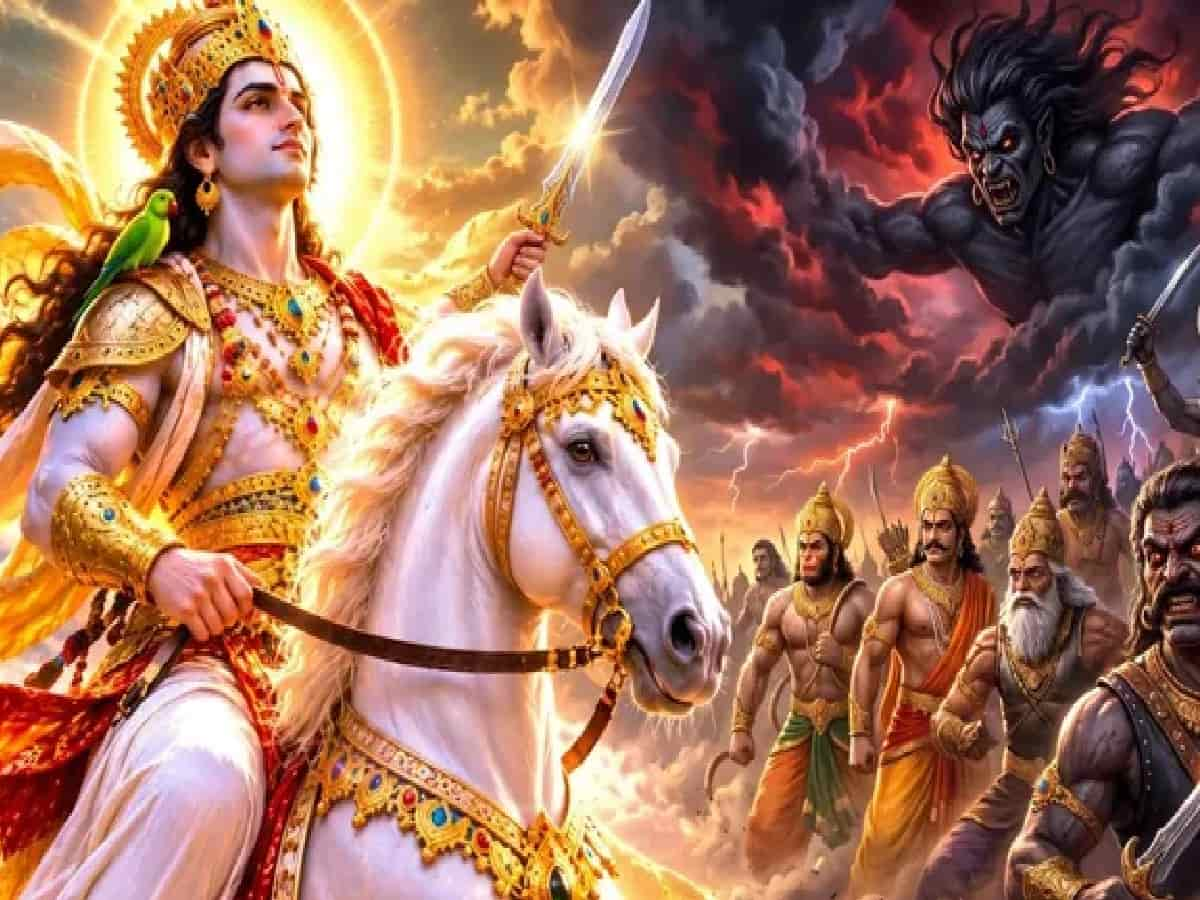
Why Lord Kalki Needs a Parrot: Sacred Secret of Shuka in Kalki Purana
In popular iconography across Indian temples and sacred art, Lord Kalki—the tenth and final avatar of Lord Vishnu foretold to appear at the culmination of Kali Yuga—is most commonly pictured astride a radiant white horse with a blazing sword raised to restore Dharma. Yet tucked inside the Kalki Purana, an Upapurana devoted to this prophetic incarnation, lies a lesser-known and deeply symbolic companion who travels right alongside him: a divine parrot named Shuka. Highlighted across religion and cultural desks on Wednesday, November 25, 2026, this scriptural detail raises an intriguing question for devotees and readers across Sambhal, Lucknow, Varanasi, Ayodhya, Mathura, New Delhi, Haridwar, and Ujjain: why would the supreme destroyer of adharma require a bird as an inseparable confidant? According to the Kalki Purana, Shuka is no ordinary avian companion—he is a celestial messenger gifted by Lord Shiva, endowed with Trikala-jnana (omniscience across past, present, and future), complete mastery of the scriptures, and flight as swift as Garuda, enabling him to serve as Kalki's strategic scout, spiritual counselor, and divine matchmaker in uniting Lord Vishnu's final incarnation with Princess Padmavati, the earthly manifestation of Goddess Lakshmi.
Kalki Purana's Divine Parrot Shuka: Birth in Sambhal, Shiva's Gifts & Prophecy
To bring together the exact scriptural reason Lord Kalki is accompanied by the celestial parrot Shuka, the sacred geography of Sambhal, Guru Parashurama's mentorship, and Lord Shiva's three divine boons, and how the eight Chiranjeevis and twin demons Koka and Vikoka fit into the Kalki Purana narrative, the tables below organize all verified scriptural details:
Lord Kalki's Divine Lineage, Training & Three Boons From Lord Shiva
| Scriptural Element | Details in the Kalki Purana | Symbolic & Spiritual Meaning |
| Birthplace & Parents | Born in the sacred town of Sambhal (modern-day Sambhal district, Uttar Pradesh) to pious Brahmin Vishnuyasha and his wife Sumati, displaying divine signs from childhood. | Grounding the prophecy in Sambhal anchors the Puranic tradition in Braj-Rohilkhand sacred geography. |
| Guru & Spiritual Education | Trained by immortal warrior-sage Lord Parashurama in the Vedas, sacred scriptures, statecraft, and celestial warfare. | Even though both Parashurama and Kalki are incarnations of Lord Vishnu, Parashurama fulfills the timeless Guru–Shishya tradition. |
| Gift 1: Divine White Horse (Devadatta) | Bestowed by Lord Shiva following Kalki's intense penance; capable of traversing realms at the speed of thought. | Represents purity, swift dharma-restoration, and unstoppable forward momentum against darkness. |
| Gift 2: Jewel-Studded Sword | Bestowed by Lord Shiva; a radiant celestial weapon forged to cut through illusion and adharma. | Symbolizes decisive justice and the destruction of the demon Kali and his forces. |
| Gift 3: Celestial Parrot (Shuka) | Bestowed by Lord Shiva; flies with the speed of Garuda, understands every scripture, and knows the past, present, and future. | Acts as Kalki's all-seeing scout, wisdom-keeper, and emissary across distant kingdoms. |
Shuka's Mission, the Eight Chiranjeevis & Final Battle in Kalki Purana
| Narrative Pillar | Key Figures & Events | Role in Restoring Satya Yuga |
| Uniting Kalki & Padmavati | Shuka flies across the ocean to Sinhala (Sri Lanka) and speaks to Princess Padmavati—an incarnation of Goddess Lakshmi—about Lord Kalki's divine destiny, paving the way for their sacred marriage. | Re-establishes the eternal cosmic union of Narayana (Vishnu) and Lakshmi on Earth. |
| The Eight Immortals (Ashta Chiranjeevis) | Hanuman, Parashurama, Ashwatthama, King Bali, Sage Veda Vyasa, Vibhishana, Kripacharya, and Sage Markandeya await Kalki's arrival across the yugas. | Each immortal preserves ancient wisdom, strength, or lineage from earlier ages to assist Kalki's mission. |
| Defeating Kali, Koka & Vikoka | Alongside the demon Kali, Kalki confronts the formidable twin sorcerers Koka and Vikoka, whose dark magic and mutual revival boons make them nearly invincible before Kalki vanquishes them. | Marks the decisive triumph of righteousness and ushers in the renewal of Satya Yuga. |
Why Spiritual Wisdom ('Shuka') Must Accompany Strength ('Sword')
In Indian philosophical symbolism, Lord Shiva's pairing of a blazing sword with a wise, truth-speaking parrot carries a profound lesson for readers across Lucknow, Sambhal, Varanasi, Ayodhya, and New Delhi: raw martial power without discernment, foresight, and scriptural wisdom cannot permanently heal a fractured age. Named after Shukadeva Goswami—the enlightened narrator of the Shrimad Bhagavata Purana who was born with parrot-like purity—Shuka embodies viveka (discernment), memory of sacred truth, and clear communication, ensuring that every strike of Kalki's sword is guided by cosmic dharma rather than blind force.
Cultural & Heritage Significance Across Sambhal and Uttar Pradesh
For devotees and heritage travelers across Sambhal, Moradabad, Bareilly, Lucknow, Mathura, and Varanasi, the Kalki Purana narrative continues to inspire temple traditions, annual Kalki Mahotsav gatherings in Sambhal, and philosophical discussions on how timeless Indian texts weave together prophecy, devotion, and inner awakening.




