







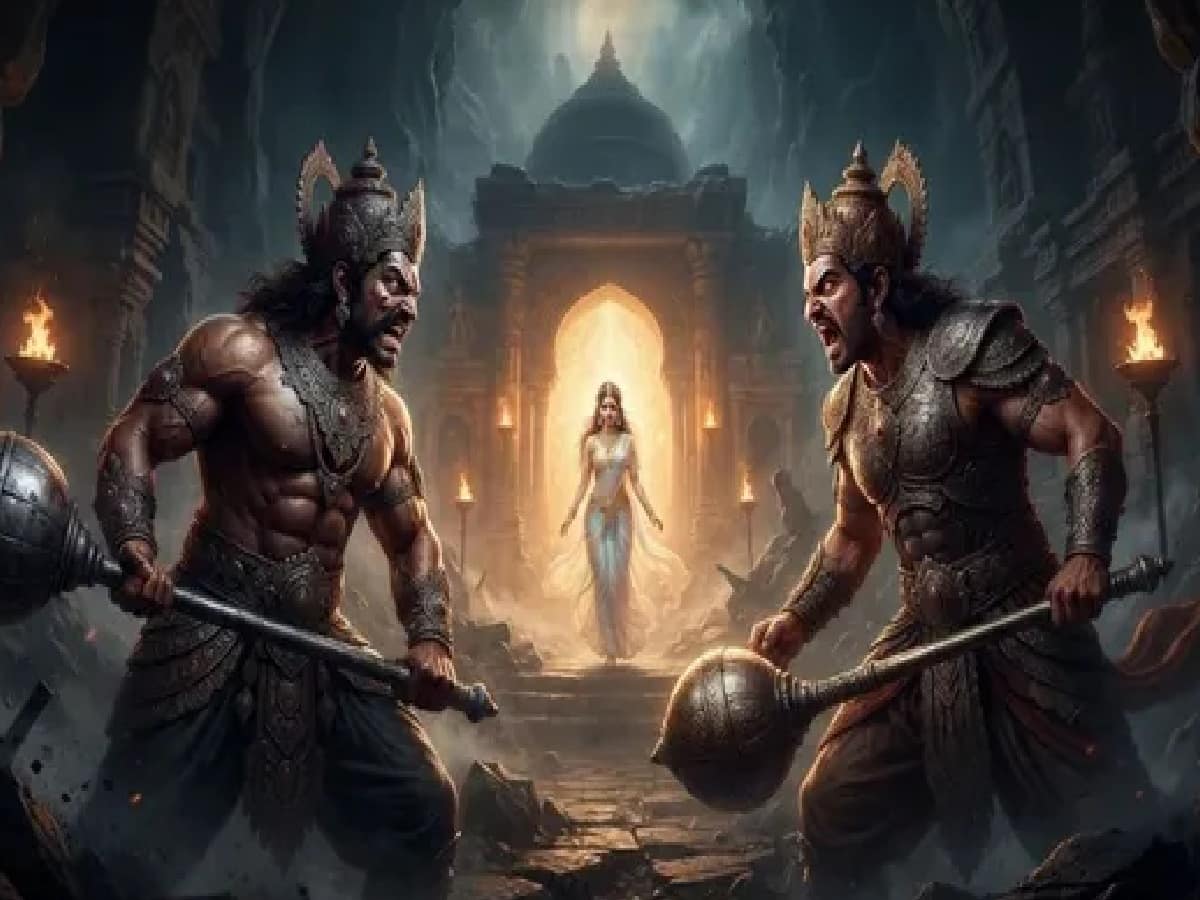
How Apsara Tilottama Ended Sunda and Upasunda Despite Brahma's Boon
Across Indian scriptures, the Mahabharata and the Puranas repeatedly return to a timeless psychological truth: no external fortress or divine boon can protect those who allow arrogance and unchecked desire to fracture their own inner unity. Few episodes illustrate this principle more vividly than the ancient story of the two inseparable Asura brothers, Sunda and Upasunda—recorded in the Adi Parva of the Mahabharata as a cautionary tale narrated by Sage Narada to the Pandavas. Highlighted across religion and cultural desks on Wednesday, November 25, 2026, the legend recalls a time when Sunda and Upasunda shared a bond so seamless that they ate together, ruled together, fought side by side, and never harbored a trace of jealousy—making their combined might feared even by the devas of Svarga. Seeking absolute invincibility through grueling penance, the brothers persuaded Lord Brahma to grant them a seemingly airtight boon: no god, sage, human, or creature across the three worlds could take their lives—they could die only at each other's hands. Believing their fraternal loyalty would keep them immortal forever, Sunda and Upasunda grew intoxicated with power, disrupting Vedic rituals, tormenting sages, and driving the gods from heaven. Yet when the besieged devas appealed to Lord Brahma, the Creator turned to divine architect Vishwakarma, commissioning the creation of Apsara Tilottama—a celestial maiden sculpted bit by bit (tila) from the finest beauty (uttama) in creation—whose single appearance shattered the brothers' lifelong bond and brought about their mutual destruction, offering enduring lessons for readers across Lucknow, New Delhi, Varanasi, Ayodhya, Prayagraj, Mathura, Haridwar, and Ujjain.
Sunda, Upasunda & Apsara Tilottama: Mahabharata Story & Life Lessons
To bring together who Sunda and Upasunda were and why Lord Brahma's boon seemed unbreakable, how celestial architect Vishwakarma crafted Apsara Tilottama to dissolve their pride, and the timeless ethical lessons the Adi Parva of the Mahabharata draws from their downfall, the tables below organize all scriptural details:
Key Characters & Scriptural Elements in the Sunda–Upasunda Legend
| Character / Figure | Scriptural Identity | Role in the Mahabharata Narrative |
| Sunda & Upasunda | Two powerful Asura brothers (sons of Nikumbha) celebrated for their extraordinary mutual affection and shared rule. | Performed severe austerities to win a near-immortality boon from Lord Brahma, then let arrogance turn them into tyrants across the three worlds. |
| Lord Brahma | The Creator in the Hindu Trimurti, bound by dharma to honor sincere penance while safeguarding cosmic balance. | Declined outright immortality (since all born beings must eventually meet an end) and granted the condition that only each other's hand could slay them. |
| Vishwakarma | The divine architect and master craftsman of the devas. | Summoned by Lord Brahma to fashion an unmatched celestial maiden by gathering the purest essence of beauty from every gem and wonder in the universe. |
| Apsara Tilottama | Celestial nymph whose name literally means "one composed of the finest (uttama) particles (tila) of beauty." | Walked calmly before Sunda and Upasunda, unintentionally triggering possessive rivalry that turned lifelong brothers into mortal enemies. |
Sequence of Events: From Unbreakable Unity to Mutual Destruction
| Stage of the Legend | What Transpired in the Scripture | Moral & Philosophical Meaning |
| 1. Rigorous Penance & Clever Boon | After years of intense tapasya, Sunda and Upasunda asked Lord Brahma for immortality; when Brahma refused, they asked that only one brother be capable of killing the other. | Demonstrates how intellect without self-restraint often tries to outsmart natural law rather than master the ego. |
| 2. Tyranny Across the Three Worlds | Convinced they would never turn against each other, the brothers grew arrogant, halted sacred yajnas, oppressed sages, and seized control of heaven. | Unchecked power stripped of humility inevitably turns into cruelty. |
| 3. Creation & Arrival of Tilottama | Following Brahma's directive, Vishwakarma created Tilottama, who appeared before the brothers while they were resting together. | Tests whether their celebrated brotherhood is rooted in true wisdom or merely shared ambition. |
| 4. Pride, Quarrel & Fulfilled Prophecy | Both Sunda and Upasunda immediately claimed Tilottama as their bride; neither yielded, anger flared into a duel, and both struck fatal blows—fulfilling Brahma's exact boon. | Proves that ego (ahankara) and possessive desire (kama) destroy from within what no external enemy can defeat. |
Why Sage Narada Narrated This Tale to the Pandavas in the Mahabharata
In the Adi Parva of the Mahabharata, Sage Narada visits the five Pandava brothers in Indraprastha and recounts the fate of Sunda and Upasunda specifically to caution Yudhishthira, Bhima, Arjuna, Nakula, and Sahadeva about preserving mutual respect, clear boundaries, and brotherhood around Draupadi. Across Varanasi, Ayodhya, Lucknow, Prayagraj, Mathura, and New Delhi, Kathavachaks and scholars still cite this episode whenever discussing family unity, leadership ethics, and the quiet danger of arrogance.
Timeless Takeaways for Modern Readers
For readers across Lucknow, New Delhi, Varanasi, Jaipur, Mumbai, and Bengaluru, the legend of Sunda, Upasunda, and Tilottama carries a clear, practical takeaway: strength built on unity and discipline endures, whereas pride and possessive rivalry can unravel even the strongest alliance overnight. Staying grounded in humility, clear communication, and self-control remains the surest safeguard against self-inflicted downfall.




