







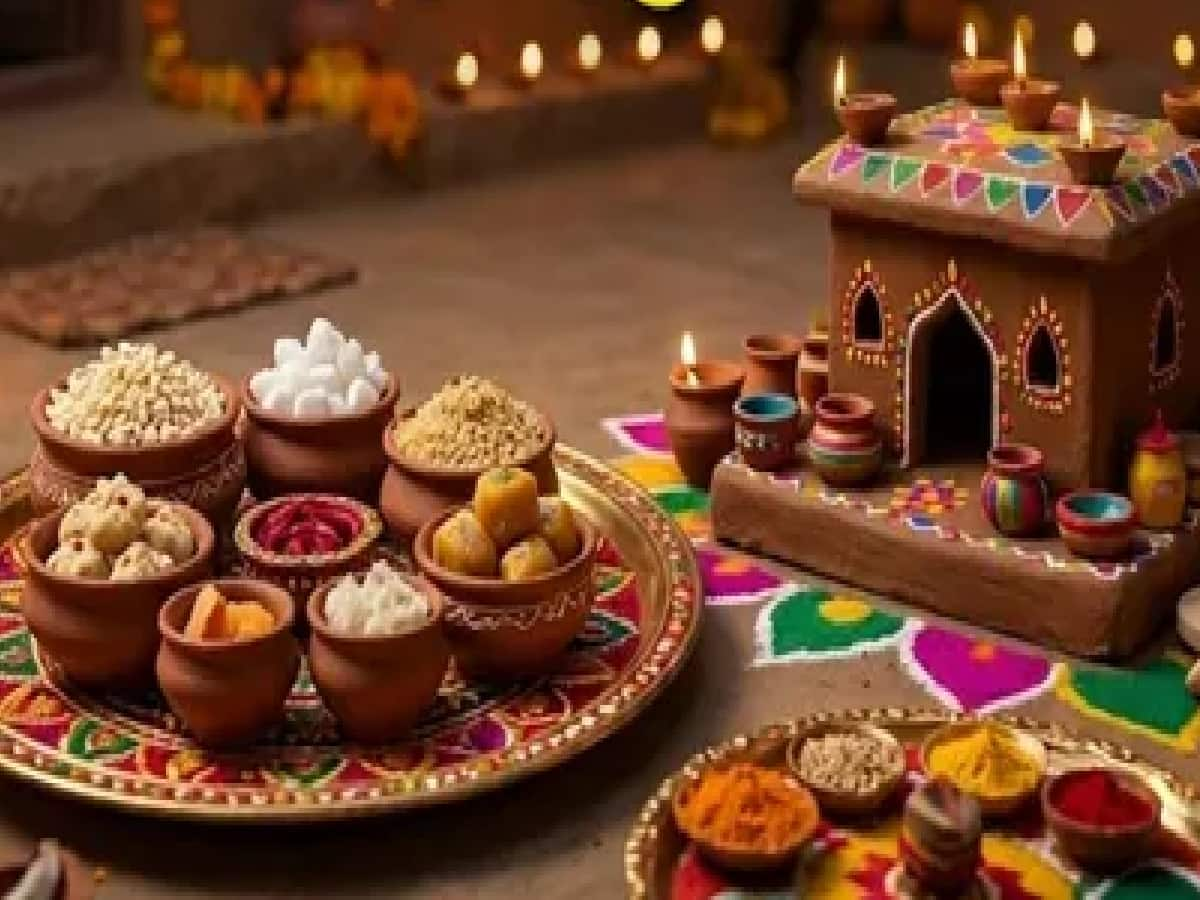
Why Families Worship Clay Kitchens and Fill 'Kulhiya-Chukiya' Pots for Goddess Lakshmi
During Diwali celebrations across Lucknow, Kanpur, and Central Uttar Pradesh, families observe the timeless 'Kulhiya-Chukiya' ritual; Vrindavan's Banke Bihari Temple priest Pandit Srinivas Goswami reveals why filling miniature earthen pots with puffed rice and sugar candy invokes Dhanya Lakshmi to bless household granaries all year round.
While Diwali illuminates cities across India with clay lamps and crackers, the heartland of Uttar Pradesh—spanning the cultural epicenters of Lucknow, Kanpur, and the broader Awadh region—preserves a uniquely intimate folk tradition that venerates the domestic hearth alongside the supreme deity of fortune. Known as the ritual of "Kulhiya-Chukiya," this centuries-old custom shifts the focus of Diwali night beyond gold ornaments and silver coins, directing devotion toward miniature unglazed earthen pots, clay toy utensils, and handcrafted domestic playhouses (gharonde). Set against the festive backdrop of Kartik Amavasya on Sunday, November 8, 2026, local households meticulously clean their courtyards to assemble these miniature clay homesteads, conducting special puja rituals that honor the kitchen, grain stocks, and daily sustenance as the truest earthly manifestations of Goddess Mahalakshmi's living presence.
Miniature Earthen Granaries: Inside the Sweet Traditions of Kulhiya-Chukiya in Awadh
Explaining the cultural roots of the practice, Pandit Srinivas Goswami, associated with the revered Banke Bihari Temple in Vrindavan, highlights that Kulhiya and Chukiya refer to miniature terracotta pots and jugs brought into the household fresh from local potters on Dhanteras and Diwali. In this charming ritual, female family members and young girls gather to arrange the clay vessels around an elaborately decorated earthen dollhouse, filling each tiny container to the brim with festive sweets, homemade kheer, crunchy puffed paddy (kheel or rice lava), traditional sugar candies (batashas), and roasted rice grain (farhi). Traditionally accompanied by women singing heritage Awadhi folk songs, the ceremony also carries deep familial affection: sisters fill specific pots with sweetened water and dry treats, offering earnest prayers for the long life, happiness, and financial triumphs of their brothers, who subsequently partake in the sanctified offerings as festive prasad.
Beyond Gold and Silver: Invoking Dhanya Lakshmi for Year-Round Household Abundance
The theological foundation behind sanctifying miniature kitchenware during Lakshmi Puja lies in the ancient Vedic understanding of wealth, which recognizes that gold and silver are meaningless without food security and physical nourishment. In Sanatan tradition, Goddess Lakshmi is revered not only as Dhana Lakshmi (goddess of material currency) but also as Dhanya Lakshmi and Annapurna, the divine providers of agricultural harvest and nourishing grain. According to Pandit Goswami, filling the Kulhiya-Chukiya with freshly harvested winter grains and confectionery serves as a direct symbolic prayer ensuring that the family's pantry, kitchen shelves, and granaries remain perpetually overflowing throughout the entire Samvat year. By revering the unpretentious earthen vessel—fashioned from mother earth and filled with the yield of the soil—devotees in Kanpur and Lucknow celebrate the sanctity of everyday domestic harmony, ensuring that genuine abundance, peace, and spiritual hospitality reside permanently within the family home.




