







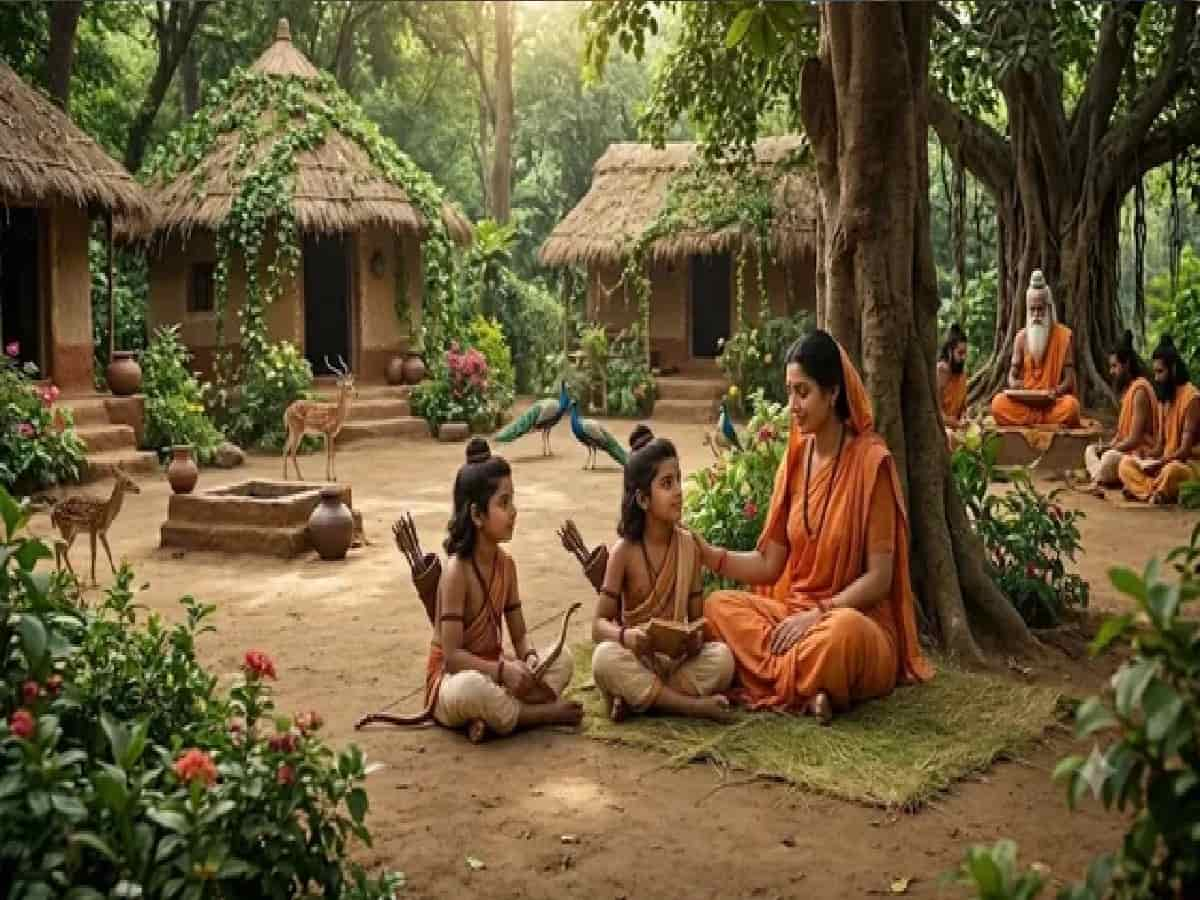
Why Ayodhya Princes Luv and Kush Grew Up in Valmiki's Ashram Hut
As the rightful sons of Maryada Purushottam Lord Shri Ram—the sovereign ruler of prosperous Ayodhya—and Mata Sita, Luv and Kush were born heirs to one of the greatest royal lineages in Indian epic history. Yet instead of growing up amid marble courtyards, golden chariots, and palace attendants, the twin princes spent their formative years inside a modest leaf-thatched hut at the forest hermitage of Maharishi Valmiki. Highlighted across spirituality and culture desks in November 2026, the complete background behind why the princes of Ayodhya were raised in an ascetic ashram—and how their names and extraordinary education took shape there—is preserved in the Uttarakanda (Book 7) of the Shrimad Valmiki Ramayana, particularly in Canto (Sarga) 66. According to the epic narrative, after defeating Ravana in Lanka, returning to Ayodhya, and ascending the throne in a grand coronation, Lord Rama governed with unwavering adherence to Rajadharma. Around the time Mata Sita was expecting their children, whispers of public gossip and uncharitable suspicion regarding her long captivity in Lanka reached the royal court. Placing the moral credibility of the throne above personal happiness, Lord Rama instructed Lakshmana to escort Sita to the forest near the banks of the Tamasa and Ganga rivers—where Maharishi Valmiki, recognizing her purity and nobility, welcomed her with the tenderness of a father toward a daughter and offered her sanctuary inside his ashram. There, far from royal luxury, Mata Sita gave birth to twin sons, whom Maharishi Valmiki blessed with sacred protective rituals using Kusha grass (giving rise to the names Kush and Luv) before mentoring them in the Vedas, scriptures, ethics, music, and advanced archery. For devotees, heritage travelers, and readers across Ayodhya, Bithoor, Kanpur, Unnao, Lucknow, Prayagraj, Varanasi, and New Delhi, revisiting this chapter of the Uttarakanda reveals how adversity inside a forest hermitage forged two of the Ramayana's brightest, most principled young warriors.
Luv and Kush's Childhood in Valmiki's Ashram: Uttarakanda Canto 66 Explained
To bring together the scriptural sequence recorded in the Valmiki Ramayana's Uttarakanda (Canto 66), the ritual behind the names Luv and Kush, and the holistic education they received under Maharishi Valmiki, the tables below summarize the epic account:
Scriptural Timeline: From Ayodhya's Throne to Maharishi Valmiki's Hermitage
| Narrative Stage | Scriptural Account (Valmiki Ramayana — Uttarakanda) | Spiritual & Cultural Significance |
| 1. Post-Coronation Rule & Public Whispers | Following his victory over Ravana and grand coronation in Ayodhya, Lord Shri Ram learned of public doubts regarding Mata Sita's stay in Lanka while she was pregnant. | Illustrates the severe personal cost of Rajadharma—where a sovereign sacrifices domestic joy to uphold public trust. |
| 2. Sanctuary at Valmiki's Ashram | Left at the forest edge by Lakshmana on Rama's orders, Mata Sita was received by Maharishi Valmiki, who treated her like his own daughter and sheltered her in his hermitage. | Turned an isolated forest retreat—traditionally associated in regional memory with Bithoor near Kanpur and Unnao—into a cradle of epic history. |
| 3. Birth of Twin Princes (Uttarakanda, Sarga 66) | Canto 66 of the Uttarakanda records that Mata Sita gave birth to twin boys inside Valmiki's ashram hut (coinciding with Shatrughna's overnight stay nearby). | Marks the arrival of Ayodhya's twin heirs in complete simplicity rather than royal splendor. |
| 4. Sacred Naming Ritual with Kusha Grass | Maharishi Valmiki performed traditional protective post-birth rites using consecrated Kusha grass—naming the elder twin Kush and the younger Luv. | Connects the princes' very names to Vedic ritual purity and forest austerity. |
How Valmiki's Hut Became a Royal Academy for Luv and Kush
| Dimension of Training | What Maharishi Valmiki Imparted | How It Shaped the Twin Princes |
| Vedas, Scriptures & Ethics (Dharma-Niti) | Deep instruction in Vedic texts, moral philosophy, and statesmanship. | Instilled humility, eloquence, and fearless devotion to truth despite living without royal titles. |
| Archery & Martial Arts (Dhanurvidya) | Rigorous training in archery, celestial weapons, and battlefield strategy. | Prepared Luv and Kush to stand unmatched in valor—even against Ayodhya's seasoned warriors during the Ashwamedha episode. |
| Music & Recitation of the Ramayana | Taught them to sing the 24,000-verse Ramayana to the accompaniment of the veena. | Allowed the twins to carry their family's true story directly into Lord Rama's assembly in Ayodhya. |
Why Growing Up in an Ashram Made Luv and Kush Extraordinary Heirs
Had Luv and Kush been raised inside the cushioned walls of Ayodhya's palace, they might have inherited royal privilege without knowing the resilience of ordinary lives. Instead, under Mata Sita's quiet grace and Maharishi Valmiki's disciplined mentorship, their modest hut became both a sanctuary and a rigorous Gurukul—blending Brahminical scriptural wisdom with Kshatriya martial mastery.
Sacred Heritage Trail Across Ayodhya, Bithoor, Unnao, Lucknow and Kanpur
For pilgrims and cultural explorers across Ayodhya, Bithoor (Kanpur), Unnao, Lucknow, Prayagraj, Varanasi, and New Delhi, the story of Luv and Kush's childhood resonates deeply in living geography—especially along the Ganga banks at Bithoor (widely revered in tradition as Valmiki Ashram and the birthplace of Luv and Kush) and across Ayodhya's sacred temples, reminding every generation that character is forged by values and teachers rather than palace walls.




