







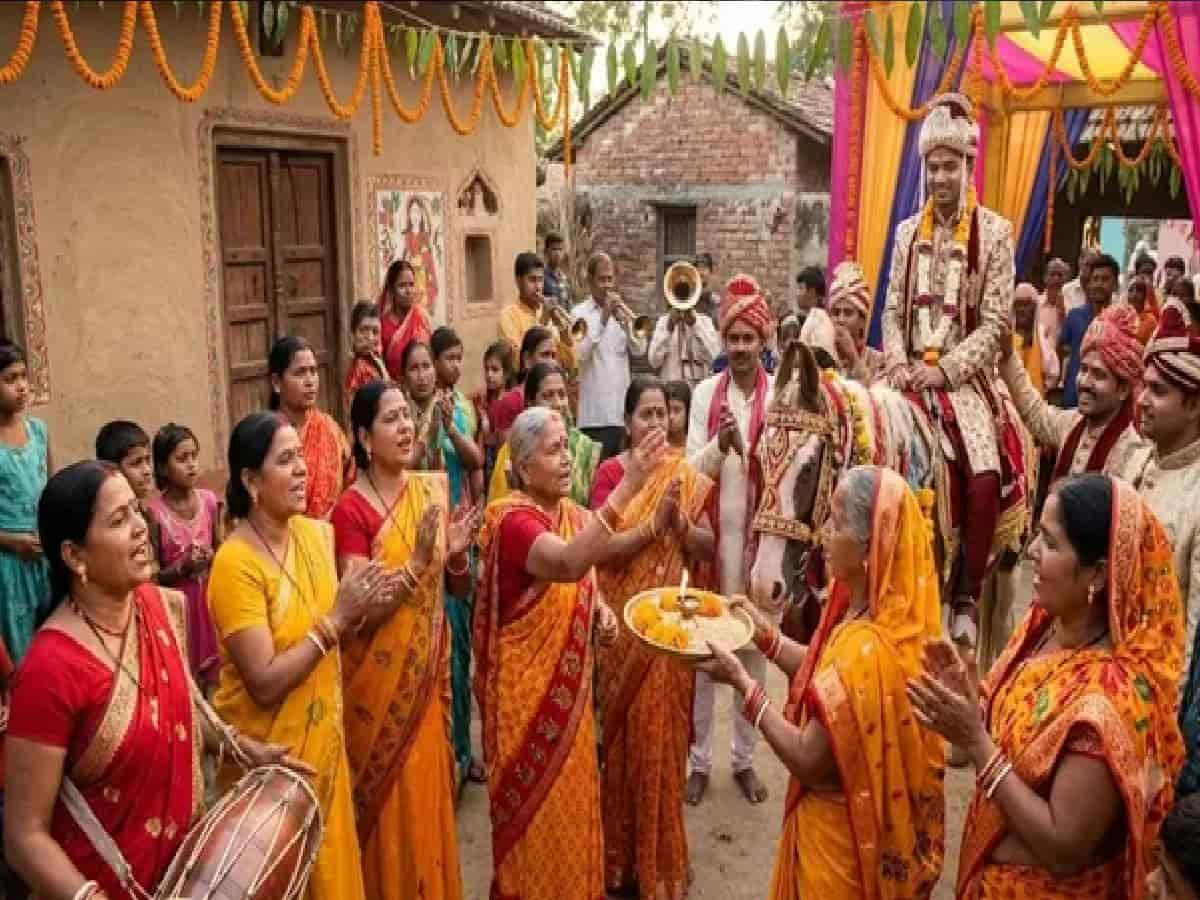
Why 'Aaj Mithila Nagariya Nihal Sakhiya' Is Sung at Indian Weddings
With Devuthani Ekadashi (Prabodhini Ekadashi) marking the awakening of Lord Vishnu from his four-month Chaturmas cosmic slumber, auspicious wedding ceremonies, shehnai melodies, and family celebrations have returned in full swing across North India. Highlighted across spirituality and culture desks on Monday, November 23, 2026, one timeless folk song echoes through wedding courtyards from Ayodhya, Lucknow, Unnao, and Kanpur in Awadh to Sitamarhi, Patna, and Janakpur in Mithila: the soul-stirring traditional Vivah Geet "Aaj Mithila Nagariya Nihal Sakhiya." More than a celebratory wedding tune, this cherished folk composition recounts the historic and sacred arrival of the royal wedding procession (baraat) of Lord Shri Ram, Lakshman, Bharat, and Shatrughan from Ayodhya to Janakpur for the divine union of Shri Ram and Mata Sita. Traditionally sung in chorus by women during the Parichhan (Dwarachar) ritual—when the bride's family welcomes the groom at the threshold with lamps, rice, and auspicious blessings—as well as during Vivah Panchami celebrations, every couplet in the song offers a poetic, affectionate depiction of Lord Rama's radiance, royal ornaments, and unmatched grace among the four princes. For families, wedding hosts, and cultural enthusiasts across Unnao, Lucknow, Kanpur, Ayodhya, Varanasi, Sitamarhi, Patna, and New Delhi, understanding the line-by-line meaning of "Aaj Mithila Nagariya Nihal Sakhiya" reveals how folk music turns every ordinary groom's arrival into a reflection of the sacred Ram-Sita Vivah.
'Aaj Mithila Nagariya Nihal Sakhiya': Line-by-Line Meaning & Wedding Rituals
To bring together the poetic meaning of each iconic verse in "Aaj Mithila Nagariya Nihal Sakhiya" alongside the traditional wedding rituals during which it is performed across Mithila and Awadh, the tables below summarize the cultural significance of the song:
Verse-by-Verse Meaning & Description of Lord Shri Ram
| Iconic Folk Verse (Transliteration) | Literal & Devotional Meaning | Poetic Imagery of Lord Shri Ram |
| "Aaj Mithila Nagariya Nihal Sakhiya" | "O dear friends, today the entire city of Mithila is overflowing with joy and blessedness." | Captures the collective euphoria in Janakpur as the royal wedding procession from Ayodhya arrives at King Janak's court. |
| "Charon Dulha Mein Badka Kamal Sakhiya" | "Among all four grooms arriving from Ayodhya, the eldest groom is truly extraordinary." | Honors Shri Ram, Lakshman, Bharat, and Shatrughan together, while highlighting the unmatched radiance and poise of the eldest bridegroom, Lord Rama. |
| "Sheesh Mani Maurya, Kundal Sohe Kanma" | "A gem-studded wedding crown (maur) adorns his head, and gleaming earrings (kundal) grace his ears." | Describes the traditional royal wedding headgear and ornaments worn by Shri Ram during the marriage ceremony. |
| "Kari-Kari Kajrari Julmi Nayanma" | "Dark, kohl-rimmed eyes (kajrari nayan) captivate every onlooker with spellbinding charm." | Celebrates the tender, expressive beauty of Shri Ram's gaze as the women of Mithila behold the groom. |
When and How the Song Is Sung in Mithila and Awadh Weddings
| Ceremonial Occasion | Region & Cultural Practice | Spiritual & Emotional Role |
| 1. Parichhan / Dwarachar (Groom Welcome at the Door) | Widely performed in Mithila (Bihar & Nepal) and Awadh (Uttar Pradesh) as the baraat reaches the bride's entrance. | Women of the bride's household gather with ceremonial platters, lamps, and akshat to bless the groom—symbolically welcoming him as Lord Rama himself. |
| 2. Tilak, Haldi & Pre-Wedding Sangeet | Sung during pre-wedding gatherings in Ayodhya, Lucknow, Unnao, Kanpur, Sitamarhi, and Janakpur. | Builds an auspicious, devotional atmosphere that unites both families through shared Ramayana heritage. |
| 3. Vivah Panchami Celebrations | Performed across temples and cultural festivals in Ayodhya, Sitamarhi, and Janakpur commemorating the anniversary of the Ram-Sita Vivah. | Keeps centuries-old oral Maithili and Awadhi folk traditions alive across generations. |
Why Every Bridegroom Is Seen as Shri Ram in Folk Wedding Traditions
In the living folk traditions of Awadh and Mithila, wedding songs (Mangal Geet) do far more than entertain guests—they elevate human milestones to a sacred plane. By singing "Aaj Mithila Nagariya Nihal Sakhiya" at the threshold during Parichhan, elders and women of the family invoke the ideals of Maryada Purushottam Shri Ram and Mata Sita, praying that the newlyweds' bond carries the same dignity, devotion, and harmony celebrated in Janakpur.
Keeping Living Heritage Alive Across Uttar Pradesh and Bihar
As wedding processions light up neighborhoods and banquet halls across Unnao, Lucknow, Kanpur, Ayodhya, Varanasi, Sitamarhi, and Patna during the ongoing November 2026 marriage season, "Aaj Mithila Nagariya Nihal Sakhiya" remains a vibrant bridge between scripture and everyday joy—proving why a centuries-old folk melody still brings tears of happiness and smiles to every wedding doorstep.




