







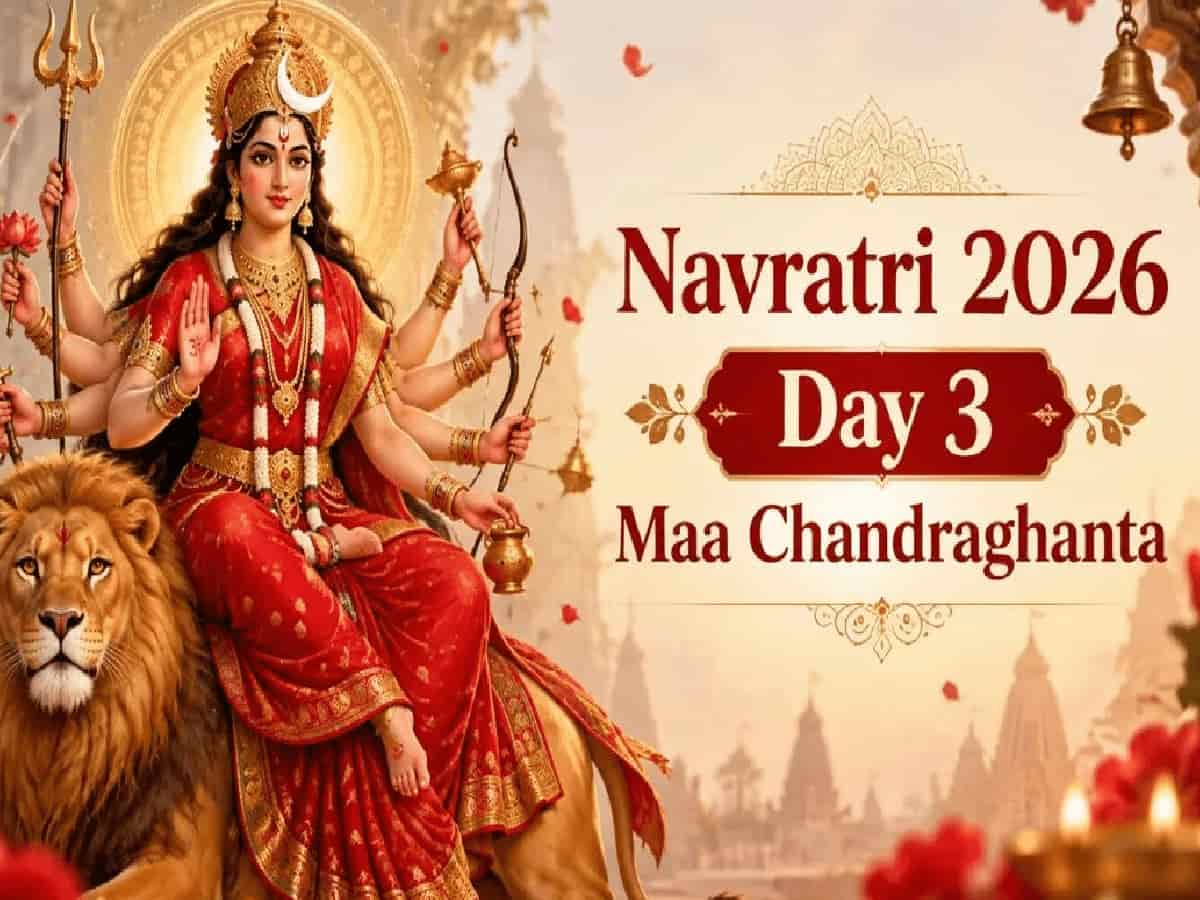
Who is Maa Chandraghanta, Colour, Sacred Mantras, Kheer Bhog, and Puja Vidhi
The spiritual fervor of Sharad Navratri reaches its vibrant third day on Tuesday, October 13, 2026, with millions of devotees invoking the boundless protection of Maa Chandraghanta, the revered third manifestation of Goddess Durga. Associated astrologically and spiritually with Shukla Paksha Tritiya, this sacred day represents the sublime harmony of fearless inner valor and tranquil grace. Worshippers dress in radiant crimson shades to mark the day's presiding energy, preparing sanctified milk-based delicacies to appease the ten-armed divine guardian who banishes chronic anxieties, protects households from malefic energies, and infuses practitioners with unshakable mental strength.
Key Highlights and Astronomical Details for Navratri Day 3
| Feature | Detail |
| Festival Date | Tuesday, October 13, 2026 |
| Navratri Tithi | Shukla Paksha Tritiya |
| Presiding Deity | Maa Chandraghanta |
| Auspicious Colour | Deep Red (Symbol of energy, courage, and vitality) |
| Primary Bhog Offering | Cow's milk, homemade rice kheer, or mawa sweets |
| Core Beej Mantra | Om Devi Chandraghantayai Namah |
| Divine Attributes | Supreme courage, psychological resilience, domestic protection |
The Divine Iconography of Maa Chandraghanta: The Bell-Crescent Warrior
The unique cosmic form of Maa Chandraghanta encapsulates a profound theological balance between fierce protective deterrence and motherly tenderness:
-
The Sacred Crescent Moon Bell: Her name originates from the crescent moon (Chandra) shaped like an alert bell (Ghanta) adorning her divine forehead, whose sonic vibration is believed to dispel demonic vibrations and negative thought cycles.
-
Golden-Hued Warrior on a Lion: Seated majestically on a roaring lion, the goddess displays ten dynamic arms carrying weapons including the sword, mace, bow, and arrow, alongside auspicious symbols like the lotus, rosary, and kamandalu.
-
Dual Nature of Calm and Ferocity: While her battle-ready posture signals immediate destruction to ignorance and malevolence, her radiant countenance remains utterly serene and compassionate toward her devotees, offering fearlessness through the Abhaya Mudra.
The Sacred Red Aesthetic: Why Crimson Defines Day 3 Worship
Adhering to traditional color codes helps align psychological focus with ancient ritual practices:
-
Symbol of Dynamic Energy: Red represents high spiritual vibrations, vitality, raw physical power, and the creative cosmic force (Shakti) required to overcome internal shortcomings.
-
Ritual Enhancements: Devotees wear auspicious red attire, adorn the sanctified idol with crimson chunris, and offer fresh red hibiscus or rose petals to enhance the energetic resonance of the prayer room.
Powerful Mantras: Chanting for Fearlessness and Mental Clarity
Chanting the sacred vibrations of Maa Chandraghanta purifies the throat and heart chakras:
-
Primary Chanting Mantra: Om Devi Chandraghantayai Namah (Chanted 108 times using a rudraksha or lotus-seed rosary during dawn or dusk sandhya).
-
Vedic Dhyan Shloka:
Piṇḍajapravarārūḍhā caṇḍakopāstrakairyutā |
Prasādaṁ tanute mahyaṁ Candraghaṇṭeti viśrutā ||
-
Translation and Meaning: Devotees bow to the illustrious Mother Chandraghanta, who rides a magnificent lion, wields formidable weapons with righteous anger against evil, and bestows boundless peace and grace upon the humble seeker.
Traditional Bhog and Puja Samagri Essentials
Preparing the sacred altar with pristine ingredients ensures complete ritual sanctification:
-
Milk and Kheer Bhog: In Sanatan traditions, cow's milk and slow-cooked rice kheer prepared with green cardamom, saffron strands, and dry fruits serve as the favorite culinary offerings for Maa Chandraghanta, believed to relieve acute mental distress and physical ailments.
-
Essential Altar Inventory: Ensure the presence of the established Day 1 Kalash, an unblemished idol or image of the Goddess, a pure desi ghee diya, natural incense, sacred roli, kumkum, akshat (unbroken rice), fresh red blossoms, mishri, betel leaves, and clean water in a copper vessel.
Step-by-Step Puja Vidhi for Navratri Day 3
Follow this streamlined daily devotional procedure to conduct the morning and evening rituals at home:
-
Purification and Altar Setup: Awaken during Brahma Muhurta, take a cleansing bath, don clean red traditional clothes, and thoroughly purify the prayer zone with sacred Ganga water.
-
Deep Daan and Kalash Pujan: Light an earthen or brass lamp filled with desi cow ghee, light fragrant dhoop sticks, and offer initial salutations to Lord Ganesha and the consecrated Navratri Kalash.
-
Floral and Tilak Offerings: Apply consecrated roli and kumkum tilak to Maa Chandraghanta, scatter unbroken akshat, and present a garland of fresh red hibiscus blossoms.
-
Presenting the Bhog: Place warm cow's milk, sweetened kheer, seasonal fruits, and mishri before the deity, ringing the brass prayer bell to evoke the cosmic resonance of the Goddess's ghanta.
-
Scriptural Recitation and Aarti: Chant the primary beej mantra 108 times, recite the Durga Chalisa or chapters of the Durga Saptashati, and conclude the ceremony by waving the camphor flame during the Durga Aarti before sharing the consecrated prasad with all family members.
Wholesome Vrat Nutrition: What to Eat During the Fast
Maintaining metabolic balance and physical vitality while fasting supports continuous spiritual meditation:
-
Permitted Sattvic Foods: Include roasted makhana, sabudana khichdi, kuttu (buckwheat) pooris, singhara (water chestnut) halwa, samak rice pulao, boiled sweet potatoes, and sendha namak (rock salt) seasoned snacks.
-
Hydration and Vitality: Consume tender coconut water, fresh fruit platters, cultured curd, chaas, and soaked almonds throughout the day to sustain hydration and prevent digestive fatigue.
-
Pragmatic Fasting Care: Senior family members, growing children, pregnant women, and individuals managing metabolic issues should choose nourished dietary routines over rigid fasts to safeguard daily health.




