







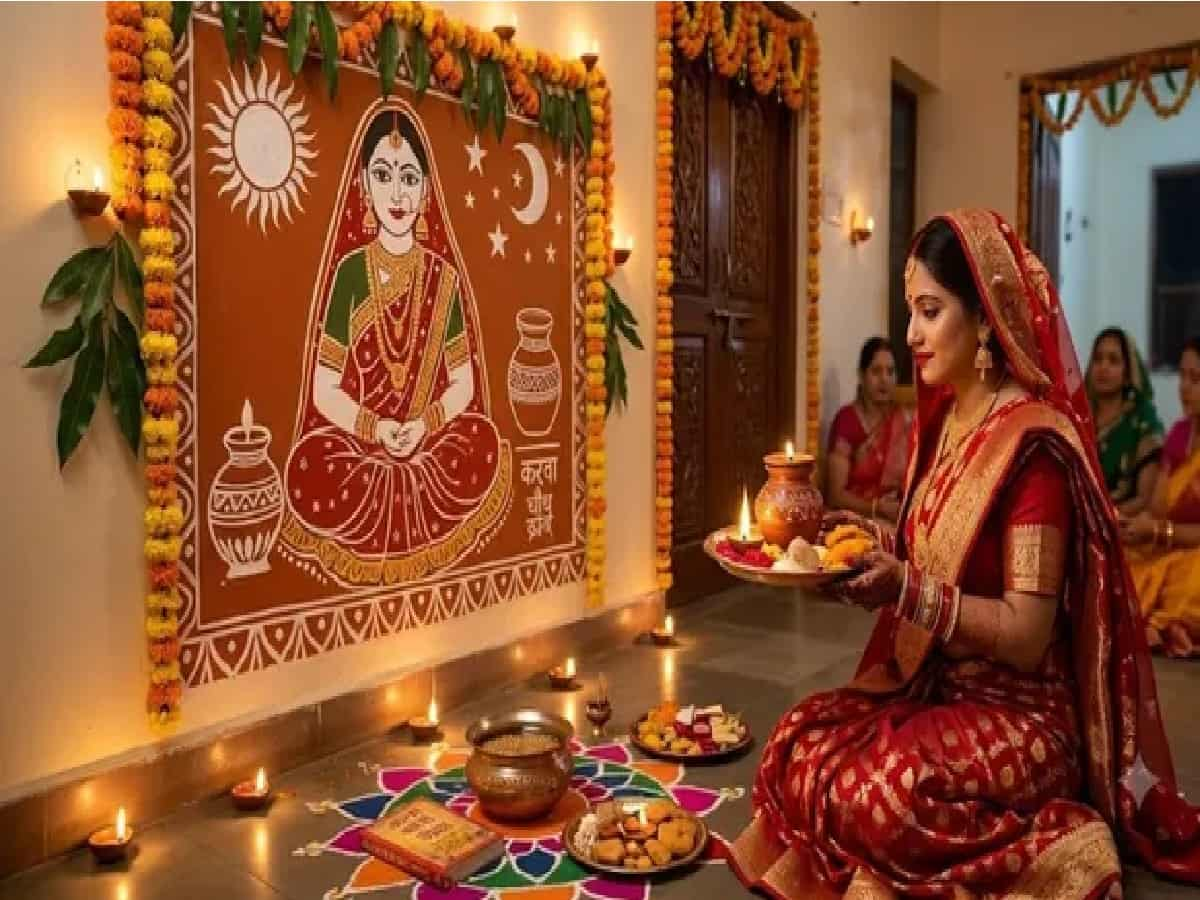
The Untold Story Behind the Goddess Worshipped on Karwa Chauth
Ahead of the nationwide observance of Karwa Chauth on Thursday, October 29, 2026, discover the sacred origin of Karwa Mata, the courageous figure worshipped alongside Goddess Parvati for her supreme devotion and power to protect a husband's longevity.
As millions of married women prepare to observe the rigorous, day-long waterless (Nirjala) fast of Karwa Chauth on Thursday, October 29, 2026, the central spiritual focus of the festival rests upon an ancient revered figure whose name defines the holy occasion itself: Karwa Mata. Marked annually on the Chaturthi Tithi of the Krishna Paksha during the auspicious lunar month of Kartik, the festival is renowned for its strict spiritual discipline, culminating only after offering ceremonial prayers to Karwa Mata and presenting sacred Arghya to the rising moon. While the festival’s fasting rituals are celebrated with immense fervor across households, the historic identity and divine manifestation of Karwa Mata remain an intriguing mystery for many modern devotees. Far from being merely a ritualistic symbol, ancient lore and Vedic traditions revere Karwa Mata as both a historic epitome of profound feminine resolve and an auspicious earthly incarnation of Goddess Parvati.
The Legend of Devotion: Who Was Karwa Mata and Why is the Festival Named After Her?
According to Hindu sacred lore, Karwa Mata was an extraordinary woman whose immense dedication, mental purity, and steadfast devotion (Pativrata Dharma) endowed her with profound spiritual strength. Puranic accounts narrate that when her husband’s life was once threatened by a deadly river crisis involving a crocodile, her unyielding spiritual power and moral courage compelled the gods of justice, including Yamraj, to intervene, preserving her husband’s life and warding off premature mortality. Across centuries of Sanatan belief, her legendary resolve became inextricably linked to the divine grace of Goddess Parvati (Maa Gauri), who herself performed rigorous austerities to win Lord Shiva. Consequently, the evening rituals of Karwa Chauth incorporate dedicated worship to Karwa Mata alongside Goddess Parvati and Lord Ganesha, serving as a reminder that an unshakeable bond of marital faith possesses the divine potency to shield a household from life-threatening adversities.
Divine Blessings and the Power of Red: How Worshipping Karwa Mata Protects Marital Life
Vedic scriptures highlight that revering Karwa Mata on this auspicious day carries immense transformative energy, believed to dismantle underlying domestic tensions, remove impending crises from a husband’s path, and bless the marital union with lasting vitality and mutual respect. The spiritual energy of the day is deeply intertwined with auspicious colors and ornamentation, with tradition emphasizing the wearing of bright red attire, such as sarees or lehengas, as red represents life energy, spiritual passion, and feminine protection. When paired with the complete Solah Shringar (sixteen sacred adornments), this devotional practice is believed to attract harmonious planetary vibrations and bestow the boon of Akhand Saubhagya (unbroken marital bliss). For the 2026 observance on October 29, women observing the fast will invoke Karwa Mata’s protection through the traditional katha recitation, concluding the holy day with renewed marital peace and divine grace.




