







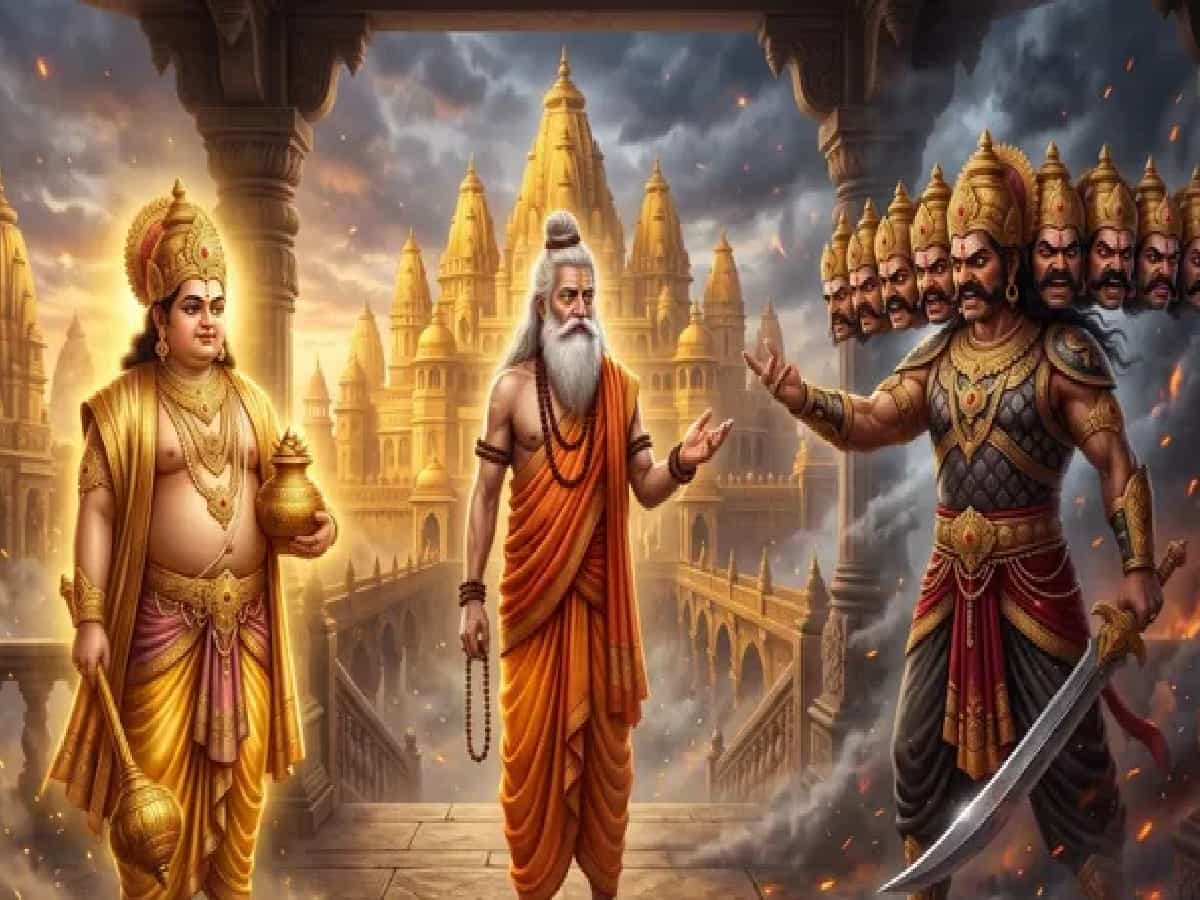
The Untold Mythological Bond Between Lord Kubera and King Ravana
Within the vast tapestry of Hindu epic traditions, few genealogies hold as profound a philosophical paradox as the household of Sage Vishrava, where a single bloodline bifurcated into the highest embodiment of divine guardianship on one side and the ultimate archetype of demonic ambition on the other. While popular culture widely perceives Lord Kubera solely as the celestial treasurer of the gods and Ravana as the ten-headed demon emperor of Lanka, ancient scriptures reveal that the two figures were paternal half-brothers, bound by the shared heritage of one of Vedic antiquity's most venerated sages. This familial intersection between divine virtue and unbridled hubris not only shaped the foundational backdrop of the Valmiki Ramayana but also illustrates the timeless metaphysical struggle between righteousness (dharma) and unchecked ego (ahamkara).
The Lineage of Sage Vishrava: Two Mothers, Divine Ascendance, and Asura Bloodlines
The genesis of this legendary brotherhood traces directly to Sage Vishrava, an ascetic scholar of eminent spiritual stature and the direct son of Prajapati Pulastya, one of Lord Brahma’s mind-born Manasaputras. Situated at the crossroads of two formidable cosmic lineages, Vishrava's marital alliances determined the destiny of the epic. From his first marriage to Devavarnini (also known as Ilavida), daughter of Sage Bharadwaja, was born Kubera, endowed with deep spiritual inclinations and unwavering devotion. Later, in an alliance designed to restore Asura hegemony across the mortal and celestial realms, King Sumali arranged for his daughter, the Asura princess Kaikesi, to marry Sage Vishrava. From this second union arose Ravana, Kumbhakarna, Vibhishana, and their sister Shurpanakha. Thus, while Kubera and Ravana shared the same revered Brahmin father, their maternal heritages and ideological inclinations diverged completely, setting the stage for an inevitable cosmic clash between divine patience and demonic conquest.
Golden Lanka and Pushpaka Vimana: How Brahma's Boons to Kubera Were Usurped
Contrary to the widespread impression that the fabled island of gold was built by or exclusively belonged to the Asura king, the Uttara Kanda of the Valmiki Ramayana documents that the golden city of Lanka was originally gifted to Lord Kubera. Following centuries of severe austerities and ascetic penance, Kubera pleased Lord Brahma, who elevated him to the exalted status of a Lokapala (guardian of the world), appointed him as the supreme keeper of cosmic wealth (Dhanadhyaksha), and bestowed upon him the aerial celestial vehicle, the Pushpaka Vimana, alongside the sovereign throne of Lanka. However, as Ravana’s military prowess grew, fueled by boons of near-invulnerability, his covetous gaze turned toward the prosperity of his elder sibling. Driven by territorial lust and ancestral claims over the island, Ravana launched a ruthless campaign, leveraging brute force and deceit to usurp Lanka, seize the legendary Pushpaka Vimana, and confiscate his brother's treasures. Recognizing that his divine purpose was anchored in preservation and stewardship rather than destructive warfare, Kubera relinquished the golden citadel without engaging in fratricidal bloodshed, journeying northward to the serene heights of the Himalayas where he established his eternal capital, Alakapuri, in the immediate vicinity of Mount Kailash. Retaining his celestial veneration, Kubera remains eternally worshipped as the supreme deity of fortune and spiritual wealth, reminding devotees that transient conquest inevitably crumbles, while righteous endurance endures forever.




