







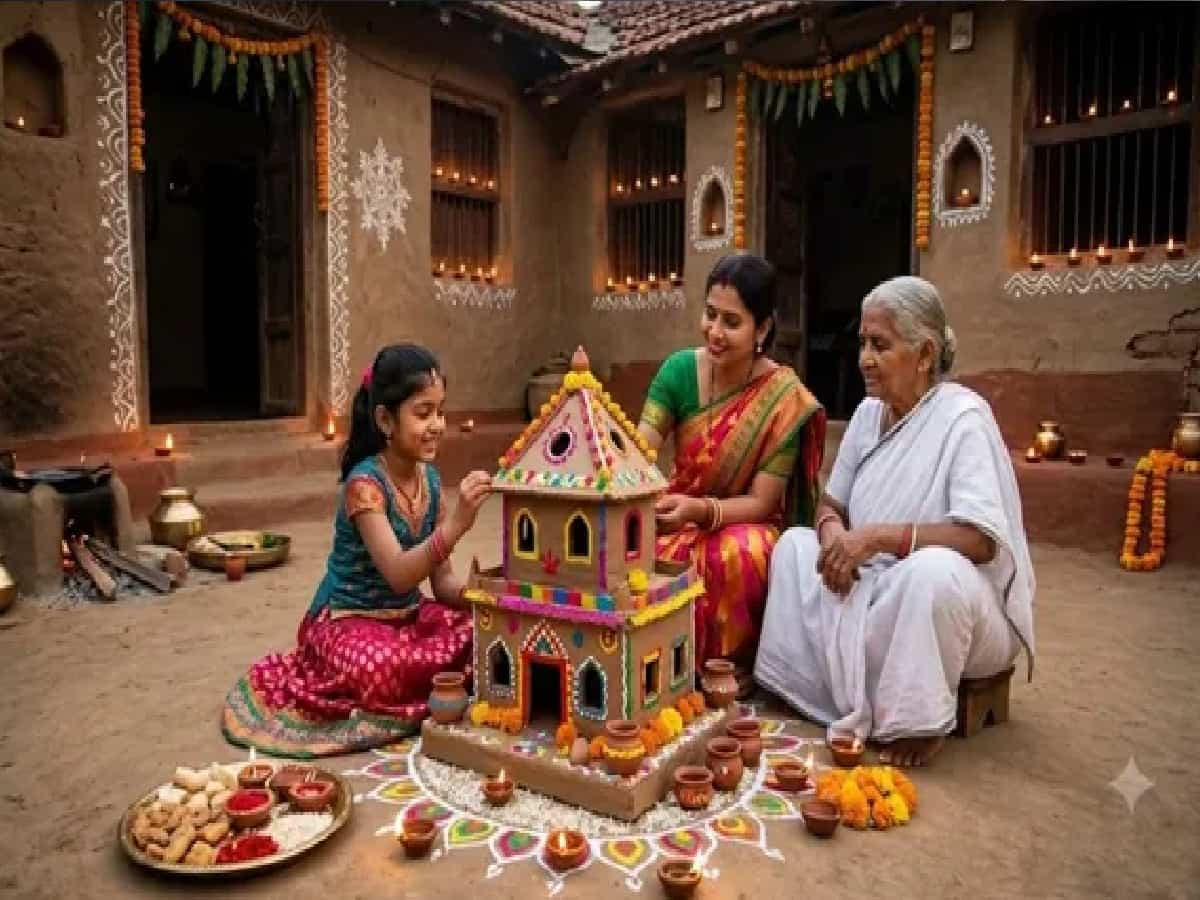
Bihar and Purvanchal Build Miniature Clay Houses to Welcome Rama and Lakshmi
Across the cultural heartlands of Bihar and Eastern Uttar Pradesh (Purvanchal), the festival of lights transforms domestic courtyards with a distinct, centuries-old folk tradition that stands apart from standard Diwali illuminations: the building of the sacred Gharaunda (miniature house). Crafted from sun-baked clay, wood, papier-mâché, and vivid natural colors, these miniature architectural marvels represent a deeply reverent celebration of domestic sanctuary and cosmic shelter. Tracing its mythological origins to the Treta Yuga, the ritual commemorates the historic homecoming of Lord Shri Ram, Mata Sita, and Lakshmana to Ayodhya following their fourteen-year forest exile and victory over Ravana. According to regional lore, the citizens of Ayodhya expressed their unbounded joy not only by lighting rows of earthen lamps, but by sculpting miniature representations of their residences, symbolizing that every single home in the sacred city was open, purified, and eagerly prepared to host the divine footsteps of their beloved king.
Welcoming Lakshmi-Ganesha: Sacred 'Kulhiya' Pots, Puffed Rice, and Warding Off Poverty
On the auspicious night of Deepavali, the Gharaunda transitions into a sanctified altar dedicated to the invocation of Goddess Mahalakshmi and Lord Ganesha. Families formally meditate upon the divine presences and install their miniature idols within the central hall of the small clay structure, cementing the symbolic belief that the household has constructed a permanent, loving home for the deities of wisdom and prosperity. A pivotal component of the ritual involves placing traditional earthen pots, locally known as kulhiya-chukiya, inside the chambers of the miniature house. Devotees fill these tiny vessels with fresh agricultural offerings, including lawa (puffed paddy), khoi, crisp sugar candies (batashe), seasonal sweets, and grains, symbolizing granaries that never run dry. Scriptural belief across the region holds that constructing and illuminating the Gharaunda during Diwali dispels latent domestic poverty (Daridrata), purging lingering negative energies from the premises and replacing them with vibrant cosmic radiance, peace, and uninterrupted family well-being.
Intergenerational Folk Art: Imparting Domestic Virtues and Creative Harmony to Unmarried Daughters
Beyond its spiritual dimensions, the building of the Gharaunda serves as an enduring social institution within Bhojpuri, Maithili, and Magahi households, traditionally driven by unmarried girls, sisters, and women of the family. The collaborative process of kneading clay, assembling wooden frames, painting intricate borders, and arranging decorative furnishings serves as a gentle rites-of-passage tradition, imparting young girls with practical foundational values of home management, aesthetic care, and domestic dedication required for their future married lives. As mothers, daughters, and younger siblings come together to fashion these vibrant artistic dwellings, the craft not only stimulates artistic creativity and spatial design among children, but also fosters deep familial bonding and mutual affection, preserving a magnificent living heritage that keeps the timeless civilizational ethos of Ayodhya thriving across modern North Indian homes.




