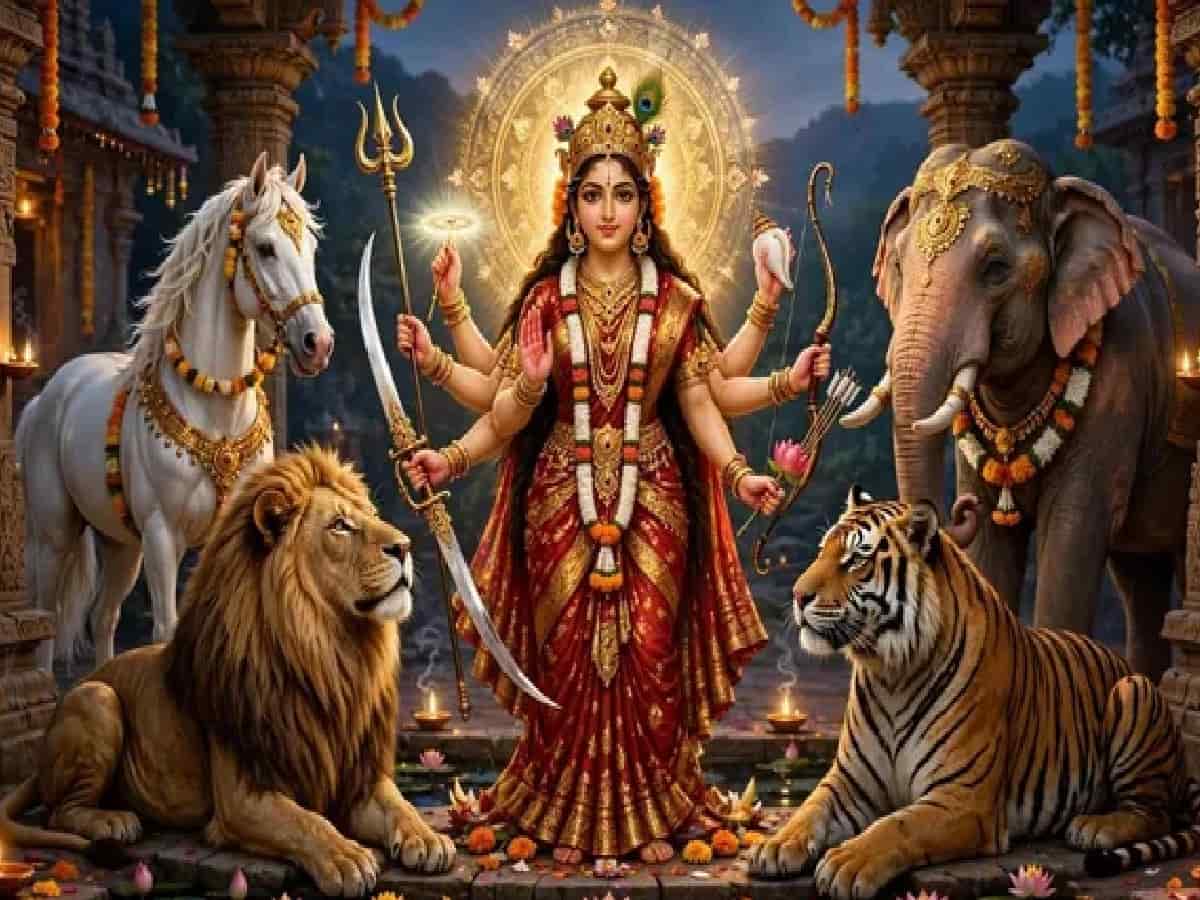
Sharadiya Navratri: Maa Durga Arrives on Elephant, Her Sacred Vahan Predicts
As millions of devotees prepare to observe the holy festival of Sharadiya Navratri across India, classical astrological and scriptural calculations have placed the divine vahana (mount) of Goddess Durga at the center of Vedic discourse. In Hindu tradition, while the Mother Goddess eternally rides a lion, her ceremonial vehicle of arrival and departure during Navratri alters every year based strictly on the weekday of Ghatasthapana. Rooted in the sacred verses of the Devi Purana, each divine mount serves as an astrological weather and geopolitical omen, signaling agrarian yields, economic conditions, and socio-political stability for the year ahead.
Scriptural Calculations Behind Maa Durga’s Annual Mount
The specific mount on which Goddess Durga arrives is governed by an ancient shloka from the Devi Purana: "Shashi Surya Gajrudha Shanibhaumai Turangme, Gurushukrech Dolayan Budhe Naukaprakirtita." According to this sacred formula, when Navratri commences on a Sunday or Monday (governed by the Sun or Moon), the Goddess arrives riding an elephant (Gaja). If the festival begins on a Tuesday or Saturday, her mount is a horse (Turangam). A Wednesday start marks her arrival on a boat (Nauka), while a Thursday or Friday commencement indicates her descent in a palanquin (Dola). Because Sharadiya Navratri 2026 begins on Sunday, October 11, Goddess Durga will make her auspicious entry riding a majestic elephant.
What the Sacred Vahan Portends for the Nation and the World
The Devi Purana further outlines the global and societal consequences linked to each vehicle through the verse: "Gajesh Jalada Devi Kshetrabhanga Turangme, Naukayan Karyasiddhisyat Dolayan Marandhruvam." An elephant arrival (Gajesh Jalada Devi) represents an exceptionally favorable omen, portending abundant monsoon showers, agricultural bounty, peaceful governance, and economic prosperity across the nation. Conversely, arrival on a horse forewarns of Kshetrabhanga or political turbulence and military conflicts, while a boat arrival signifies total task fulfillment (Karyasiddhi) and successful endeavors. The palanquin is traditionally viewed with caution, historically linked to seasonal epidemics, public unrest, and natural calamities. With an elephant arrival sanctifying Navratri 2026, Vedic scholars foresee widespread economic and agricultural renewal.