Secret of 'Achyutam Keshavam': Eight Sacred Names and Profound Leelas Hidden in Adi Shankaracharya’s Hymn
Music and devotional hymns have always held a unique power to uplift the human spirit, bringing instant calm to restless minds and filling the body with positive energy. Among the countless musical compositions dedicated to Hindu deities, few hold as much emotional resonance and spiritual pull as the timeless chant "Achyutam Keshavam Krishna Damodaram". Listening to or reciting this soulful hymn in the early morning hours fills the heart with divine joy, but beyond its melodious cadence lies a profound reservoir of ancient Vedic wisdom, philosophical depth, and sacred mythology.
Origin of the Hymn in Adi Shankaracharya’s 'Achyutashtakam'
While millions across the world sing "Achyutam Keshavam Krishna Damodaram" as a popular modern devotional bhajan, its true roots run much deeper into Sanskrit literature. The sacred phrase is derived directly from the revered Achyutashtakam, an eight-stanza Sanskrit hymn composed by the legendary 8th-century philosopher, saint, and theologian Adi Shankaracharya.
The opening couplets of this classical composition function as a powerful Krishna mantra. According to spiritual texts, regular chanting of these divine syllables acts as a spiritual armor, clearing accumulated mental fog and removing unexpected obstacles from a devotee's path.
Decoding the Meaning Behind Each Sacred Name
The complete traditional chant—"Achyutam Keshavam Krishna Damodaram, Ram Narayanam Janaki Ballabham"—encapsulates several principal incarnations and attributes of the Supreme Lord. Each name carries a distinct historical or mythological story:
-
Achyutam: Signifying the "Infallible One"—one who never undergoes destruction or loss of divine nature.
-
Keshavam: Honoring the slayer of the formidable horse demon Keshi, or one who possesses long, beautiful, flowing locks.
-
Krishna: Representing the dark-complexioned, all-attractive Supreme Personality of Godhead who draws all hearts toward love and righteousness.
-
Damodaram: Commemorating the endearing childhood pastime where Mother Yashoda bound young Kanha's waist with a churning rope (dama meaning rope, udara meaning belly).
-
Ram & Narayanam: Invoking the righteous king of Ayodhya and the cosmic preserver who provides ultimate shelter to all of humanity.
-
Janaki Ballabham: Translating to the beloved husband and protector of Mother Sita.
Together, the mantra serves as an active remembrance: "I worship and meditate upon that Supreme Lord who is Achyut, Keshav, Krishna, Damodar, Ram, Narayan, and the beloved Lord of Janaki."
Mental Peace, Positivity, and Spiritual Benefits of Chanting
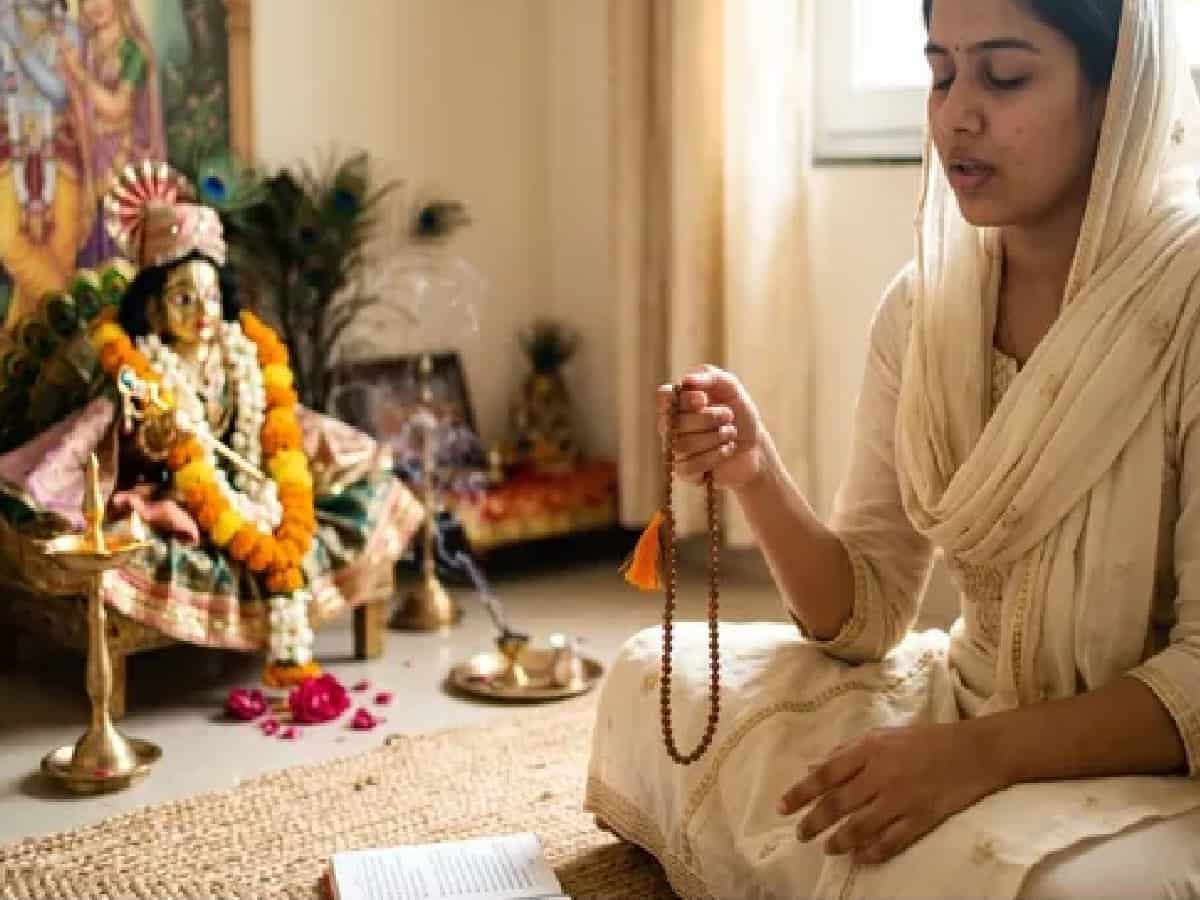
Incorporating the daily recitation of this mantra into your morning routine yields profound mental and spiritual rewards. According to ancient wisdom and meditation practices, regular chanting helps stabilize the mind, dissolves chronic stress, and purifies the domestic environment by dispelling negative thoughts.
Furthermore, the rhythmic repetition of Kanha's holy names anchors practitioners in deep gratitude and faith, helping modern seekers navigate daily anxieties with grace, inner poise, and unwavering divine protection.