







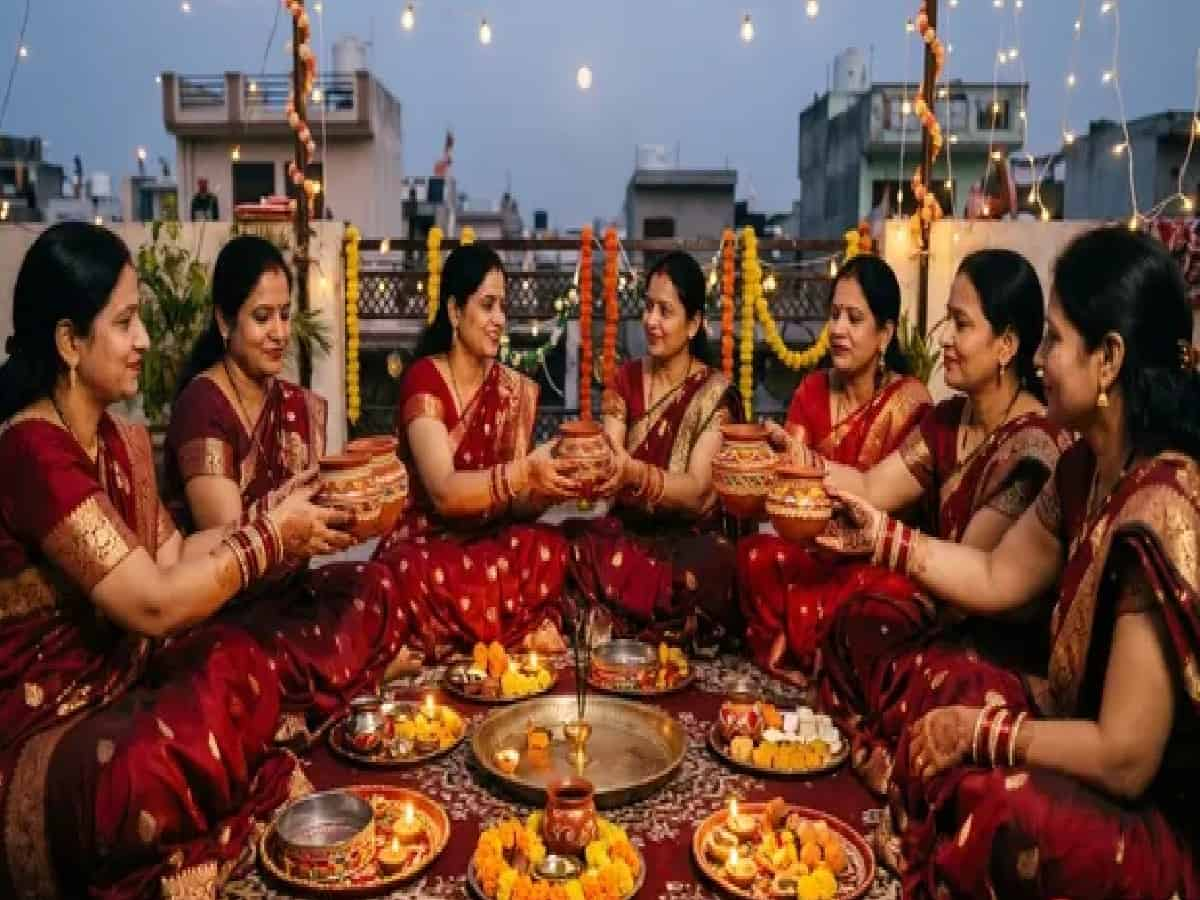
Sacred Karwa Is Rotated Exactly Seven Times During Evening Puja
As married Hindu women across the country prepare to observe the sacred fast of Karwa Chauth on Thursday, October 29, 2026, time-honored rituals and spiritual traditions are taking center stage in household festivities. Dedicated to the long life, sound health, and prosperity of spouses, the day-long Nirjala (waterless) fast culminates in an elaborate evening worship of Goddess Parvati (Gauri) and Lord Ganesha before concluding with moonrise prayers. Among the diverse customs practiced during the twilight ceremony, the ritual of Karva Phera—wherein fasting women seated in a circle systematically rotate and exchange the decorated clay or metal pot (Karwa) exactly seven times—remains one of the most essential yet least understood elements of the puja vidhi. While millions participate in this rhythmic exchange every autumn, the profound spiritual symbolism and numerological reasoning underlying the exact count of seven rotations remain unknown to nearly ninety percent of devotees.
The Power of Seven: Mirroring the Sacred Saptapadi and Marital Vows
In Sanatan Dharma and Vedic philosophy, the number seven is considered an emblem of cosmic completeness, auspiciousness, and spiritual permanence. This sacred numeral forms the bedrock of the Hindu matrimonial ceremony through the Saptapadi—the seven sacred steps and rounds taken around the holy fire (Agni) that bind husband and wife in seven lifetime commitments. Astrological scholars and Vedic priests explain that rotating the Karwa seven times during the evening prayer is a symbolic reenactment and cosmic reaffirmation of those original wedding vows. Each circular turn of the sacred pot represents an earnest prayer for the renewal of unconditional love, loyalty, mutual protection, financial prosperity, spiritual alignment, good health, and family longevity. Even in regions where ceremonial brass plates (puja thalis) are passed around instead of the vessels themselves, women strictly observe the count of seven cycles, ensuring that the vibrational energy of the ritual actively preserves happiness and stability in married life.
How the Karva Phera Is Performed: Sacred Chants and Solitary Worship Protocols
The actual execution of the Karwa exchange follows a melodious, communal cadence that has been preserved across generations of married women (Suhagans). During the evening assembly, as the traditional Karwa Chauth Vrat Katha is being narrated, participating women pass the earthen or brass vessels—traditionally adorned with sacred moli threads and slender wooden sticks—from one hand to another while chanting the rhythmic folk invocation, "Karwa le suhagan, Karwa de suhagan" (Accept the Karwa, blessed wife; give the Karwa, blessed wife). For women observing the fast in nuclear households or residing abroad away from family where group gatherings are not possible, scriptures provide a dedicated solitary protocol: the devotee places two separate Karwas before the deity altar—one representing Goddess Parvati and the other representing herself—and alternates between them across seven distinct shifts while reciting the sacred story. Once the sevenfold rotation is completed, the sanctified vessel is placed back onto the altar, clearing the path for the night-time moon sighting (Chandra Darshan) where the fast is formally broken with water offered from the husband's hand.




