







Ramayana Mystery: How Bal Brahmachari Hanuman Fathered a Son
The epic narrative of the Ramayana contains profound spiritual wisdom, divine allegories, and lesser-known historical chronicles that continue to captivate scholars and devotees across the globe. Central among these fascinating accounts is the existence of Makardhwaj, widely revered in ancient scriptures as the direct son of Lord Hanuman. The revelation often sparks widespread theological intrigue: how could Bajrangbali, venerated across Sanatan tradition as an eternal Bal Brahmachari committed to absolute, lifelong celibacy, father an offspring? Detailed extensively in the sacred Saar Kand of the Anand Ramayana, the birth of Makardhwaj was not the product of physical union or worldly desire, but rather an extraordinary divine occurrence born out of the catastrophic flames of the Lanka Dahan, leaving Hanuman’s unbroken vow of brahmacharya completely untarnished.
From the Ashes of Lanka to the Ocean Depths: How a Sweat Drop Conceived Makardhwaj
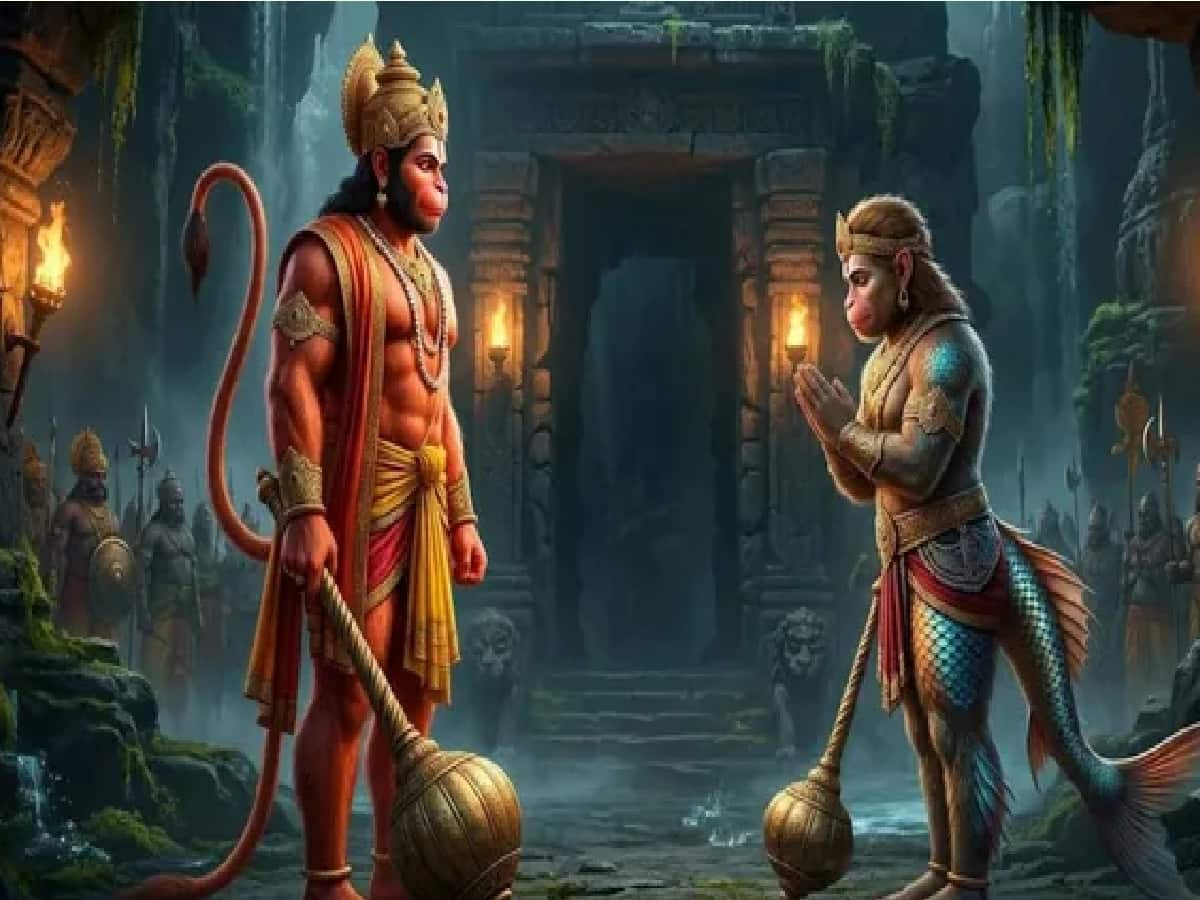
The miraculous genesis of Makardhwaj traces back to the celebrated Sundara Kanda episode when Lord Hanuman crossed the Indian Ocean to reach the golden kingdom of Lanka in search of Mata Sita following her abduction by demon king Ravana. Captured by the Rakshasa forces, Hanuman turned his captivity into an offensive, setting the entire city of Lanka ablaze with the sacred fire ignited on his tail. After decimating the demonic capital, Bajrangbali leaped into the cool expanse of the ocean to quench the blazing flames and relieve his soaring internal body heat. As the mighty warrior entered the water, a single droplet of radiant sweat rolled off his heated skin and fell into the ocean depths, where it was immediately swallowed by a colossal aquatic creature known scripturally as a Makara (a mythical crocodilian-fish beast). The divine potency carried within Hanuman’s sweat caused the creature to conceive, and when local coastal fishermen subsequently caught the giant fish and sliced it open, they discovered a radiant, powerful child inside. Because the infant emerged directly from the womb of a Makara, he was named Makardhwaj, eventually caught the attention of Ahiravana—the demonic ruler of Patala Lok (the netherworld)—who adopted the exceptionally gifted child and appointed him the supreme guardian and gatekeeper of Patalpuri.
The Clash at Patala Lok: How Father and Son Reunited to Rescue Lord Rama
Makardhwaj inherited his father's immense physical prowess, unmatched martial discipline, and towering stature, standing as an unbreachable defense at the portals of the underworld. The extraordinary reunion between father and son unfolded during the climax of the Ramayana war, when Ahiravana used dark sorcery to kidnap Lord Rama and Lakshmana from their battle camp, spiriting them away to the underworld to be offered as human sacrifices. Descending into Patala Lok on a perilous rescue mission, Hanuman arrived at the netherworld gates only to find them barred by a formidable young warrior who bore an uncanny resemblance to himself. A relentless, earth-shaking duel broke out between the two peerless combatants, with neither able to easily vanquish the other; when Hanuman demanded the identity and lineage of the fierce guardian, Makardhwaj proudly announced that he was the son of the great Vayuputra Hanuman. Stunned by the proclamation, Hanuman listened as the young warrior recounted the miraculous circumstance of his birth from the oceanic sweat droplet, confirming their divine bloodline. Recognizing the pure, immaculate nature of his origin, Hanuman embraced his son before completing his mission to eliminate Ahiravana, liberate Rama and Lakshmana, and ultimately coronate Makardhwaj as the righteous new monarch of Patala Lok.




