







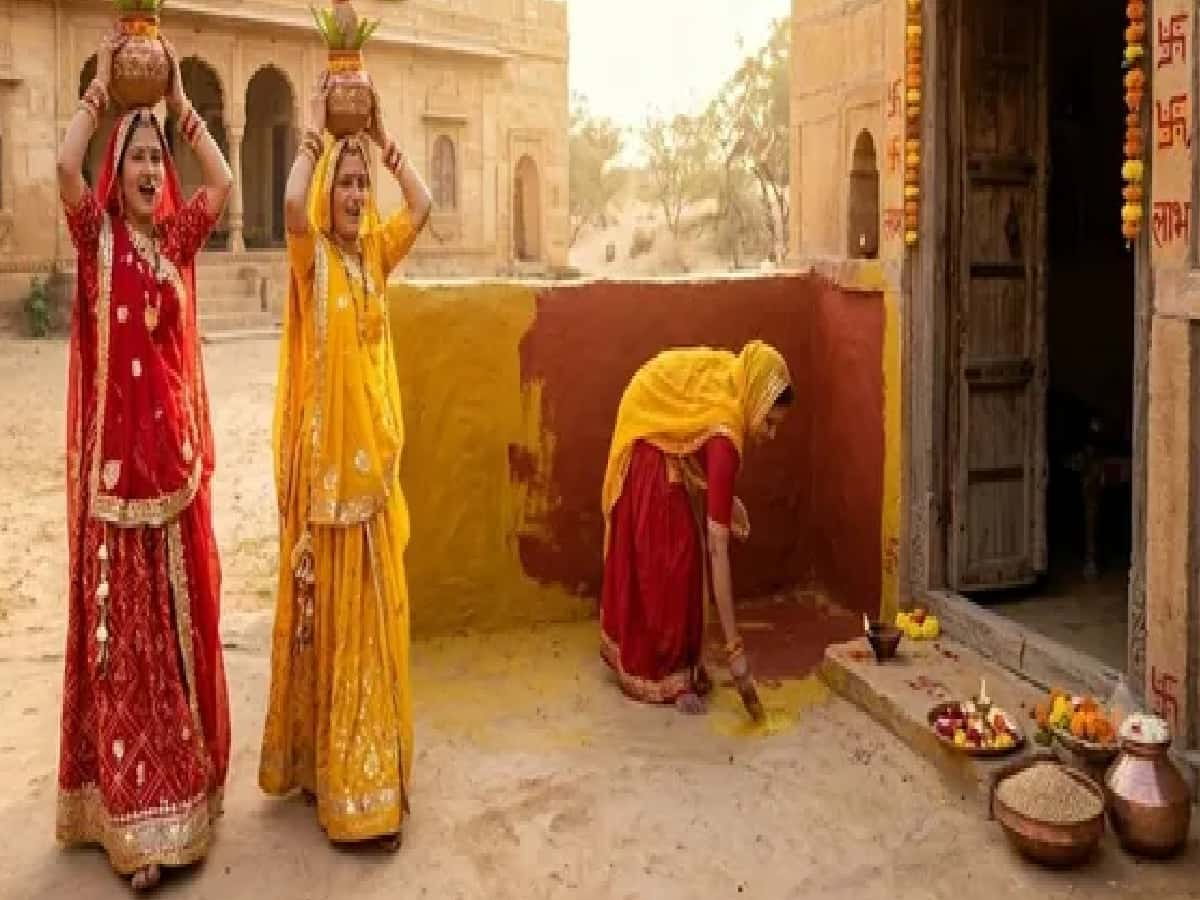
Rajasthan's 100-Year-Old Dhanteras Ritual Where Sacred Soil is Worshipped
While commercial marketplaces across the country brim with shoppers queuing outside jewelry stores and utensil showrooms to purchase gold and brass on Dhanteras, households across Rajasthan’s cultural heartland celebrate an agrarian custom rooted in deep reverence for nature. In the historic regions of Jodhpur, Udaipur, and greater Marwar, a century-old custom persists where yellow and red soil (mitti) is elevated above precious metals as the supreme manifestation of divine fortune. Guided by ancestral wisdom, local communities view the earth not merely as physical ground, but as the primordial foundation of human survival, sustenance, and cosmic abundance. On this auspicious morning, the courtyard (aangan) and the threshold (chaukhat) of the home are ritually plastered with sanctified clay, reaffirming an enduring spiritual philosophy that identifies Mother Earth as the ultimate source of wealth.
Sacred Thresholds: Plastering Courtyards with Clay to Welcome Goddess Lakshmi
According to traditional Marwari beliefs, Goddess Lakshmi resides within the fertile purity of untainted yellow and red earth, the very substance that yields food, clean water, and shelter for all living beings. Bringing freshly collected soil into the household on Dhanteras is considered a harbinger of enduring peace, spiritual balance, and domestic prosperity. The ritual practice of plastering household courtyards, exterior mud walls, and doorframes using a mixture of filtered soil and cow dung serves as an ancient, natural hygiene protocol and spiritual purification process ahead of Diwali. Folklore holds that celestial energies and the goddess of wealth only enter dwellings that maintain absolute physical cleanliness and energetic purity, with the earthen coating functioning as a protective barrier designed to dispel negative vibrations and establish harmony across the living space.
Pre-Dawn Field Rituals: How Marwari Women Carry Mother Earth Home in Sacred Pots
The observance of this ritual begins before dawn on the morning of Dhanteras, as married women dress in traditional Rajasthani attire and journey toward village fields or untouched natural clay banks. Carrying sacred ceremonial offerings—including pure water, vermilion (kumkum), unbroken rice grains (akshat), oil lamps, and unhusked paddy—they begin the ceremony by drawing a sanctified Swastika upon the earth. The soil is then consecrated through prayers of gratitude offered to Mother Earth (Bhumi Puja) for safeguarding the family's health and fortune. After the rituals conclude, the sanctified red and yellow clay is placed inside brass or clay vessels, balanced upon the women's heads, and carried back to the village amidst the collective singing of celebratory folk melodies. Once home, the clay is immediately used to adorn the threshold and courtyard. This timeless Rajasthani observance highlights an eco-conscious reminder that true wealth lies in respecting the living ecosystems that sustain human life, preserving a direct connection between cultural devotion and environmental stewardship.




