







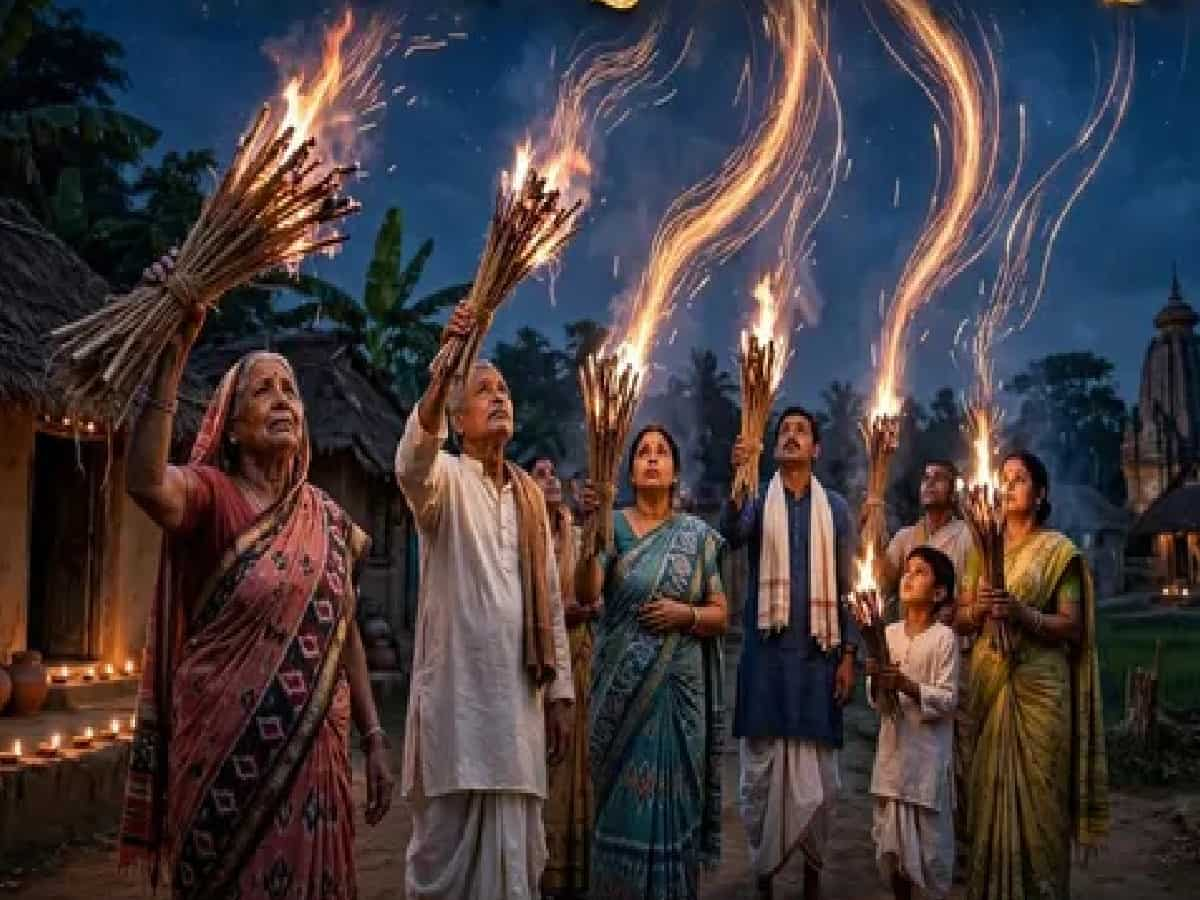
Odisha's Bad Badua Daaka: The Unique Diwali Ritual Where Ancestors Are Revered
While the festival of lights unites millions across India, the sacred night of Kartik Amavasya unfolds through diverse cultural expressions, from the illumination of earthen diyas in Ayodhya and Uttar Pradesh to the fierce devotion of Kali Puja in West Bengal, colorful threshold kolams in Tamil Nadu, and ledger-sanctifying Chopad Puja in Gujarat. Yet, nestled along the eastern coastline in Odisha, Diwali preserves a rare metaphysical tradition that places ancestral reverence above all else, commanding that departed forefathers be venerated and bid farewell before the first ceremonial lamp for Goddess Lakshmi is ever lit. Known as "Bad Badua Daaka," this ancient dusk ceremony transforms courtyards and thoroughfares across the state into glowing corridors of fire and gratitude, reminding devotees that true prosperity cannot enter a household without first honoring the departed souls whose karmic blessings built its foundations.
Lighting Kaunriya Kathi: The Sacred Chants Outside Puri's Jagannath Temple
As twilight descends on Diwali evening, the eldest male members of Odia households assemble at their doorsteps and along village commons, holding bundles of dried jute stalks locally known as Kaunriya Kathi. In the sacred pilgrim town of Puri, thousands gather in the grand thoroughfare outside the iconic 12th-century Jagannath Temple, creating an awe-inspiring sea of flames against the darkening sky. The word Badua refers to the revered departed elders and forefathers of the lineage, while Daaka translates directly to a solemn call or invocation. Igniting the resin-rich jute stalks, the living raise the blazing torches high into the night air while chanting traditional verses, casting bright beams upward to pierce the darkness of the new moon and illuminate the heavens for the departed.
Guiding Souls Back to Pitru Loka Before Mahalakshmi's Divine Welcome
According to Odia spiritual cosmology, the spirits of ancestors descend from the celestial ancestral realm (Pitru Loka) during the dark fortnight of Mahalaya to dwell among their earthly kin and partake in festive joy. As the sacred fortnight concludes on the pitch-black night of Amavasya, the torch-like brilliance of the burning Kaunriya Kathi serves as a cosmic beacon to show these returning souls their path back to the higher realms without disorientation or spiritual distress. By offering this illuminated send-off with folded hands, families ensure their ancestors depart peacefully, having bestowed generational blessings upon the lineage. Only after these vital ancestral farewell rites are completed do households wash their hands, cleanse their thresholds, and formally begin the worship of Goddess Lakshmi and Lord Ganesha, cementing Bad Badua Daaka as one of India's most profound Diwali customs.




