







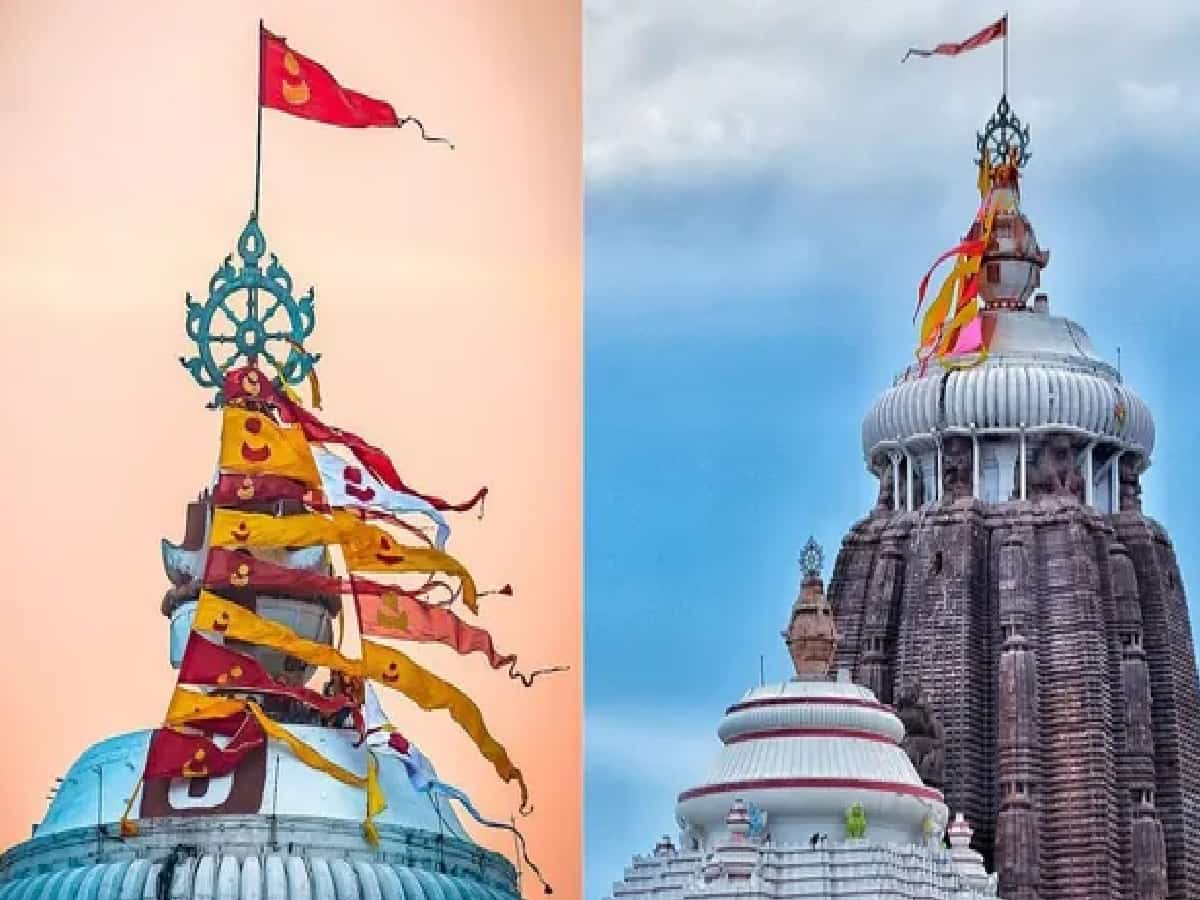
Mystery of Puri Jagannath: 14-Foot Sacred Flag Is Changed Daily and the Truth Behind
Standing tall against the coastal winds of Odisha, the 12th-century Shree Jagannath Temple in Puri remains one of Hinduism's most sacred pilgrimage destinations, drawing thousands of devotees each day to seek the blessings of Lord Jagannath, Balabhadra, and Goddess Subhadra. Among the centuries-old rituals defining daily worship at the holy shrine, none captures the devotion and astonishment of onlookers quite like the daily changing of the sacred flag atop the towering sanctum sanctorum. Far more than a ceremonial ornament, the temple banner—revered as the Patitapabana Bana—serves as an enduring emblem of divine presence, sanctity, and unyielding spiritual continuity. According to Pandit Madhav Chandra Mahapatra, a former member of the Jagannath Temple managing committee, hoisting the flag atop the architectural peak holds profound theological weight, functioning in the same spiritual manner as the sacred Shikha does for Brahmins by endowing the holy structure with cosmic completeness and divine authority.
The Daring Ascent of Chunara Sevaks: Scaling the Nilachakra Without Safety Gear
The perilous responsibility of replacing the sacred banner every single evening rests exclusively with a designated lineage of temple servitors known as the Chunara Sevaks, belonging to the traditional Chola family. For centuries, members of this family have inherited the sole hereditary privilege of performing this high-risk service, scaling the towering stone pinnacle of the 214-foot shrine without the support of harnesses, ropes, or protective equipment. Carrying devotionally offered banners on behalf of pilgrims, the Chunara Sevak scales the exterior carved facade facing forward toward the stone structure, braving high coastal wind gusts to reach the sacred Neela Chakra (the historic eight-spoked Blue Wheel) forged from eight sacred metals atop the highest dome. The flag itself measures approximately 14 feet in length and is crafted in auspicious hues of brilliant red, bright yellow, or pure white, fluttering majestically above the coastal skyline as a beacon for pilgrims miles away.
Debunking the 18-Year Closure Claim: The True Origin of Anasara and Unbroken Dedication
In recent times, viral rumors circulating widely across digital platforms have claimed that if the temple flag is missed or not replaced on any given day, the temple gates must remain shut for a catastrophic period of 18 years. Pandit Madhav Chandra Mahapatra dismissed this claim as an entirely baseless fabrication, clarifying that no such scripture, record, or temple manual prescribes an 18-year shutdown for a missed ritual. The only mandated period when the sanctum doors remain closed to standard public viewing occurs during the annual Anasara fortnight following the holy water bath of Snan Purnima, when the deities traditionally retire into isolation for approximately 15 days to recover from a ritual fever before the grand Rath Yatra. What makes the daily flag changing truly extraordinary is its unbroken record; through ferocious tropical cyclones, torrential monsoon deluges, and historical crises, the Chunara Sevaks have continuously ascended the monumental spire without interruption, transforming a perilous physical climb into a testament of multi-generational faith and selfless surrender to the divine.




