







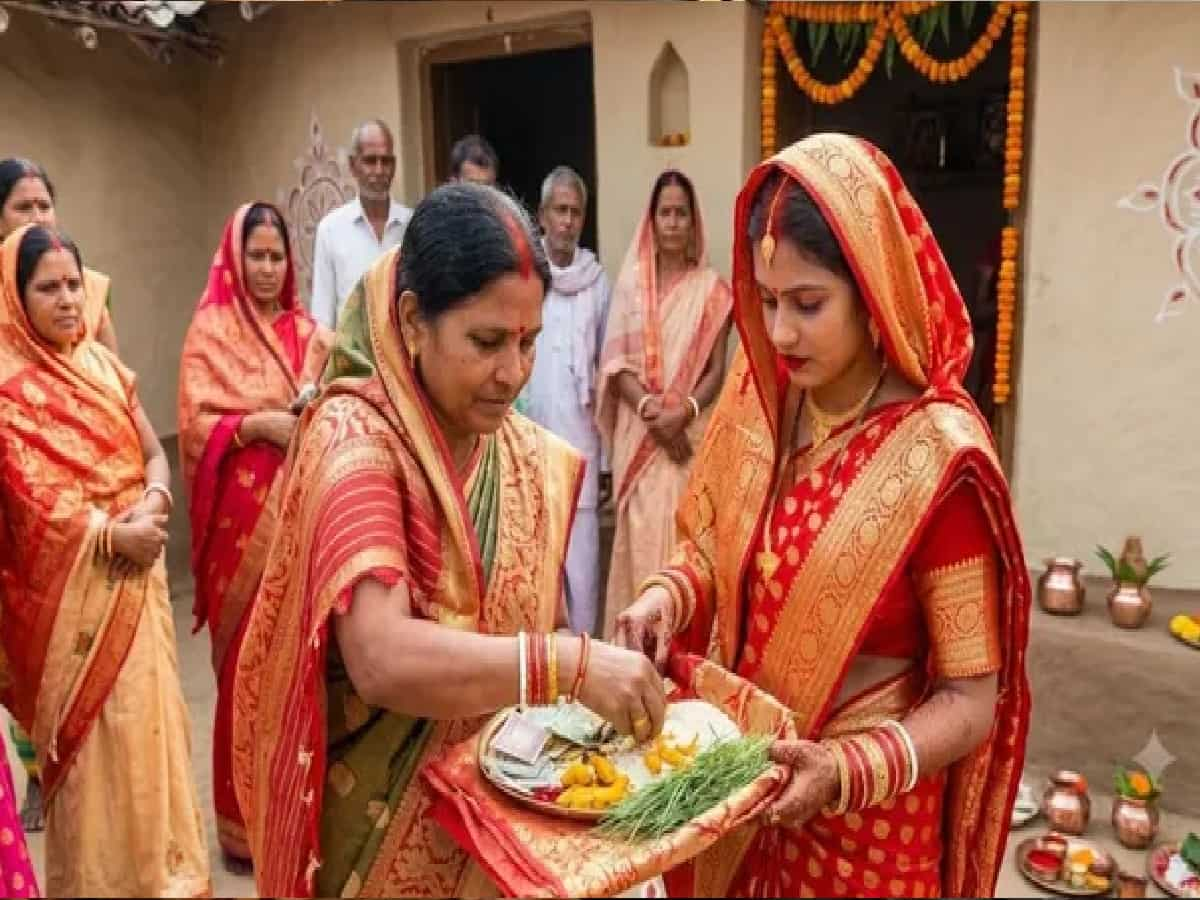
Married Women in UP and Bihar Fill Maa Durga’s Khoicha on Navami and Dashami
As the festive fervor of Sharadiya Navratri reaches its emotional crescendo across Northern and Eastern India, millions of households across Uttar Pradesh and Bihar are observing one of the most culturally revered Vedic-folk rituals known as 'Khoicha' (also referred to as Khoincha or Godh Bharai). Performed predominantly on the pivotal transition days of Maha Ashtami, Maha Navami, and Vijayadashami, this poignant ceremony embodies an intimate spiritual bond where devotees do not merely worship Goddess Durga as an omnipotent deity, but honor her as a cherished daughter (Kulvadhu or Beti) who has returned to her maternal home (Maike) for a brief annual stay. As her earthly sojourn concludes and she prepares for her celestial departure back to Lord Shiva’s abode on Mount Kailash, women gather before pandal shrines and household sanctums to pack her aanchal (lap) with auspicious provisions, mirroring the timeless Indian bridal bidaai ceremony.
The Sacred Lore Behind Khoicha: Bidding Farewell to the Divine Daughter
Rooted deeply in the regional ethos of Purvanchal, Mithila, Magadh, and the Bhojpuri heartland, the tradition of filling the Khoicha carries immense emotional resonance and theological purpose. In traditional Indian society, whenever a married daughter prepares to depart her maternal home to return to her marital home (Sasural), elderly matriarchs tenderly tie raw rice, fresh fruits, whole turmeric roots, and auspicious suhaag articles into the loose hem or pallu of her sari. This time-honored gesture serves as both a maternal blessing and a prayer that she never faces scarcity, barrenness, or domestic sorrow in her married life. When extended to Goddess Durga during the concluding phases of Sharadiya Navratri, the act takes on sacred metaphysical dimensions. According to deep-rooted spiritual beliefs, presenting Khoicha to the departing Mother Goddess invokes divine blessings of 'Akhand Saubhagya' (unbroken marital bliss and long life for the husband), while shielding the devotee’s entire household from misfortunes, financial distress, and domestic strife.
Essential Khoicha Samagri: The Spiritual Symbolism of the Eleven Sacred Items
The bundle prepared for the deity's departure is composed of specific, spiritually potent ingredients, each carrying ancient allegorical meaning tied to fertility, purity, and fortune. The essential inventory for a complete Khoicha includes:
-
Sacred Red Cloth: An unblemished piece of crimson cotton or silk that acts as the protective outer wrap, signifying the vibrancy of Shakti and marital prosperity.
-
Akshat (Unbroken Rice): Pure, uncooked, and undamaged grains of rice symbolizing uninterrupted abundance, eternal life, and fertile growth.
-
Durva Grass: Fresh blades of sacred grass revered for longevity, spiritual purification, and the removal of karmic obstacles.
-
Whole Turmeric Knot (Sabut Haldi): A raw lump of dry turmeric representing health, organic well-being, and divine protection against negative energies.
-
Sindoor (Vermilion): The ultimate emblem of marital devotion, offered to pray for the longevity and vitality of one’s spouse.
-
Five Fresh Betel Leaves (Paan): Clean, whole betel leaves symbolizing auspiciousness and fresh beginnings in household endeavors.
-
Five Betel Nuts (Supari): Compact, hard areca nuts denoting mental strength, unwavering determination, and structural integrity of the home.
-
Whole Coconut (Shriphal): The divine fruit representing high consciousness, self-realization, and fruitful enterprise.
-
Currency Coins (Dakshina): Auspicious metal coins representing sustained monetary stability and Goddess Lakshmi's permanent residence.
-
Traditional Sweets and Seasonal Fruits: Confectionery and fresh seasonal produce offered to sweeten the relationship between the deity and the devotee.
-
Complete Suhaag Shringar Adornments: Essential bridal vanity items, including glass bangles, bindi packets, bridal alta, and decorative ribbon, honoring the cosmic feminine form.
Step-by-Step Vidhi: How Married Women Perform the Lap-Filling Ritual
The ritual procedure for filling the Khoicha is performed with meticulous devotion on Ashtami, Navami, or the morning of Vijayadashami prior to the idol immersion (Visarjan) processions. To begin the ceremony, married women take a ritual morning bath, don auspicious traditional attire such as red, yellow, or saffron saris, and lay a clean, uncreased red cloth directly in front of the sanctified idol or portrait of Maa Durga. The assortment of complete suhaag adornments, raw rice, five betel leaves, five supari, fresh Durva blades, turmeric knot, unbroken coconut, sweets, seasonal fruits, and metallic coins are carefully arranged in the center of the fabric. The edges of the cloth are then gathered together and securely tied into a sanctified pouch or potli, which is then offered with folded hands directly into the lap or placed gently at the divine lotus feet of Mata Rani. Alongside this sacred offering, devotees light a pure cow-ghee lamp (Diya) and offer incense, closing their eyes to recite heartfelt prayers for domestic peace, marital harmony, and the lifelong well-being of their families. Finally, women perform 'Kshama Prarthana'—bowing low with folded hands to seek the benevolent Mother’s forgiveness for any accidental omissions, ritual oversights, or unintended pronunciation errors committed during the nine days of devotional worship.




