







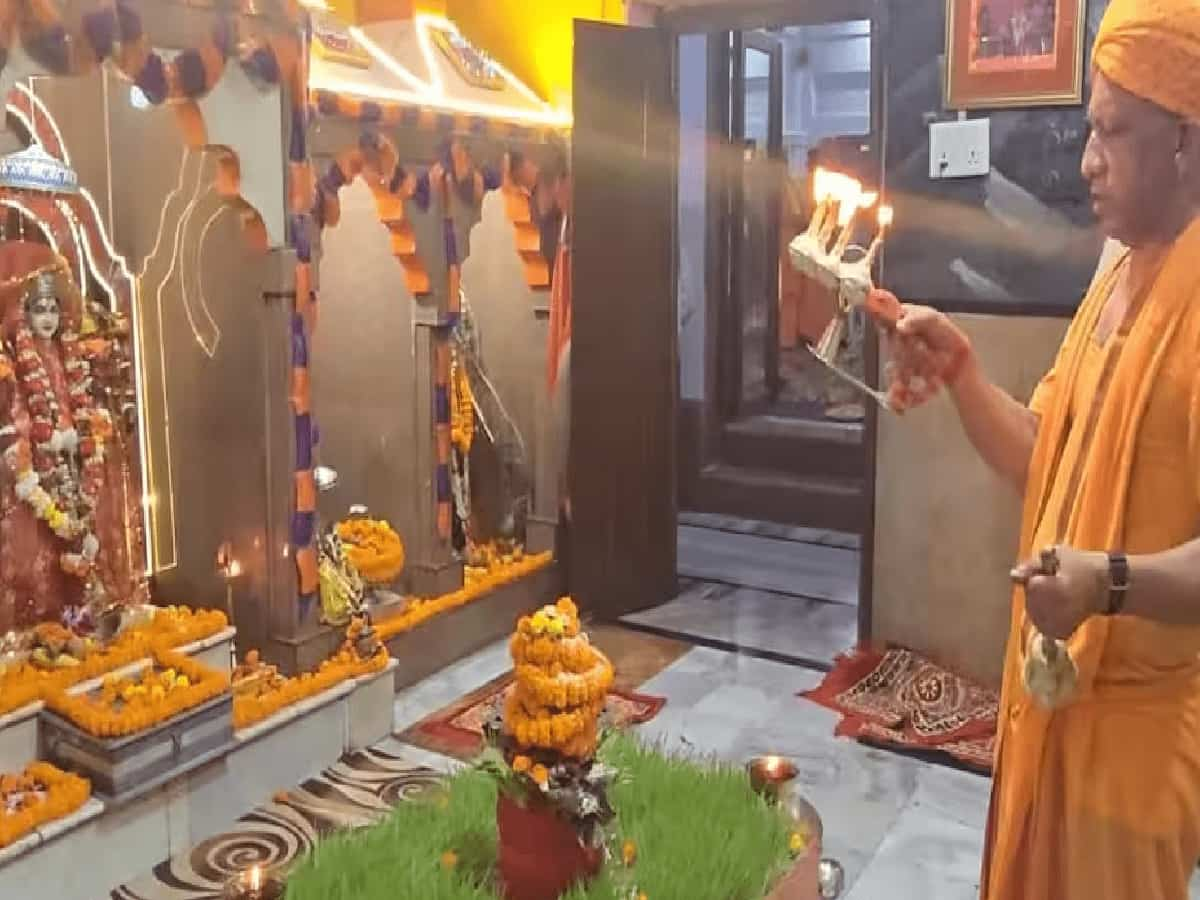
CM Yogi Performs Sacred Mahanisha Puja & Havan at Gorakhnath Temple on Maha Ashtami
Steeped in the centuries-old ascetic traditions of the Nath monastic order, Uttar Pradesh Chief Minister and Gorakshapeethadhiswar Yogi Adityanath performed the sacred Mahanisha Puja and grand havan on the auspicious occasion of Maha Ashtami during Sharadiya Navratri at the Gorakhnath Temple in Gorakhpur. Arriving in the eastern Uttar Pradesh city on Sunday, the Chief Minister proceeded directly to the temple complex to initiate the nocturnal rituals. Upholding longstanding Peeth protocol, he first offered prayers and performed traditional worship at the sanctum of Shiva's avatar, Guru Gorakhnath. Following this invocation, he paid homage at the samadhi sthal of his revered spiritual mentor, the late Mahant Avedyanath, seeking divine blessings before immersing himself in the intensive spiritual austerities that stretched from late evening well into the night.
Sanctum Resonates with Vedic Mantras: Two-Hour Elaborate Rituals at the Shaktipeeth
The inner sanctum of the Gorakhnath Temple Shaktipeeth echoed with ancient hymns and Vedic recitations as Chief Minister Yogi Adityanath led the specialized rituals honoring the Mother of the Universe:
-
Invocation of Maa Mahagauri: Prior to the nocturnal rites, the Chief Minister performed ceremonial worship of Maa Mahagauri, the eighth divine form of Adishakti, seeking inner peace, auspiciousness, and spiritual strength.
-
Gauri Ganesh, Varun & Peetha Puja: The ceremonial sequence opened with classical invocations to Lord Ganesha, Goddess Gauri, Lord Varun, and the consecrated sanctum seat (Peetha Puja) alongside intricate Yantra worship.
-
Shodashopachar of Deities: The Gorakshapeethadhiswar carried out full sixteen-step (Shodashopachar) venerations of Lord Rama, Mata Sita, and Lakshmana, alongside deep reverence for Lord Krishna and Gomata (the holy cow).
-
Veneration of Shaivite Powers: The comprehensive ceremony incorporated specialized worship of the twelve sacred Jyotirlingas, Ardhanarishwar, Shiva-Shakti, Batuk Bhairav, Kaal Bhairav, Trishul Parvat, the celestial Navagrahas, Bilva leaves, and consecrated defensive weapons (Shastra Puja).
Grand Havan and Shri Durga Saptashati: Invoking Universal Well-Being and Prosperity
The extensive spiritual exercise culminated in a sacred havan ceremony at the consecrated sacrificial altar inside the Shaktipeeth:
-
Invocation of the Cosmic Trinity: Sacred oblations were poured into the burning sacrificial fire, invoking Lord Brahma, Lord Vishnu, Lord Rudra, and Agni Dev with precision.
-
Harvesting the Sacred Jau (Barley): Adhering to ancient Navratri customs, the barley sprouts (Jayanti) cultivated on the sanctum altar were ceremonially harvested and offered to Goddess Durga while seeking divine protection, health, and prosperity for all citizens.
-
Chanting of Durga Saptashati: The atmosphere was charged with resonant recitations from the sacred scripture Shri Durga Saptashati, complemented by continuous Vedic verses.
-
Kshama Prarthana and Prasad Distribution: The high-energy ritual concluded with the ceremonial Maha Aarti and the traditional recitation of Kshama Prarthana (prayer seeking forgiveness for unintended ritual omissions), followed by the distribution of consecrated prasad among the large gathering of devotees present inside the temple corridors.




