







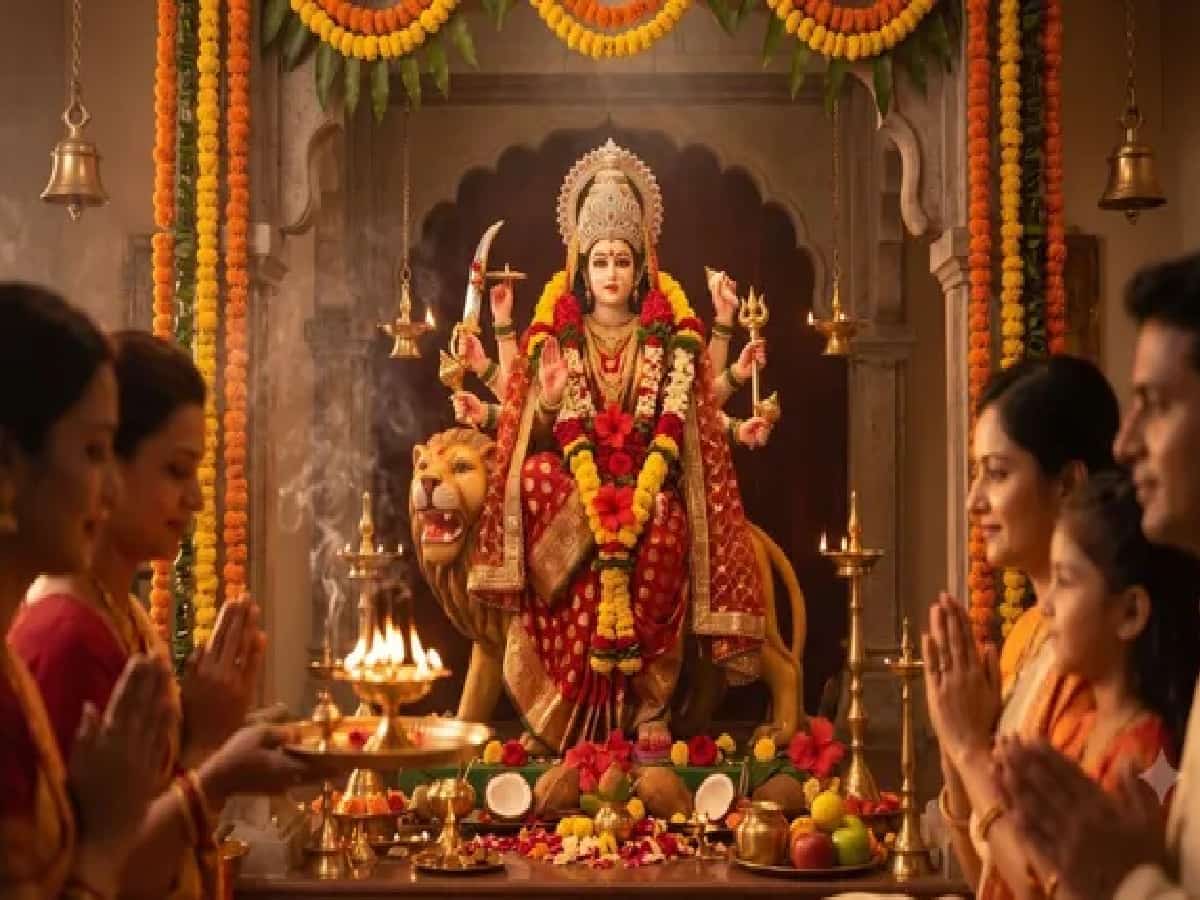
Maa Durga Is Revered as 'Sarvamangala' and Chanted Before Every Auspicious Beginning
As millions of devotees across the country observe the sacred festival of Navratri by worshipping the nine divine manifestations of Navdurga through Vedic rituals, fasting, and deep meditation, one sacred chant unfailingly resonates across every temple courtyard, home altar, and ritual gathering: "Sarva Mangala Mangalye Shive Sarvartha Sadhike | Sharanye Trayambake Gauri Narayani Namostu Te ||" While the ancient verses of the Durga Saptashati enumerate over 108 venerated names for Goddess Durga—honoring her supreme persona as Shakti, Jagadamba, and Mahishasura Mardini—it is her definitive identity as 'Sarvamangala' that is universally invoked before embarking on any momentous life milestone. The sacred title directly encapsulates the Goddess as the boundless fountainhead of all auspiciousness (sarva-mangal), signifying the compassionate cosmic mother who bestows holistic well-being, shields creation from negativity, and embodies inherent purity and universal welfare.
Scriptural Roots in the Markandeya Purana: The Cosmic Power of Narayani Stuti
The profound theology behind this divine epithet is anchored in the 10th verse of Chapter 11 of the Markandeya Purana, embedded within the revered scripture Durga Saptashati. Known sacredly as the Narayani Stuti, this hymn was spontaneously composed and chanted by Lord Indra and the entire assembly of Devas in an overwhelming surge of celestial gratitude and relief following the annihilation of the tyrannical demon brothers Shumbha and Nishumbha. Within this single compact verse, the Goddess is addressed through four interwoven cosmic dimensions that reveal her all-encompassing nature: as Shiva and Gauri, she is the auspicious and gentle counterpart to Lord Shiva, celebrated during Navratri in her serene form as Mahagauri; as Tryambake, she shares the formidable third eye of transcendent wisdom and perception with Shiva; and as Narayani, she manifests as the supreme dynamic power and creative energy of Lord Narayana (Vishnu), signifying that all preservation and protection in the universe flow directly from her grace.
The Dual Force of Praise and Blessing: Why Indian Households Invoke 'Sarvamangala' First
In classical Sanskrit liturgy, traditional hymns generally serve one of two distinct purposes: they either offer poetic adoration (stuti) of the divine or submit a humble petition (prarthana) for protection and material fulfillment. The remarkable spiritual potency of the Sarva Mangala Mangalye shloka lies in its rare ability to seamlessly accomplish both functions simultaneously, operating both as an elevated prayer of surrender and as an immediate divine shield. Chanting this mantra during the nine nights of Navratri is held to accelerate spiritual progress and dissolve unforeseen impediments in worldly pursuits. Consequently, Vedic tradition mandates its recitation at the very commencement of significant life transitions—including marriage rituals (Vivaha Samskara), housewarming ceremonies (Griha Pravesh), high-stakes academic examinations, commercial enterprise inaugurations, and sacred travel. By invoking Goddess Durga as Sarvamangala first, devotees reaffirm their spiritual refuge in the benevolent mother, trusting that her cosmic presence will neutralize all obstacles and infuse every upcoming endeavor with lasting prosperity and auspiciousness.




