







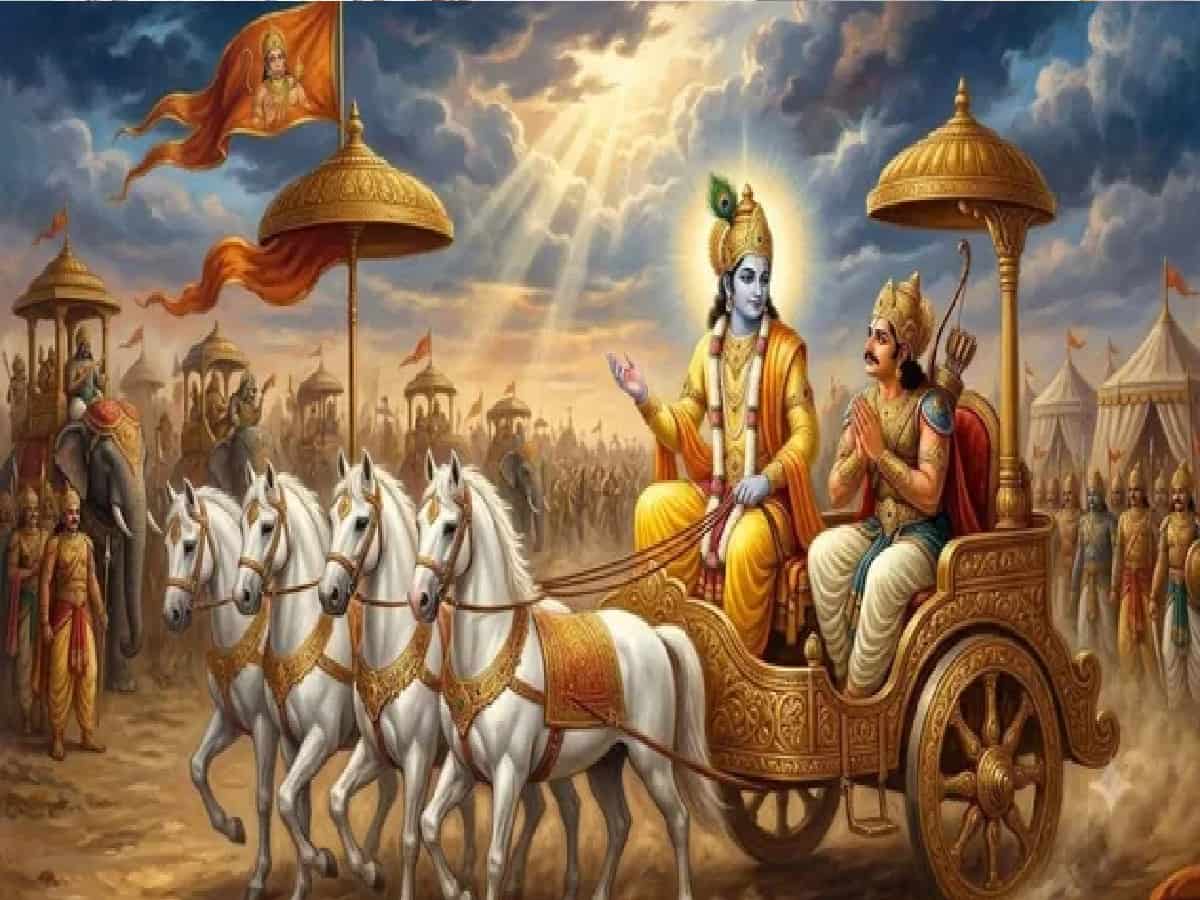
Lord Krishna Compares the World to an Inverted Tree in Chapter 15
Across centuries of philosophical inquiry, the Shrimad Bhagavad Gita has served as humanity’s ultimate spiritual compass, offering timeless psychological and existential insights that transcend historical eras. Revered as the pinnacle of practical Vedanta, the sacred dialogue between Lord Krishna and the Pandava prince Arjuna addresses the core dilemma of human suffering—our perpetual entanglements in transient attachments and emotional vulnerabilities. Within Chapter 15, titled Purushottama Yoga, Lord Krishna unveils one of the most striking allegorical frameworks found in global literature, comparing the architecture of the cosmos to an inverted Peepal (Ashvattha) tree. Through two pivotal verses—Verse 1 and Verse 5—the scripture delivers a masterclass in spiritual detachment, explaining how unravelling the mechanisms of material illusion enables a seeker to dismantle sorrow, transcend the repetitive cycle of birth and death, and anchor consciousness directly in supreme self-realization.
Decoding Verse 1: The Metaphysics of the Upside-Down Tree and Vedic Wisdom
The chapter opens with the majestic declaration: "Urdhvamoolamadhah shaakhamashvattham praahuravyayam, Chhandaamsi yasya parnaani yastam veda sa vedavit." In this foundational verse, Lord Krishna explains that the phenomenal universe is like a celestial Peepal tree whose primordial roots extend upward into the transcendent Supreme Reality (Brahman), while its sprawling branches cascade downward into the mortal, sensory world. The leaves of this cosmic tree represent the Vedic hymns, which govern seasonal actions, cosmic rituals, and societal duties. Krishna emphasizes that whoever comprehends the intricate secret of this upside-down tree is a true "knower of the Vedas" (Vedavit). The philosophical lesson embedded here is transformative: human beings habitually search for permanence, peace, and unblemished happiness among the downward-hanging branches and leaves—namely fleeting relationships, material possessions, and perishable titles. However, genuine fulfillment cannot be extracted from perishable offshoots; true peace is realized only when individuals trace their awareness back to the celestial source, redirecting their inner consciousness toward the immortal roots of the Supreme Being rather than lingering in material mirages.
Verse 5 Roadmap: Transcending Ego, Dualities, and the Cycle of Rebirth
Providing the practical methodology to sever attachment to this material tree, Verse 5 outlines the precise spiritual discipline required for liberation: "Nirmaanamohaa jitasangadoshaa adhyaatmanityaa vinivrittakaamaah, Dvandvairvimuktaah sukhaduhkhasamjñairgachhantyamoodhaah padamavyayam tat." In this profound teaching, Lord Krishna clarifies that the eternal supreme abode (padamavyayam) is attained exclusively by those who have systematically eradicated false pride, narcissism, and delusion (nirmaana-moha). The verse instructs seekers to conquer the contamination of unhealthy emotional clinginess (jita-sanga-dosha), anchor their thoughts perpetually in higher spiritual contemplation (adhyaatma-nityaa), and actively dissolve personal greed and lust. Most critically, the text demands mastery over life's binary dualities—such as praise and blame, gain and loss, or happiness and sorrow (sukha-duhkha). By remaining emotionally balanced in the face of fluctuating external conditions, the enlightened person overcomes existential confusion, stepping out of repetitive mental suffering to claim unshakeable inner freedom and enduring spiritual equilibrium.




