







Karwa Chauth: Why Married Women Pray to Chandra Dev Instead of the Sun
As millions of married women across India and global diaspora communities prepare to observe the austere waterless (Nirjala) fast of Karwa Chauth on Thursday, October 29, 2026, the unique astronomical and Vedic customs defining the festival have taken center stage. Falling annually on the Chaturthi Tithi of the Kartik Krishna Paksha, the sacred observance is dedicated to seeking marital longevity, household prosperity, and the well-being of spouses through devoted prayers offered to Lord Shiva, Goddess Parvati, Lord Ganesha, and Karwa Mata. Yet, unlike major Hindu fasts such as Chhath Puja that pay homage to the fiery life-giving power of the Sun God (Surya Dev), Karwa Chauth centers exclusively on the nocturnal sighting of the Moon (Chandra Dev), prompting many devotees to explore the deep mythological and astrological logic underpinning this ancient celestial ritual.
Solar Intensity vs. Lunar Serenity: The Astrological Core of Marital Harmony
The core explanation for revering Chandra Dev over Surya Dev on this auspicious day lies within Vedic astrology and the psychological qualities governing married life. In traditional planetary sciences, the Moon is recognized as the cosmic governor of the mind (Manas), emotional serenity, maternal affection, and mental composure (Sheetalta). In contrast, the Sun embodies fierce masculine energy, unyielding heat, ego, and intense radiance. Vedic traditions hold that sustaining a lifelong matrimonial bond requires the cooling, pacifying, and nurturing vibrations of lunar rays rather than harsh solar heat, ensuring that anger and misunderstandings dissolve in favor of mutual tenderness. Mythologically, Chandra Dev holds a special affinity for his consort Rohini among his twenty-seven wives; on Karwa Chauth, the prominent alignment of the Rohini Nakshatra enhances lunar auspiciousness, making prayers offered to the Moon exceptionally potent for inviting domestic bliss, romantic harmony, and emotional equilibrium into marital households.
The Sacred Draupadi Legend, Clay Karwa Rituals, and 2026 Shubh Muhurat
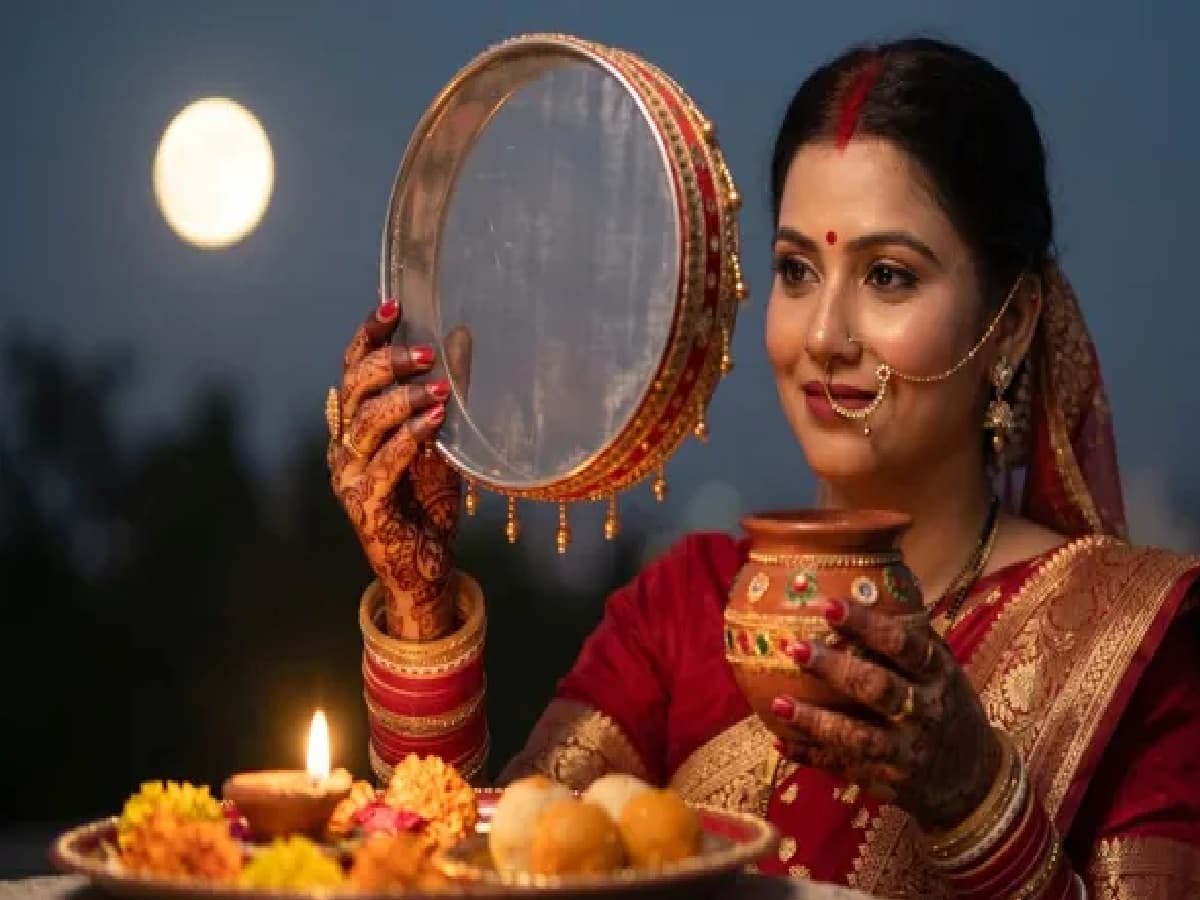
The deep-rooted historical significance of the fast also traces back to the epic Mahabharata, where Queen Draupadi observed the rigorous Karwa Chauth fast under the direct counsel of Lord Krishna to protect the five Pandavas from grave crises during their forest exile. The linguistic roots of the festival further illuminate its rustic symbolism: 'Karwa' refers to a traditional earthen clay pot with a spout, while 'Chauth' denotes the fourth lunar day. Devotees fill this clay vessel with water to offer sacred Arghya to the cooling moon through a traditional sieve, absorbing the filtered lunar light to reinforce marital sanctity. For the 2026 observance on October 29, Vedic panchang calculations indicate that the prime evening Karwa Chauth puja muhurat will run from 5:38 PM to 6:56 PM, providing a dedicated one-hour-and-eighteen-minute window for women to complete the sacred katha recitation and worship rituals before stepping out to sight the rising moon.




