







Karwa Chauth Moonrise Timings: City-Wise Schedule for Delhi, Mumbai, UP, and Across India
The sacred festival of marital devotion, Karwa Chauth, is being celebrated with immense enthusiasm and spiritual fervor across India on Thursday, October 29, 2026, as married women observe a rigorous, day-long waterless fast (nirjala vrat) praying for the longevity, health, and prosperity of their husbands. Because the day-long penance concludes exclusively after sighting the illuminated lunar disc and offering formal prayers, tracking the precise moment of moonrise (Chandrodaya) is the primary focus for millions of devotees nationwide. Addressing widespread queries regarding city-specific sightings, celebrated Ujjain astrologer Pandit Manish Sharma has detailed the astrological and astronomical timings, noting that due to regional longitudinal variations and local geographic coordinates, moonrise will differ significantly across regions, beginning as early as 7:48 PM in Bihar and stretching up to 9:00 PM in Maharashtra.
City-Wise Moonrise Schedule: Exact Timings for Delhi-NCR, Mumbai, UP, and Central India
Astronomical calculations show that eastern India will catch the earliest glimpse of the moon, with Patna leading major northern and eastern urban hubs between 7:48 PM and 7:50 PM. In Uttar Pradesh, Prayagraj will witness moonrise around 8:00 PM, followed closely by Kanpur at 8:05 PM, Lucknow at 8:06 PM, and Agra at 8:15 PM. Across the National Capital Region (NCR) and the northern plains, the celestial view will arrive slightly later: Ghaziabad can expect the moon around 8:16 PM, Delhi between 8:17 PM and 8:21 PM, Chandigarh at 8:18 PM, Faridabad at 8:20 PM, Gurugram at 8:22 PM, and Amritsar around 8:24 PM. Meanwhile, devotees across central and western territories will endure a longer wait; in Madhya Pradesh, Ujjain will record moonrise at 8:32 PM, Bhopal at 8:33 PM, and Indore between 8:30 PM and 8:35 PM, while the financial capital of Mumbai will register one of the latest moonrise timings in the nation, with the moon projected to emerge around 9:00 PM.
Sacred Rituals and Sieve Tradition: How to Perform Moon Arghya and Break the Nirjala Vrat
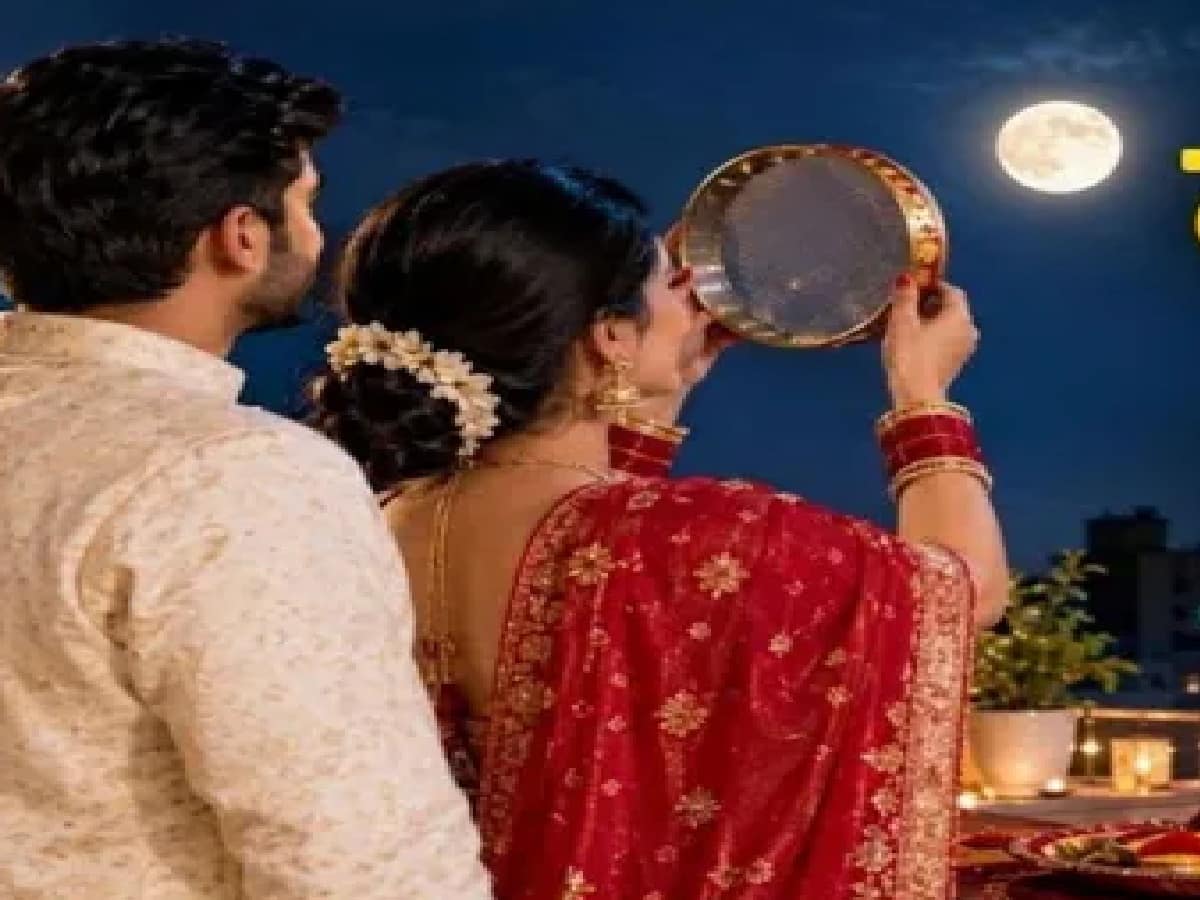
The spiritual observance of Karwa Chauth follows time-honored Vedic traditions that commence during the pre-dawn Brahma Muhurta with the consumption of Sargi—a nourishing meal traditionally gifted by mothers-in-law—after which women abstain completely from food and water throughout daylight hours. In the auspicious twilight hours, devotees gather to perform community puja and recite the traditional Karwa Chauth katha, invoking the divine blessings of Lord Shiva, Goddess Parvati, Lord Ganesha, and Karwa Mata for enduring marital harmony. The culmination of the fast arrives with the moon’s appearance, where women view the radiant moon through a traditional decorated sieve (chhalni), immediately followed by gazing upon their husband’s face through the same mesh. After presenting water offerings (Arghya) accompanied by sacred chants to the moon deity, the fast is ceremoniously broken as husbands offer their wives the first sip of water and a bite of consecrated sweet. Astrological authorities remind devotees that localized cloud cover, atmospheric haze, or high-rise urban density may cause brief optical delays, advising women observing the fast to coordinate with nearby temple sightings to perform their concluding rituals with peace of mind.




