







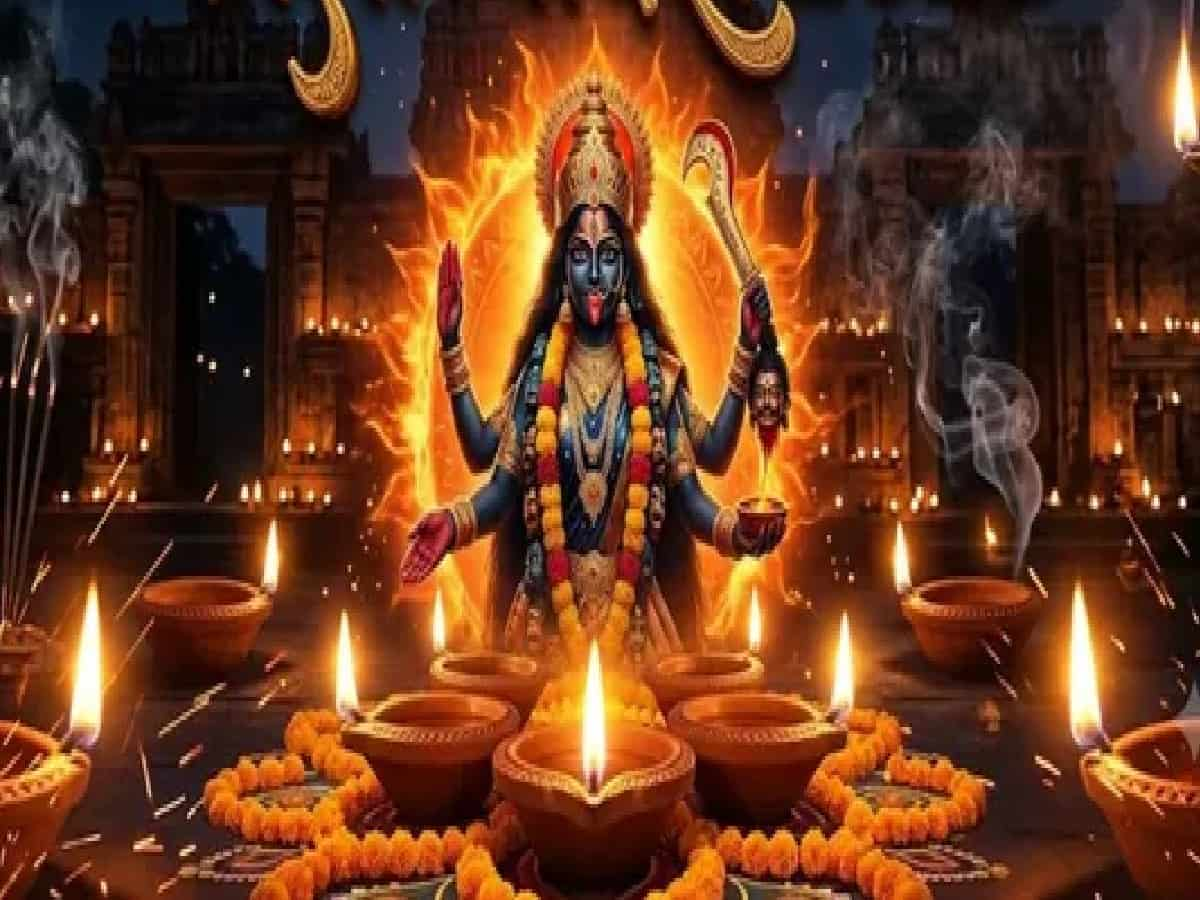
Kali Chaudas 2026: 5 Sacred Secrets of the Mystical Night From Yama’s Lamp
As the second sacred day of the five-day Diwali festival approaches, devotees across India are preparing to observe Kali Chaudas on Saturday, November 7, 2026. Falling on the Chaturdashi Tithi of the dark fortnight (Krishna Paksha) in the holy month of Kartik, this potent night—often celebrated alongside Naraka Chaturdashi—is revered as one of the most spiritually charged junctures in the Vedic calendar. Dedicated to the worship of Goddess Mahakali, Lord Krishna, Lord Hanuman, and Yamraj (the god of death and justice), the festival blends ancient scriptural lore with protective tantric traditions, transforming an otherwise ominous night into a powerful period for spiritual renewal, purification, and the eradication of negative cosmic energies.
Divine Triumph & Cleansing: The Cosmic Fury of Maa Kali and Krishna’s Holy Abhyanga Snan
The primary spiritual foundation of Kali Chaudas centers on the invocation of supreme feminine energy (Shakti) and the righteous destruction of demonic forces. According to classical scriptures, Goddess Mahakali manifested her fiercest form to annihilate the demon Raktabeej and restore cosmic order across the three realms, making this night exceptionally fruitful for devotees seeking freedom from deep-seated mental anxiety, chronic physical illness, and lingering fear. Simultaneously, the night commemorates Lord Krishna’s legendary victory over the tyrannical demon king Narakasura, liberating 16,000 captive women from captivity. To cleanse away the blood and fatigue of the battlefield, Lord Krishna was bathed with fragrant herbal pastes (ubtan) and consecrated oils before dawn, establishing the sacred custom of Abhyanga Snan—an auspicious pre-dawn therapeutic bath that devotees perform to cleanse worldly toxins and invite divine grace.
Yama's Lamp, Occult Shields, and Bajrangbali's Blessings: Neutralizing Fears and Planetary Malice
Beyond mythological victories, Kali Chaudas is distinguished by three potent esoteric traditions designed to protect households from harm, malevolent energies, and premature mortality. As dusk settles, families observe the age-old rite of lighting a dedicated four-wick oil lamp for Yamraj (Yama Deepam), which is placed outside the entrance facing south—the directional realm of death—to ward off the fear of accidental demise (Akal Mrityu) and bless family members with longevity. The midnight hours of Chaturdashi are also regarded as a cosmic shield against the evil eye, dark occult afflictions, and malevolent spiritual disturbances, where chanting protective mantras and performing home cleansing rituals effectively banish domestic negativity. Furthermore, across western states like Gujarat and Maharashtra, the day holds deep reverence for Lord Hanuman; devotees visit temples to offer vermilion (sindoor), mustard or sesame oil, and sacred robes (chola) to Bajrangbali, seeking the ultimate dispeller of crises (Sankat Mochan) to eradicate planetary doshas, chronic obstacles, and psychic fears before the dawn of Diwali.




