







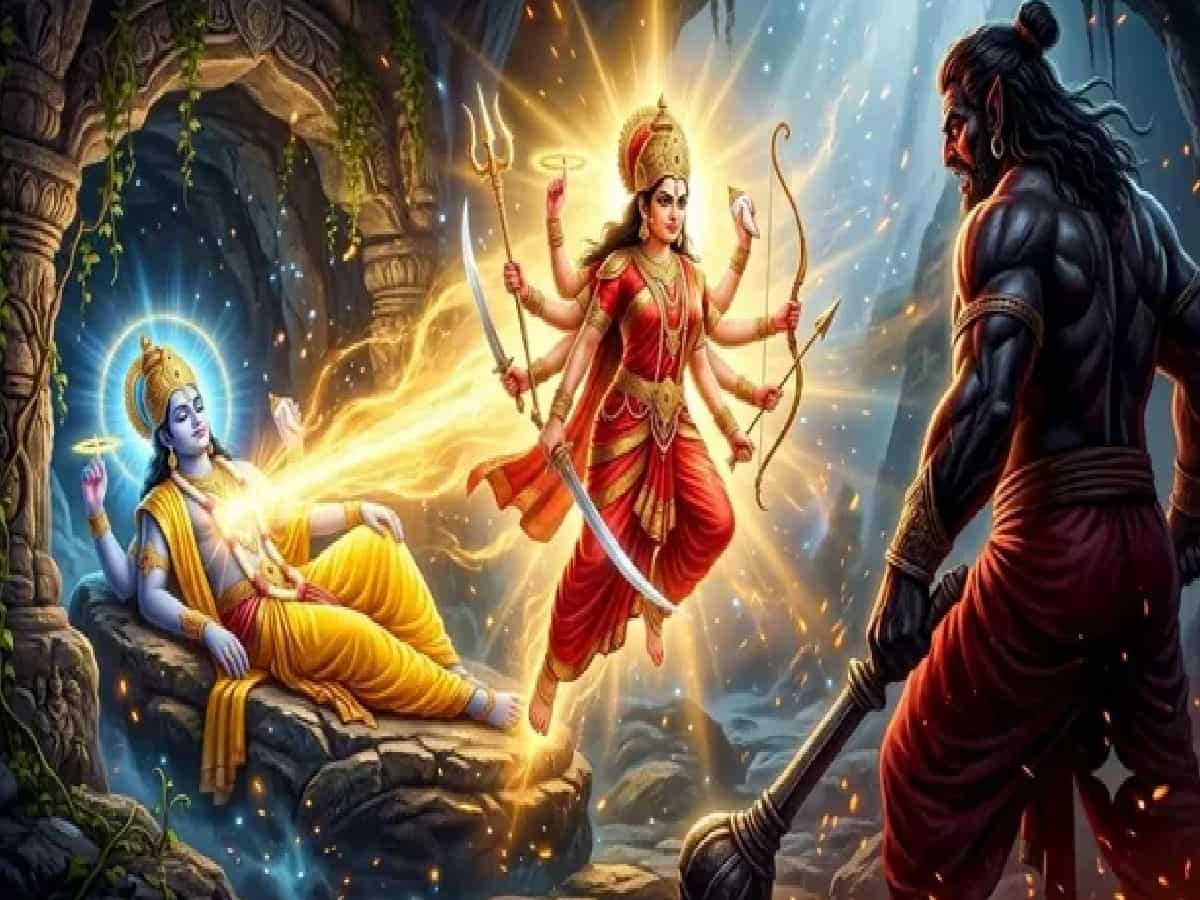
How Goddess Ekadashi Was Born From Lord Vishnu & Why Fasting Began
In Sanatana Dharma, Ekadashi is widely observed twice every lunar month—on the eleventh day (Tithi) of both the waning fortnight (Krishna Paksha) and the waxing fortnight (Shukla Paksha). Yet scriptural traditions reveal that Ekadashi is far more than a calendar date. According to sacred Hindu texts such as the Padma Purana (Uttara Khanda) and Brahma Purana, Ekadashi Devi is a radiant, weapon-wielding goddess who manifested directly from the divine body of Lord Vishnu to destroy the demon Murasura, establishing one of Hinduism's most revered fasting traditions.
Who Was Demon Mura and Why Did the Gods Seek Lord Vishnu's Help?
According to Puranic lore, during a distant cosmic age, a ferocious and arrogant demon named Mura (or Murasura) amassed immense strength and overran the celestial realms. Expelling Indra, the king of the heavens, along with the sun, wind, and fire deities from their heavenly abode, Mura disrupted sacred rituals across the three worlds.
-
Refuge in Mount Kailash and Vaikuntha: Driven from heaven and wandering the earth, Indra and the distressed deities first approached Lord Shiva for guidance, who advised them to seek the protection of Lord Vishnu—the supreme preserver of cosmic order (Dharma).
-
The battle at Chandravati: Answering the gods' prayers, Lord Vishnu mounted his celestial eagle Garuda and marched to Mura's capital city of Chandravati. While Vishnu's Sudarshana Chakra decimated Mura's vast demon armies, Murasura himself fought relentlessly—both with celestial weapons and in bare-handed combat—for thousands of divine years.
How Goddess Ekadashi Emerged From the Body of Lord Vishnu
After centuries of continuous combat, Lord Vishnu withdrew to Badarikashram in the Himalayas, entering a serene, cavernous sanctuary known as the Himavati cave to rest in divine slumber (Yoganidra). Seeing Vishnu asleep inside the cave, the vengeful demon Mura crept silently toward him with raised weapons, intending to strike down the preserver of the universe while he rested.
At that decisive moment, a dazzling burst of spiritual radiance erupted from Lord Vishnu's body, taking the form of a resplendent young maiden armed with divine celestial missiles and weapons. Embodying Vishnu's own transcendental protective energy (Shakti), the goddess challenged Murasura before he could touch the sleeping Lord. A fierce duel ensued inside the cavern, culminating when the luminous goddess shattered Mura's chariot and weapons, slaying the tyrant and reducing his power to ashes.
Why the Tradition of Observing the Ekadashi Fast Began
When Lord Vishnu awakened from his slumber and saw the slain body of Murasura lying before the radiant maiden, he was deeply moved by her valor and devotion. Because she had manifested on the eleventh lunar day of the waning moon in the month of Margashirsha (celebrated every year as Utpanna Ekadashi), Lord Vishnu named her Ekadashi and invited her to ask for any boon.
| Scriptural Aspect | Details in Puranic Tradition |
| Primary Scriptural Source | Padma Purana (Uttara Khanda, Chapter 38) & Brahma Purana |
| Place of Manifestation | Himavati Cave in Badarikashram (Himalayas) |
| Demon Defeated | Murasura (ruler of Chandravati) |
| Appearance Day | Utpanna Ekadashi (Margashirsha Krishna Paksha) |
| Traditional Fast Breaking (Parana) | Next morning on Dwadashi (12th lunar day) within prescribed window |
Rather than asking for personal sovereignty or celestial luxuries, Goddess Ekadashi requested a blessing for all humanity: that whoever observes a disciplined fast with sincerity and devotion on the eleventh lunar day be absolved of past and present sins, shielded from worldly suffering, and granted spiritual liberation (Moksha) in Lord Vishnu's abode. Granting her wish immediately, Lord Vishnu declared Ekadashi the holiest of all lunar days.
Spiritual Significance of Ekadashi Vrat Today
Across temple towns and households in Varanasi, Ayodhya, Mathura-Vrindavan, Lucknow, Pandharpur, Tirupati, and throughout India, millions of devotees observe the 24 (or 26 during an Adhik Maas leap month) annual Ekadashi fasts by abstaining from grains and rice, chanting Vishnu Sahasranama, and breaking the fast (Parana) on the following Dwadashi morning. Beyond scriptural merit, spiritual teachers emphasize that the bi-monthly fast cultivates self-discipline, mental clarity, and gratitude—honoring the divine feminine energy born from Lord Vishnu to safeguard Dharma.




