







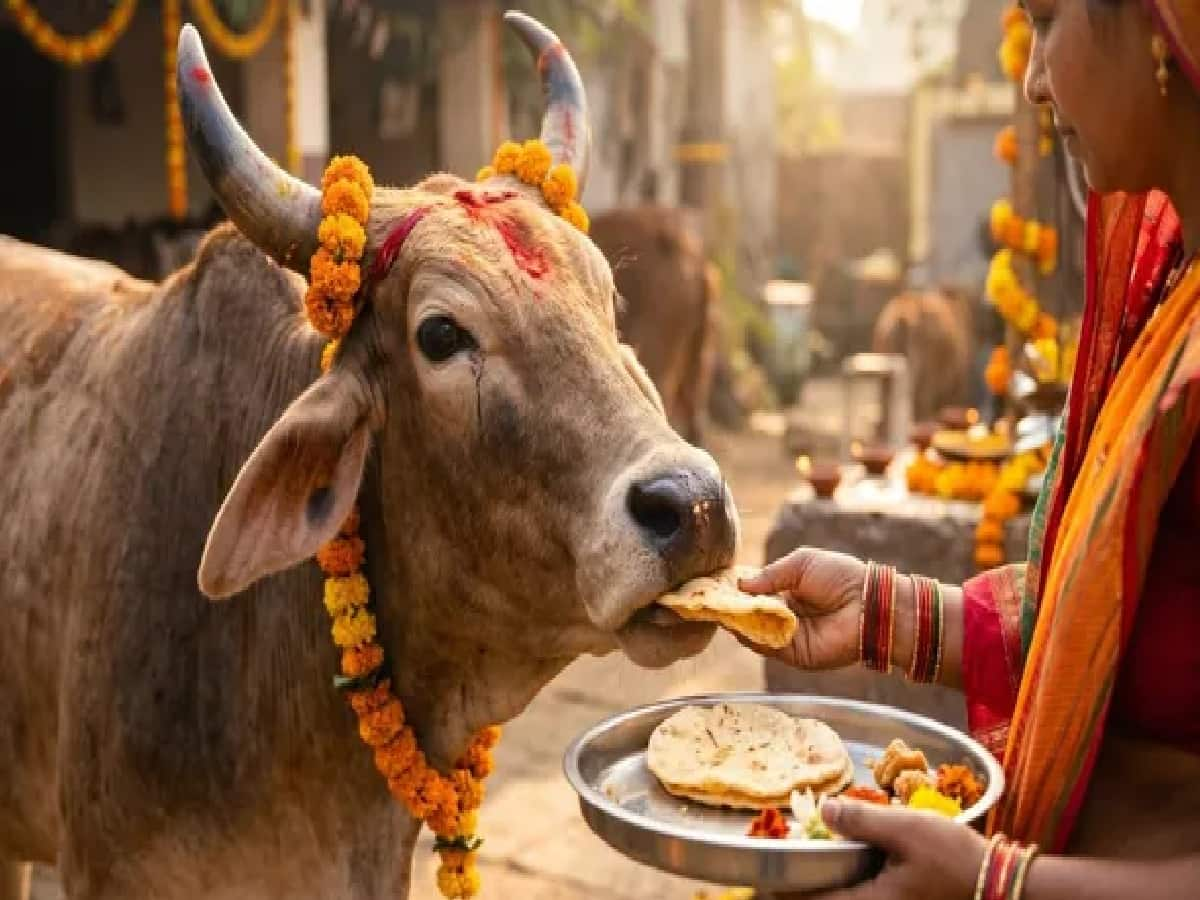
Feeding the First Morsel to a Cow is the Ultimate Remedy for Debt Relief and Wealth
While shoppers flock to purchase gold, silver, and utensils on Dhanteras (Friday, November 6, 2026), scriptures reveal that offering the first freshly made roti to a cow invokes the blessings of 33 deities, pleases Goddess Lakshmi, and provides spiritual relief from financial debt when accompanied by the sacred 'Om Surabhaye Namah' chant.
In millions of households across India, a sacred ritual has endured for generations: the first freshly baked wheat flatbread (roti) prepared in the morning hearth is never consumed by the family, but lovingly set aside and offered to a cow. In Sanatan Dharma, serving and nourishing any living creature stands as the highest embodiment of righteous living (dharma), yet offering that very first morsel to a cow carries unmatched metaphysical significance during the festive threshold of Dhanteras, which falls on Friday, November 6, 2026. While festival crowds traditionally focus on purchasing auspicious items—such as gold, silver, brass and copper vessels, festive brooms, and household valuables—scriptural masters underline that material acquisition remains spiritually incomplete without practicing Gau Seva. Regarded as an eternal emblem of divine motherhood, selflessness, and universal nourishment, the cow is worshipped as a living representative of cosmic abundance, ensuring that households who honor her receive the lasting favor of Goddess Lakshmi alongside holistic family well-being.
The Abode of 33 Deities: Why Gau Seva Outweighs Material Shopping on Dhanteras
According to Vedic philosophy, the cow is not viewed merely as a domesticated animal, but as a living sanctuary in which 33 primary categories of divine deities reside. Consequently, honoring and feeding a cow on the auspicious occasion of Dhantrayodashi is believed to simultaneously invoke the collective grace and protective goodwill of every celestial divinity. In Hindu cosmology, the cow is revered as a direct earthly manifestation (swaroop) of Goddess Mahalakshmi herself. While the standard ceremonial protocols of Dhanteras focus on performing elaborate rituals for Goddess Lakshmi and Lord Kubera to draw liquidity and economic security into the home, performing Gau Seva serves as an energetic catalyst that magnifies the spiritual efficacy of those prayers. Ancient texts specifically note that feeding a cow with genuine reverence acts as a potent astrological and karmic remedy (upay) to dissolve longstanding economic blockages and relieve families from debilitating financial debt (rin mukti).
From Samudra Manthan's Kamadhenu to Debt Clearance: Chanting 'Om Surabhaye Namah'
The sacred lineage of the bovine form traces directly to ancient Vedic literature, where cows are classified as Dhenu and elevated to an Adhidevik (spiritually elevated) status. When the divine beings and cosmic forces churned the celestial ocean during the primordial Samudra Manthan, one of the fourteen divine treasures (ratnas) that manifested was Kamadhenu, the wish-fulfilling cow capable of granting every virtuous aspiration. Scriptural guidelines advise devotees that while offering the first morsel of fresh roti, green fodder, or clean grains on Dhanteras, they should consciously recite the potent Vedic mantra: "Om Surabhaye Namah". Chanting this sacred vibration while serving Mother Cow is believed to neutralize chronic domestic distress, dissolve hardships, and open enduring pathways for personal and professional advancement, reinforcing that the highest wealth on Dhanteras lies in the compassionate service of living divinity.




