







Dhanteras 2026:13 Lamps from Yama Deepam to Kubera and Where to Place Them
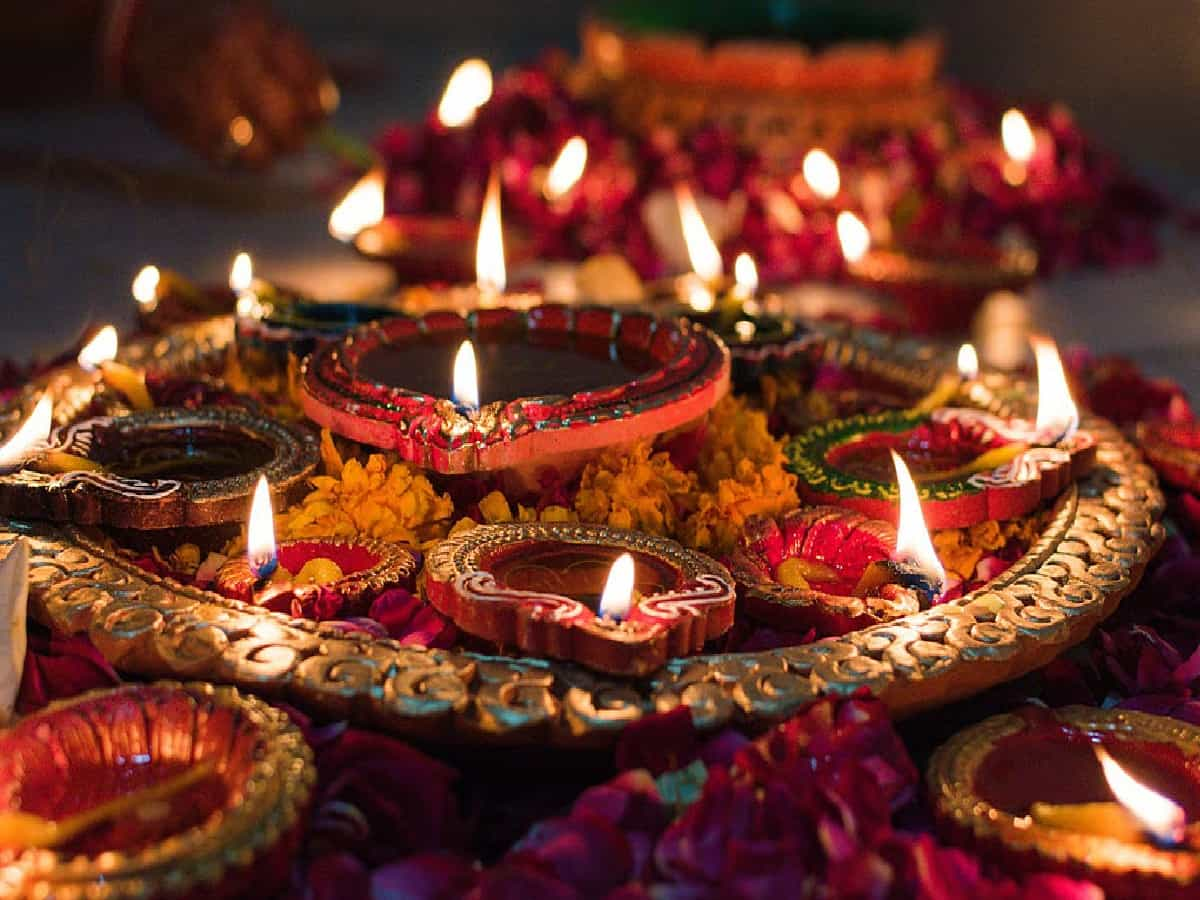
Celebrated two days prior to Diwali during the auspicious month of Kartika, the festival of Dhanteras, also known as Dhantrayodashi, marks the divine manifestation of Lord Dhanvantari, the supreme deity of Ayurveda and healing who emerged from the cosmic churning of the ocean (Samudra Manthan) bearing the sacred pot of immortal nectar (Amrit Kalash). While the day is widely renowned for purchasing precious metals and utensils to usher in material wealth, the most vital spiritual observance of the festival centers on the ancient ritual of illuminating 13 sacred earthen lamps (diyas). Deeply intertwined with the solemn practice of "Yama Deepam," this centuries-old lighting ceremony serves as a powerful protective shield designed to eliminate "Apamrityu" (the fear of premature or untimely death) while invoking longevity, physical vitality, and holistic well-being for every member of the household. Falling precisely on the Trayodashi Tithi of the Krishna Paksha, the illumination of these 13 points ensures that every shadowy corner of the residence is infused with divine radiance ahead of the grand Deepavali festivities.
Spiritual Significance: Yama Deepam, 13 Vital Pranas, and the Lunar Cycle
The esoteric significance of the number 13 on Dhanteras extends far beyond simple date alignment, carrying profound astronomical and metaphysical symbolism. Traditionally, each of the 13 lamps corresponds to one of the 13 lunar months of the Hindu calendar year—including the intercalary Adhik Maas—symbolizing unbroken spiritual guardianship over the family across all seasons. Furthermore, ancient texts link these 13 flames to the 13 vital life forces (Pranas) operating within the human body, acting as a spiritual alignment that harmonizes the microcosm of the self with cosmic energies. At the nucleus of this sacred constellation rests the paramount "Yama Deepam," a solitary lamp dedicated to Lord Yama, the god of death and justice. Positioned as the central spiritual anchor of the ritual, this foundational lamp is lit with unwavering faith to appease Lord Yama, neutralize malefic karmic burdens, and grant the household divine immunity against fatal afflictions and unexpected tragedies.
Auspicious Placements: The Sacred 13-Point Vastu Map Across the Household
To harness the full spectrum of metaphysical benefits, scriptures prescribe precise household coordinates for each of the 13 lamps, creating an impenetrable grid of spiritual and material abundance. The pivotal first lamp must be placed in the south direction of the home dedicated directly to Lord Yama to ward off fatal hazards. The second lamp is traditionally positioned outside the perimeter near the trash and waste disposal zone, a deliberate placement intended to subdue decaying influences and eliminate the looming fear of untimely demise. The third lamp belongs at the threshold of the primary entrance door, serving as a radiant beacon to invite incoming Prana and auspicious cosmic energies into the living quarters. The fourth lamp is reserved for the holy Tulsi (basil) plant to secure the permanent abode of Goddess Lakshmi within the family. To diminish the malefic astrological influence and shadow effects of Rahu, the fifth lamp is set upon the terrace or open rooftop of the residence. The sixth lamp is illuminated directly inside the home's Puja room or altar, activating the joint blessings of Goddess Lakshmi and Lord Kubera for perpetual liquidity and material prosperity.
The remaining sequence strategically anchors ancestral, natural, and elemental protections across the domestic boundary. The seventh lamp must be lit beneath a nearby sacred Peepal tree to ensure the protective benevolence of departed ancestors (Pitrus) remains intact. The eighth lamp is kept inside the storeroom or granary, a remedial placement designed to purge residual negative energy and eradicate domestic poverty (Daridrata). The ninth lamp is positioned immediately outside the washroom or bathroom boundary to contain and suppress stagnant vibrations. The tenth lamp is aligned near the primary windows and ventilation openings, scattering positive light across domestic passages. The eleventh lamp finds its home beneath a sacred Bel (Bael) tree to invoke the protective grace of Lord Shiva. The twelfth lamp is placed at the absolute geographical center of the residence—the sacred Brahmasthan—to dissolve internal conflict and foster deep interpersonal harmony among relatives. Finally, the thirteenth lamp is established in the sacred northeast corner (Ishanya Kona), the sanctum of the divine that invites the collective blessings of all celestial deities, ensuring the household remains enveloped in unyielding peace, health, and spiritual fortune throughout the coming year.




