







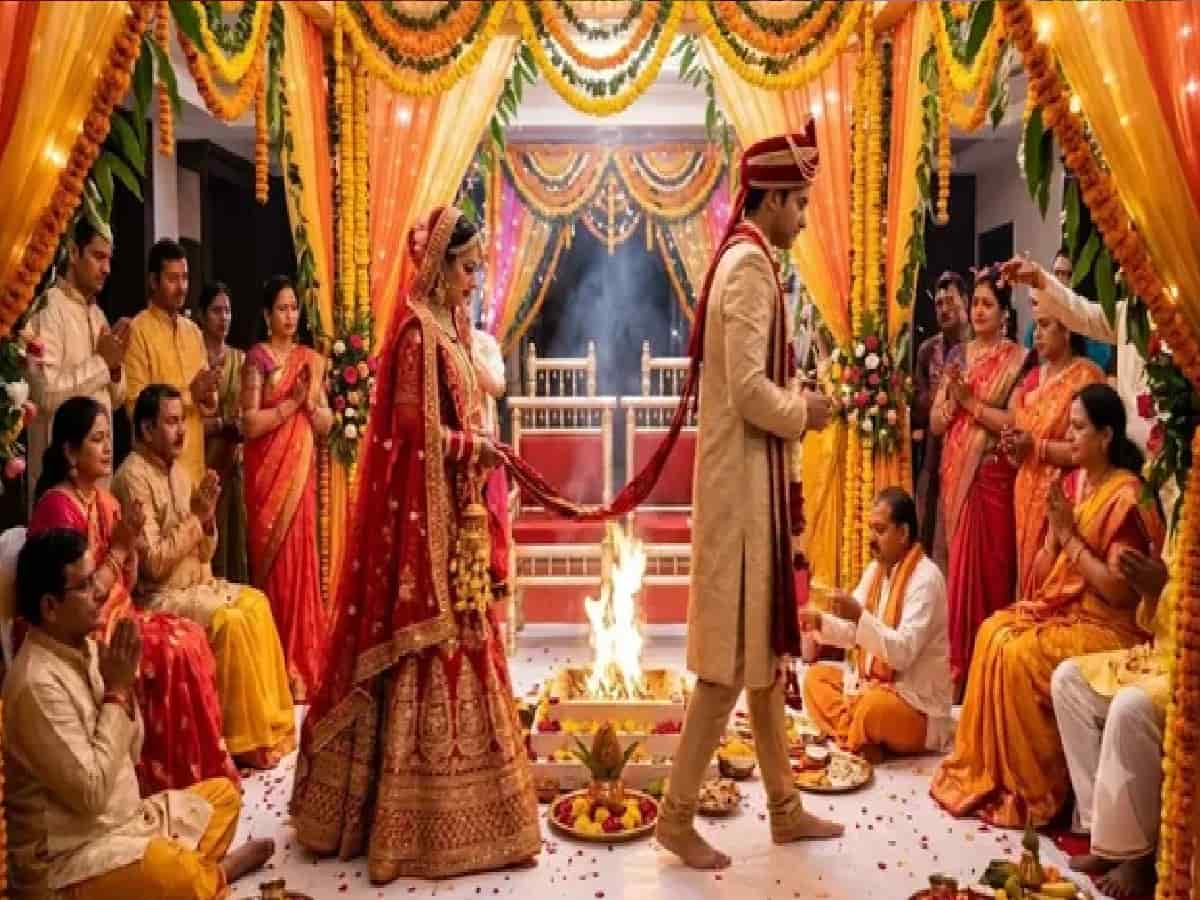
Devuthani Ekadashi 2026: Why Weddings Resume as Lord Vishnu Awakens
Across India, wedding bands are tuning up, banquet halls are glowing with marigold garlands, and household courtyards are echoing with traditional mangal geet as Devuthani Ekadashi—also revered in Hindu scriptures as Devotthan Ekadashi and Devprabodhini Ekadashi—ushers in the auspicious Hindu wedding and festive season on November 20 and November 21, 2026. Celebrated annually during the bright fortnight (Shukla Paksha) of the holy month of Kartik, this sacred eleventh lunar day holds unparalleled spiritual importance because it marks the cosmic awakening of Lord Vishnu from His four-month yogic slumber (Yoga Nidra) in the Kshirsagar (Ocean of Milk), formally bringing the four-month sacred retreat of Chaturmas to a close. According to the Vedic Panchang, Kartik Shukla Ekadashi Tithi commenced at 7:15 AM on Friday, November 20, 2026 and concluded at 6:31 AM on Saturday, November 21, 2026—meaning Smarta householders observed the fast on November 20 while Vaishnava traditions mark the observance on November 21 alongside Tulsi Vivah. With Lord Vishnu—the cosmic preserver and primary witness to all Vedic sacraments—resuming active governance of the universe, centuries-old Hindu custom reopens the calendar for marriages (Vivah), housewarmings (Griha Pravesh), sacred thread ceremonies (Upanayana), and tonsure rites (Mundan) that remain paused throughout Chaturmas. For families planning winter weddings, temple priests, astrologers, and devotees across Kanpur, Unnao, Lucknow, Ayodhya, Varanasi, Prayagraj, Mathura, Patna, and New Delhi, understanding both the scriptural rationale behind Chaturmas and the symbolic inauguration of the wedding season through Tulsi Vivah illuminates one of Sanatan Dharma's richest living traditions.
Devuthani Ekadashi 2026: Panchang Timings, Chaturmas Cycle & Auspicious Resumptions
To bring together the exact lunar timings for Devuthani Ekadashi 2026, the cosmic timeline from Devshayani Ekadashi to Devprabodhini Ekadashi, and the specific ceremonies that resume once Chaturmas concludes, the tables below summarize the verified scriptural and Panchang details:
Devuthani Ekadashi 2026 Panchang & Observance Windows
| Panchang / Observance Detail | Verified Date & Timing (IST — Nov 2026) | Scriptural & Ritual Context |
| Kartik Shukla Ekadashi Tithi | Begins: Nov 20, 2026 at 7:15 AM | Ends: Nov 21, 2026 at 6:31 AM | Governs Devuthani / Devotthan / Devprabodhini Ekadashi across North and Central India. |
| Smarta vs. Vaishnava Observance | Smarta Fast: Friday, Nov 20 (Parana Nov 21, 1:11 PM–3:18 PM) | Vaishnava Fast: Saturday, Nov 21 (Parana Nov 22, 6:49 AM–8:56 AM) | Reflects traditional Panchang rules governing sunrise Tithi and Hari Vasara intervals. |
| Four-Month Chaturmas Cycle | Begins on Ashadha Shukla Ekadashi (Devshayani Ekadashi) and concludes on Kartik Shukla Ekadashi (Devuthani Ekadashi) | Marks the four monsoon-to-autumn months when Lord Vishnu rests in Yoga Nidra and Lord Shiva oversees cosmic order. |
| Tulsi Vivah Inaugural Ceremony | Celebrated on Kartik Shukla Dwadashi (Saturday, Nov 21, 2026) | The ceremonial marriage of Mata Tulsi and Lord Shaligram symbolically opens the marriage season for households. |
Why Auspicious Ceremonies Pause in Chaturmas and Resume After Devuthani Ekadashi
| Dimension | During Chaturmas (4 Months) | After Devuthani Ekadashi (Nov 20–21, 2026 Onward) |
| Cosmic Role of Lord Vishnu | Lord Vishnu enters Yoga Nidra in the Kshirsagar; because He is the divine witness and sustainer of marital vows, major samskaras are deferred. | Lord Vishnu awakens (Prabodhini), blessing newlyweds and new beginnings with stability, dharma, and prosperity. |
| Astrological & Muhurat Status | Traditional Hindu Panchangs list zero Vivah Muhurats during Chaturmas; emphasis shifts to fasting, japa, charity, and inward spiritual discipline. | Auspicious Vivah, Griha Pravesh, Mundan, and Upanayana dates reopen across Kartik, Margashirsha, Magha, and Phalguna. |
| Traditional Household Custom | Families focus on sattvic living, scripture recitation, and seasonal restraint during the monsoon months. | Families draw sacred footprints (charan) of Lord Vishnu at dawn, blow conches, and celebrate Tulsi Vivah before hosting family weddings. |
Mythological Significance: From Devshayani Ekadashi to Lord Vishnu's Awakening
In Hindu cosmology, the four-month cycle between Ashadha Shukla Ekadashi (Devshayani Ekadashi) and Kartik Shukla Ekadashi (Devuthani Ekadashi) aligns spiritual life with both seasonal rhythms and divine lore. According to the Puranas, after vanquishing the demon Shankhasura and honoring the devotion of King Bali, Lord Vishnu retreats to the Kshirsagar for four months of restorative Yoga Nidra, entrusting universal administration to Lord Shiva during the monsoon season (Chaturmas). Because Lord Vishnu is the preserver of cosmic harmony and the sacred witness invoked at every Vedic marriage altar—where the groom and bride are revered as embodiments of Lakshmi-Narayana—Hindu scriptures instruct that weddings, housewarmings, and grand worldly celebrations should wait until the Lord awakens. When Devuthani Ekadashi arrives in Kartik, devotees clean their courtyards, draw Lord Vishnu's symbolic footsteps with rice paste and vermilion, ring temple bells, and chant "Utho Deva, Baitho Deva" to welcome His awakened grace back into household life.
How Tulsi Vivah Symbolically Opens the Hindu Wedding Calendar
Immediately following Devuthani Ekadashi, families perform Tulsi Vivah on Kartik Shukla Dwadashi (November 21, 2026)—solemnizing the celestial wedding of Goddess Tulsi and Lord Shaligram beneath a canopy of fresh sugarcane stalks. In North Indian tradition across Uttar Pradesh, Bihar, Madhya Pradesh, and Rajasthan, this divine wedding serves as the ceremonial first marriage of the year; once Mata Tulsi and Lord Shaligram are united in holy matrimony, families consult astrologers for auspicious Vivah Muhurats and commence wedding celebrations across towns and villages. Even after Devuthani Ekadashi, elders and priests verify planetary positions and lagna timings so that every marriage begins under the combined blessings of Lord Vishnu and Goddess Lakshmi.




