







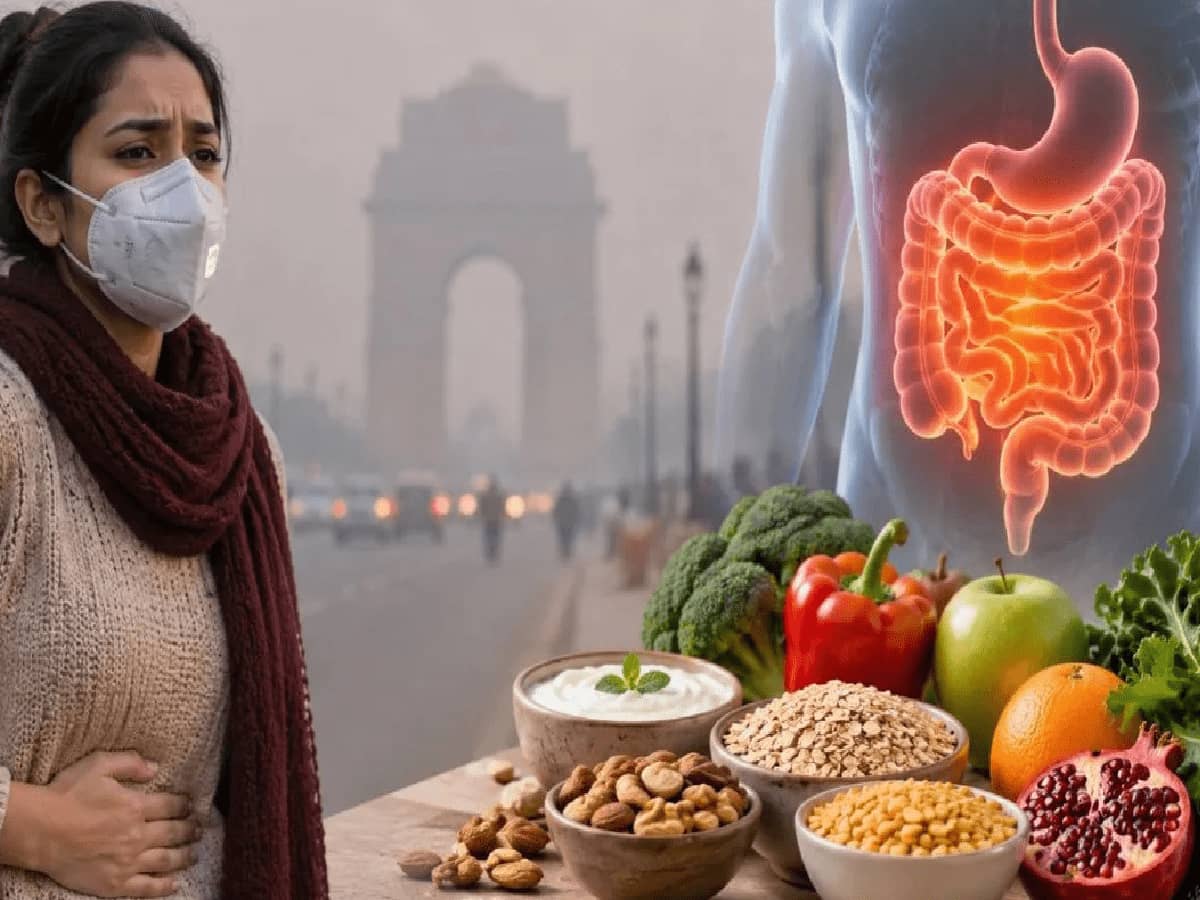
Can Delhi's Toxic Air Affect Your Gut Health
Every winter, worsening air quality across the Indo-Gangetic plain—from Delhi-NCR to major urban hubs across Uttar Pradesh including Kanpur, Lucknow, and Unnao—immediately brings coughing, wheezing, throat irritation, and stinging eyes into sharp focus. Yet medical researchers are increasingly looking past the lungs to ask a deeper question: can breathing polluted air also disrupt the digestive system, alter gut bacteria, and trigger intestinal inflammation? While scientific investigation into the airway-to-gut link is expanding rapidly, specialists emphasize that current findings point to plausible biological pathways rather than proven direct causation in everyday human exposure.
Dr. Sandip Banerjee, founder of Pelvinic Micro-Hospital in New Delhi and a senior specialist in laparoscopic colorectal surgery, proctology, and bariatric surgery, notes that early data suggests environmental pollution may interact with digestive wellness, though researchers are still working to establish the exact scale of its impact on people.
How Inhaled Particulate Matter Reaches Beyond the Lungs
Most discussions around hazardous air center on PM2.5—microscopic particulate matter capable of penetrating deep into the respiratory tract, where it triggers localized inflammation and oxidative stress. However, the respiratory and digestive tracts are physically connected through mucociliary clearance. When airway mucus traps inhaled pollutants and is subsequently cleared from the throat and swallowed, tiny particulate matter can enter the gastrointestinal tract.
As Dr. Banerjee explains, swallowed mucus can carry particulate pollutants into the digestive system, prompting scientists to investigate how those particles interact with the intestinal environment. Exactly how much everyday urban air exposure alters human intestinal function remains an active subject of clinical study.
Can Air Pollution Alter the Human Gut Microbiome?
The human gut houses trillions of microorganisms—collectively known as the gut microbiome—that support digestion, immune regulation, and metabolic balance. Research exploring whether air pollution shifts this microbial ecosystem has yielded intriguing, though still preliminary, clues. A 2023 systematic review analyzing 48 studies observed that human observational data frequently pointed to associations between particulate air pollution exposure and measurable shifts in gut microbial diversity and composition.
Still, Dr. Banerjee urges caution when interpreting those findings. Results varied noticeably across individual studies, and a large share of the mechanistic evidence comes from animal experiments rather than controlled human trials—making it premature to conclude precisely how ambient urban smog reshapes the human gut under day-to-day living conditions.
Intestinal Inflammation and Gut Barrier Integrity
One leading hypothesis connecting polluted air to gastrointestinal health involves oxidative stress and low-grade inflammation. Experimental research suggests that exposure to particulate pollutants may irritate the delicate intestinal lining—the protective mucosal barrier that keeps harmful microbes and toxins inside the digestive tract while allowing nutrients into the bloodstream.
According to Dr. Banerjee, researchers are examining whether pollution-linked stress on the intestinal barrier could contribute to broader inflammatory signaling in the body. While these cellular mechanisms appear biologically plausible in laboratory settings, their real-world clinical weight for residents living through seasonal smog episodes is still being clarified.
Exploring the Link Between Gut Health and Metabolic Outcomes
Several observational studies have also reported statistical links between long-term air pollution exposure, alterations in gut bacteria, and metabolic markers such as impaired glucose regulation. Scientists are investigating whether changes in the gut microbiome might serve as an intermediate pathway between environmental pollutants and metabolic disorders.
At the same time, Dr. Banerjee stresses that real-world populations are shaped by overlapping variables—including dietary patterns, physical activity levels, socioeconomic conditions, medication use, and pre-existing medical issues. Because of these confounding factors, observational associations do not prove that pollution-induced gut shifts directly cause diabetes or other chronic illnesses.
Practical Dietary Habits to Support Gut Health During Smog Season
While no specific food, drink, or supplement has been scientifically proven to "detoxify" the body or neutralize inhaled air pollution, maintaining a steady, nutrient-dense diet helps keep digestion resilient during heavy smog months. Dr. Banerjee outlines four straightforward everyday habits to support digestive health:
-
Prioritize Dietary Fiber: Include fresh vegetables, seasonal fruits, whole grains, dal, and legumes to nourish beneficial gut bacteria.
-
Add Healthy Fats: Incorporate nuts, seeds, and wholesome dietary fats to support balanced nutrition.
-
Include Fermented Dairy if Tolerated: Plain curd (dahi) or yogurt can contribute helpful probiotic cultures for those who digest dairy comfortably.
-
Stay Hydrated and Eat on Schedule: Drinking adequate water throughout the day and maintaining regular meal timings help keep bowel motility steady.
Ultimately, emerging science suggests that toxic air may have wider physiological ripples than once realized, bringing the gut microbiome and intestinal lining into sharper focus. Until human research matures further, pairing sensible pollution precautions—such as wearing well-fitted masks outdoors on high-AQI days—with consistent, fiber-rich eating remains the most grounded way to protect both respiratory and digestive health.




