







Chhath Puja 2026 Sandhya Arghya: Check City-Wise Sunset Timings Today
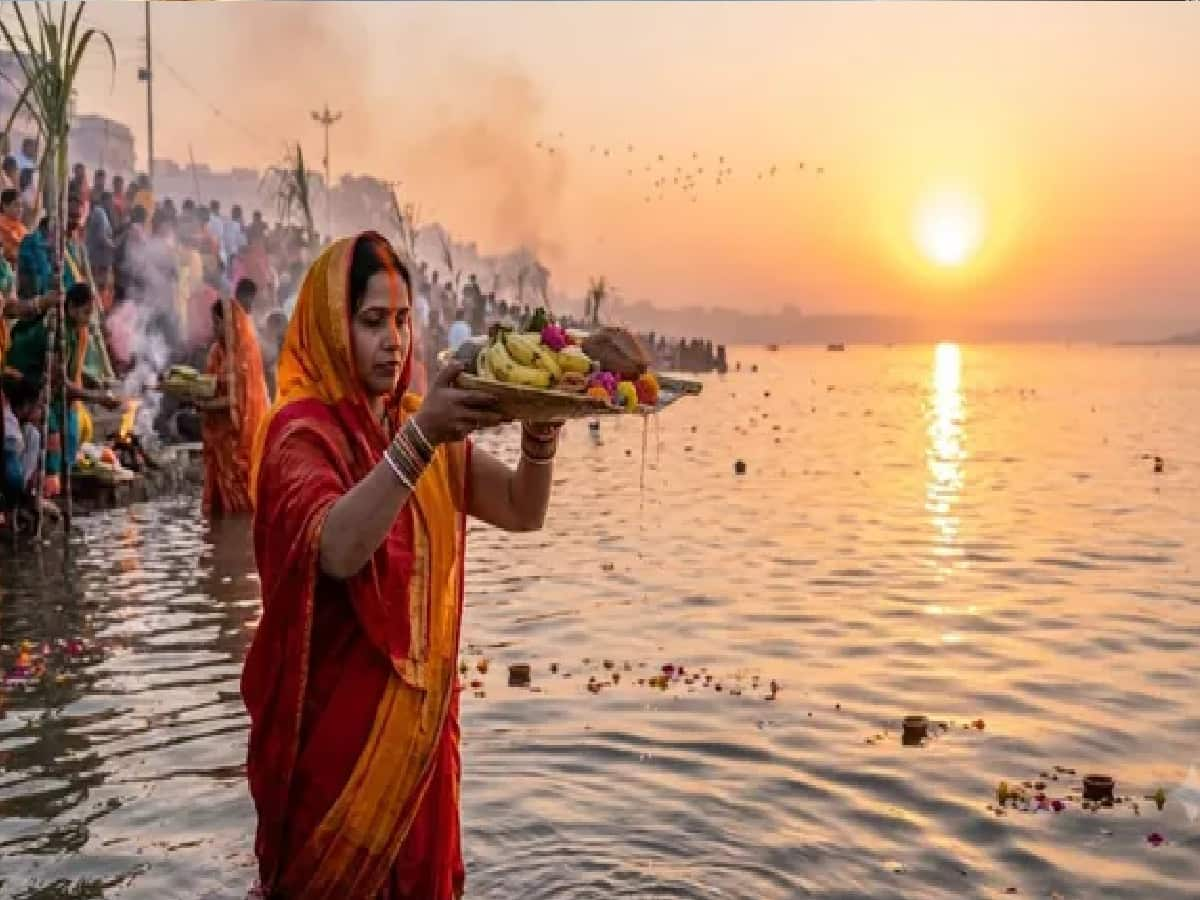
Across riverbanks, ponds, and neighborhood ghats decorated with earthen lamps and sugarcane arches, millions of fasting devotees (vratis) are gathering today—Sunday, November 15, 2026—to observe Sandhya Arghya, the sacred third day of the four-day Chhath Mahaparva. Rooted in ancient Vedic gratitude toward Surya Dev (the Sun God) and Chhathi Maiya, Chhath Puja is the only major festival in which devotees offer prayers not only to the rising sun, but also to the setting sun—honoring the complete cycle of life, humility, and renewal. On this auspicious evening, fasting women and men stand waist-deep in sacred waters to offer arghya with water and raw cow's milk while praying for the long life, good health, and prosperity of their children and families. Because exact sunset timings shift from east to west across northern and eastern India, the precise moment to offer Sandhya Arghya varies by several minutes from city to city. For families, devotees, and festival participants across Lucknow, Gorakhpur, Varanasi, Kanpur, Jaunpur, Patna, Gaya, Chhapra, Motihari, Darbhanga, Ranchi, Dhanbad, and New Delhi, knowing the accurate local sunset time ensures every ritual is performed at the most auspicious moment.
Chhath Puja 2026 Sandhya Arghya: City-Wise Sunset Timings (November 15, 2026)
According to regional panchang and astronomical sunset schedules for Sunday, November 15, 2026, cities in Bihar and Jharkhand experience sunset roughly 15 to 30 minutes earlier than cities in Uttar Pradesh and the National Capital Region. Devotees are advised to reach their local ghat well ahead of dusk so that all offerings are arranged neatly before sunset begins:
| City / Region | State | Sandhya Arghya Sunset Timing (Nov 15, 2026) |
| Darbhanga | Bihar | 4:57 PM |
| Dhanbad | Jharkhand | 4:59 PM |
| Motihari | Bihar | 5:00 PM |
| Patna | Bihar | 5:01 PM |
| Chhapra | Bihar | 5:02 PM |
| Gaya | Bihar | 5:03 PM |
| Ranchi | Jharkhand | 5:04 PM |
| Varanasi | Uttar Pradesh | 5:10 PM |
| Jaunpur | Uttar Pradesh | 5:11 PM |
| Lucknow | Uttar Pradesh | 5:16 PM |
| Gorakhpur | Uttar Pradesh | 5:19 PM |
| Kanpur | Uttar Pradesh | 5:19 PM |
| New Delhi | Delhi NCR | 5:28 PM |
(Note: Local visibility may vary by 1–2 minutes depending on riverbank elevation and weather conditions; devotees are encouraged to arrive at the ghat at least 30 to 45 minutes prior to sunset.)
Sacred Significance of Offering Arghya to the Setting Sun
Chhath Puja unfolds across four disciplined days: Nahay-Khay, Kharna, Sandhya Arghya (Surya Shashthi), and Usha Arghya (Parana). While most religious traditions focus exclusively on sunrise, offering Sandhya Arghya to the setting sun carries a profound philosophical message—teaching humanity to express gratitude even during moments of decline or transition, with full faith that every sunset prepares the way for a radiant dawn.
Religious scholars note that worshipping Lord Surya alongside Chhathi Maiya on the evening of Kartik Shukla Shashthi is believed to remove familial obstacles, bless households with peace and abundance, and safeguard the well-being and longevity of children.
Essential Rituals and Ghat Safety Guidelines for Evening Prayers
Preparations for Sandhya Arghya begin at dawn inside devotee households, where traditional thekua, rice laddoos (kasar), fresh sugarcane stalks, coconut, bananas, turmeric, ginger, and seasonal fruits are lovingly arranged inside handwoven bamboo baskets (daura) and winnowing trays (soop). As late afternoon approaches, entire families walk together toward the ghat while singing timeless folk melodies dedicated to Chhathi Maiya.
At the water's edge, devotees light earthen diyas, enter the water barefoot with pure thoughts, and offer arghya of water and milk toward the descending sun while meditating on Chhathi Maiya's grace. Alongside maintaining strict ritual cleanliness (pavitrata), devotees and accompanying family members should observe basic water-safety precautions at crowded riverbanks—staying within designated barricaded zones, keeping children closely supervised near deep water, and ensuring earthen lamps are placed safely along the steps.




