







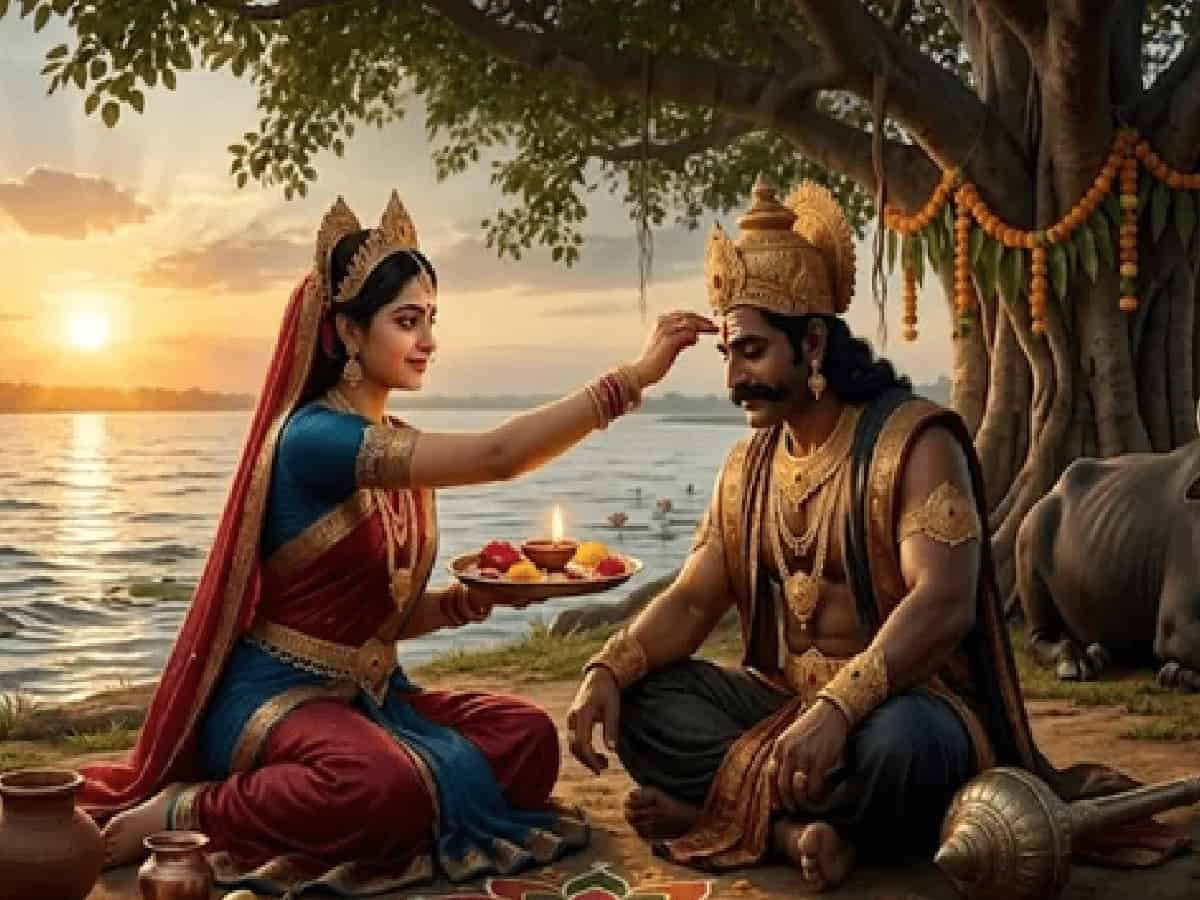
Bhai Dooj 2026: Why Yamraj and Yamuna's Meeting Protects Brothers
The five-day festival of lights reaches its emotional conclusion on Wednesday, November 11, 2026, with the nationwide celebration of Bhai Dooj. Known scripturally across the Indian subcontinent as Yama Dwitiya, this festival falls on the second lunar day (Dwitiya Tithi) of the bright waxing fortnight (Shukla Paksha) in the sacred month of Kartik. While commercial festivities often center on gifting and family feasts, the foundational essence of this holiday lies in a story of sibling devotion between Yamaraj, the cosmic deity of justice and death, and his sister, the holy river goddess Yamuna.
Observed with deep devotion in states from Uttar Pradesh and Bihar to Maharashtra (where it is celebrated as Bhav Bij) and West Bengal (as Bhai Phonta), the day honors the spiritual bond that shields brothers from premature demise. Puranic texts reveal that the ritual of a sister applying a vermilion mark on her brother’s brow is not merely a gesture of affection; it is a spiritual invocation rooted in an ancient promise granted by the lord of death himself. On this auspicious tithi, sisters prepare feasts and pray for their brothers' longevity, reenacting the divine hospitality that once moved Yamaraj to grant immortality from untimely perils.
The Mythological Chronicle: When Yamaraj Finally Visited Sister Yamuna
The legend of Bhai Dooj begins with the divine parentage of Yamraj and Yamuna, both born to Suryadev, the Sun God, and his celestial consort Saranyu (also known as Sanjna). The siblings shared an affectionate bond during their heavenly youth, but as their cosmic duties manifested, physical distance widened between them. Yamaraj took charge of the realm of Yamaloka to govern the departed and administer the laws of karma, while Yamuna descended to the earthly plane, flowing as a sacred river to purify humanity of sins.
Despite her brother's stern responsibilities, Yamuna constantly yearned for his company. She frequently dispatched messages to Yamaloka, lovingly inviting Yamaraj to visit her riverside abode and partake in a meal prepared by her own hands. Bound by the continuous demands of his duties, the lord of death postponed his journey time and time again. However, on the second day of the bright fortnight of Kartik, Yamaraj decided to leave his throne and surprised his sister by arriving unannounced at her doorstep.
The Feast of Love and the Life-Saving Boon Granted to All Brothers
Yamuna was overcome with joy when she opened her door to find her brother standing before her. She welcomed Yamaraj with reverence, washing his travel-weary feet, seating him on an elevated throne, and applying an auspicious vermilion tilak along with unbroken grains of rice (akshat) upon his forehead. Yamuna then presented an elaborate vegetarian feast consisting of dishes she had prepared from scratch, serving him with tenderness and personal care.
Moved by his sister’s unconditional love and hospitality—a warmth he had rarely experienced in his somber realm—Yamaraj’s heart softened completely. Pleased beyond measure, the god of death told Yamuna to ask for any boon she desired. Rather than seeking wealth, power, or personal celestial favors, Yamuna selflessly thought of all humanity. She requested two boons: first, that Yamaraj visit her residence on this exact day every year to accept her meal; and second, that any sister who welcomes her brother, feeds him with love, and places a sacred protective tilak upon his brow on Kartik Shukla Dwitiya should ensure her brother's deliverance from the fear of untimely death (Akal Mrityu) and the torment of Yamaloka. Touched by her compassion, Yamaraj granted the wish, decreeing that the day would forever be known as Yama Dwitiya.
The Spiritual Virtue of Bathing in the Holy Yamuna River
Because of this ancient promise, taking a holy dip in the sacred waters of the Yamuna River on Bhai Dooj carries deep spiritual significance in Hindu tradition. Pilgrims gather at historic river ghats across Mathura, Vrindavan, Prayagraj, and Delhi in the pre-dawn hours of Kartik Shukla Dwitiya to perform ceremonial ablutions. It is traditionally believed that brothers and sisters who hold hands and take a holy bath together in the Yamuna on this day earn freedom from the fear of untimely death and wash away accumulated karmic distress.
For millions who live far from the banks of the sacred river, scriptural traditions suggest mixing a few drops of consecrated Yamuna water or holy Gangajal into standard morning bath water at home while chanting sacred hymns. Following the ceremonial cleansing, families assemble to recite the sacred katha of Yamraj and Yamuna before commencing the tilak ceremonies. Listening to this sacred narrative reinforces familial harmony, dissolves lingering domestic bitterness, and ensures that the protective aura of the divine boon surrounds the household throughout the coming year.
Crucial Ritual Rules: Mistakes to Avoid During the Bhai Dooj Tilak
To ensure the spiritual benefits of Yama Dwitiya are fully realized, Vedic scholars emphasize adhering to prescribed ritual directions, seating orientations, and traditional customs during the ceremony:
-
Maintain Auspicious Seating Directions: The brother should never be seated facing the south direction during the tilak ritual, as south is the domain of ancestors (pitrus) and death. Instead, the brother must face the north or east, which channel positive solar energy, vitality, and intellectual growth.
-
Keep the Head Covered: Both brother and sister should keep their heads covered with a clean handkerchief, dupatta, or ceremonial scarf throughout the ceremony. In traditional Vedic rituals, covering the crown of the head protects the Sahasrara chakra, ensuring that the spiritual vibrations generated by the sacred mantras are preserved within the body.
-
Never Part with Empty Hands: Following the application of the tilak and the sharing of festive sweets, a brother must never depart or send his sister away empty-handed. Tradition mandates that the brother present a token of appreciation, such as gifts, new garments, or a monetary shagun, honoring his sister as a living representative of Goddess Lakshmi.
-
Strictly Avoid Rahukaal Windows: Astrologers caution families against performing the sacred tilak during Rahukaal—the daily inauspicious astrological period ruled by Rahu. Undertaking sacred rites during this window can neutralize the spiritual potency of the ceremony, so families should consult the local Panchang to ensure rituals occur during Shubh Muhurat hours.
-
Refrain from Wearing Dark Attire: Both siblings should strictly avoid wearing black or dark somber colors during the Bhai Dooj celebrations. Black absorbs negative energy and is associated with mourning; instead, bright festive colors such as yellow, saffron, red, or white should be worn to invite joy, purity, and spiritual grace.




