







Cabinet Approves ₹2,390 Cr Aqua Line Metro Extension to Gr Noida
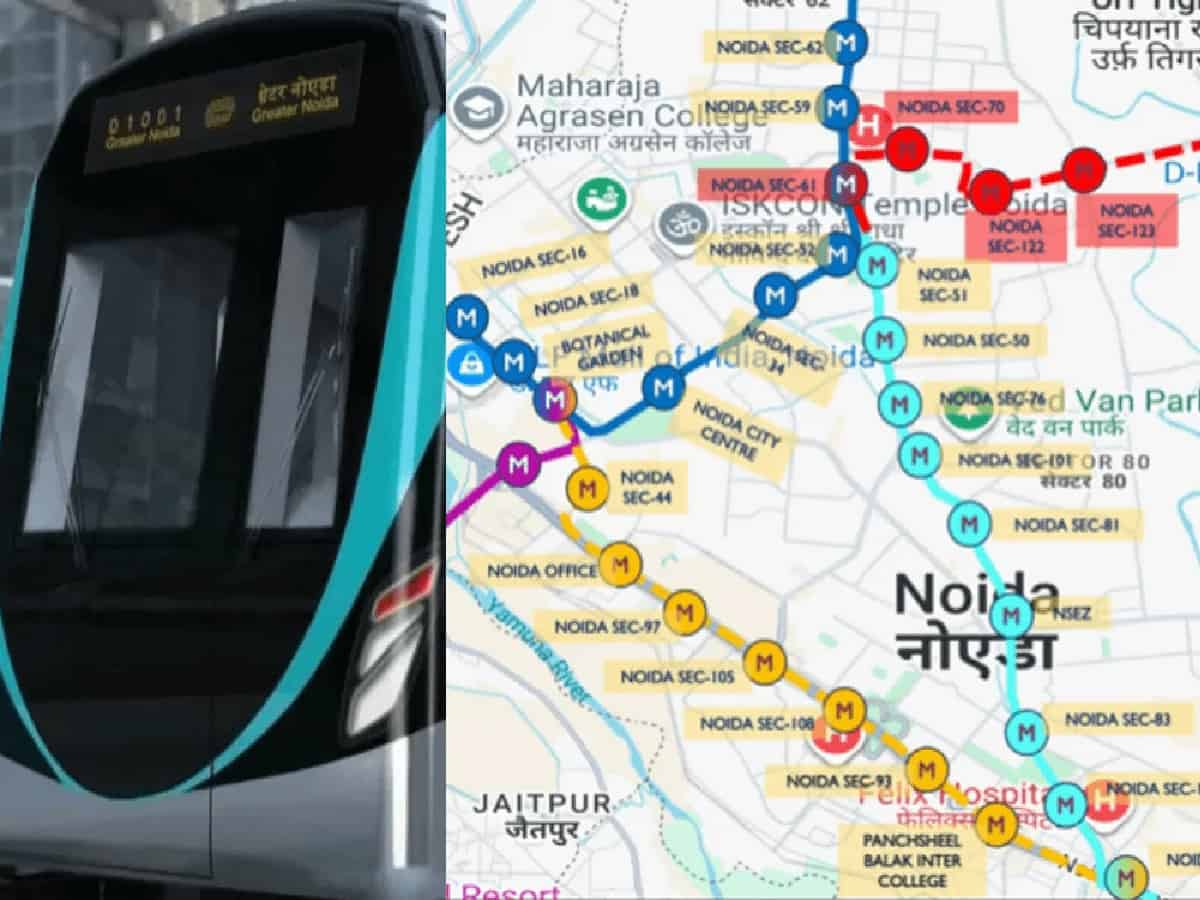
In a major infrastructure breakthrough for daily commuters and business hubs across the National Capital Region, the Union Cabinet, chaired by Prime Minister Narendra Modi, on Wednesday, November 11, 2026, officially approved the extension of the Aqua Line Metro Rail Corridor from Noida Sector 51 to Greater Noida Sector 4. Addressing a press briefing in New Delhi, Union Minister for Information and Broadcasting Ashwini Vaishnaw announced that the strategic rapid transit expansion will be constructed at an estimated investment of ₹2,390 crore. The approved corridor will span 8.449 kilometers and feature five modern elevated metro stations, connecting established residential enclaves and office parks across Noida with the rapidly expanding commercial clusters of Greater Noida West.
The approval fulfills a long-standing demand of residents, daily office goers, and industrial units across the twin cities who have long navigated congested arterial surface corridors, including the Vikas Marg stretch and the Hindon river crossings. Highlighting the socio-economic impact of the decision, Minister Vaishnaw emphasized that the elevated corridor will serve as a vital transit lifeline for thousands of tech professionals employed at the numerous Information Technology (IT) parks, software campuses, and multinational Global Capability Centres (GCCs) established throughout this high-density urban growth corridor.
Active Metro Rail Footprint Expands to 71.878 Kilometers
According to an official statement issued by the Ministry of Housing and Urban Affairs, the commissioning of this new link will elevate the combined active metro network across Noida and Greater Noida to a total length of 71.878 kilometers. By extending the operational jurisdiction of the Noida Metro Rail Corporation (NMRC), the project directly addresses public transit bottlenecks, encouraging commuters to transition away from fossil-fuel-dependent private vehicles to high-capacity, zero-emission mass transit.
The five elevated stations planned along the 8.449-kilometer alignment will include Noida Sector 61, Sector 70, Sector 122, Sector 123, and Greater Noida Sector 4. Crucially, the route incorporates a seamless multi-modal interchange with the Delhi Metro Rail Corporation's (DMRC) Blue Line at Noida Sector 61. This direct integration solves a persistent passenger inconvenience by establishing frictionless, covered transfers between the Delhi and Noida metro networks, enabling commuters to travel effortlessly between Rajiv Chowk, Anand Vihar, Vaishali, Dwarka, and Greater Noida West.
Multi-Modal Transport Integration and Airport Access
Beyond serving local office commutes, the Aqua Line extension is designed to link into northern India’s larger regional logistics framework. Union Minister Ashwini Vaishnaw pointed out that the extended network will dramatically enhance long-distance connectivity toward regional airports, including Indira Gandhi International Airport in Delhi and the upcoming greenfield Noida International Airport at Jewar.
Furthermore, the new metro line will integrate directly with a planned mega multi-modal transportation hub (MMTH) being developed in Greater Noida, which features a multi-platform railway terminal, an interstate bus terminus (ISBT), and local feeder facilities. "The investments made in the metro system over the last 12 years under the leadership of Prime Minister Narendra Modi have directly benefited middle-class families, the poor, and the youth, while also providing a reliable and safe mode of travel for women commuters," Vaishnaw said during the media briefing. Commercial developments, retail centers such as Gaur City Mall, medical infrastructure like Kailash Hospital and Cloudnine, and academic institutions scattered along the Noida-Greater Noida Link Road are expected to witness enhanced footfalls and economic growth once physical train trials commence.
Major Decisions: ₹62,370 Crore Fertilizer Subsidy and Cultural Projects
Alongside the urban infrastructure sanction, the Union Cabinet cleared a series of major economic, agricultural, and cultural initiatives on Wednesday. In a massive welfare measure aimed at insulating farmers from volatile global commodity markets, the Cabinet approved a subsidy outlay of ₹62,370 crore on phosphatic and potassic (P&K) fertilizers for the Rabi cropping season 2026-27 (effective from October 2026 to March 31, 2027) under the Nutrient Based Subsidy (NBS) framework.
Explaining the agricultural rationale, Minister Vaishnaw noted that international chemical fertilizer raw material prices experienced steep inflationary shocks due to prolonged geopolitical conflicts, notably the West Asia crisis and the Russia-Ukraine war. By approving this subsidy package, the central government has absorbed the global price spikes, guaranteeing that essential crop nutrients like Di-ammonium Phosphate (DAP) and Muriate of Potash (MOP) remain available to Indian farmers at stable, subsidized rates throughout the critical sowing window.
In addition to agricultural support, the Cabinet sanctioned ₹3,230 crore for developing the grand Yuge Yugeen Bharat Museum project through the adaptive reuse of the historic North and South Block buildings on Raisina Hill in New Delhi. To support small-scale enterprise financing, the government also approved a five-year extension for the Credit Guarantee Fund for Micro Units under the Pradhan Mantri Mudra Yojana (PMMY), ensuring continued collateral-free credit flow to grassroots entrepreneurs nationwide.




