Are Two Straight Lines Drawn on Either Side of the Swastika in Sanatan Dharma
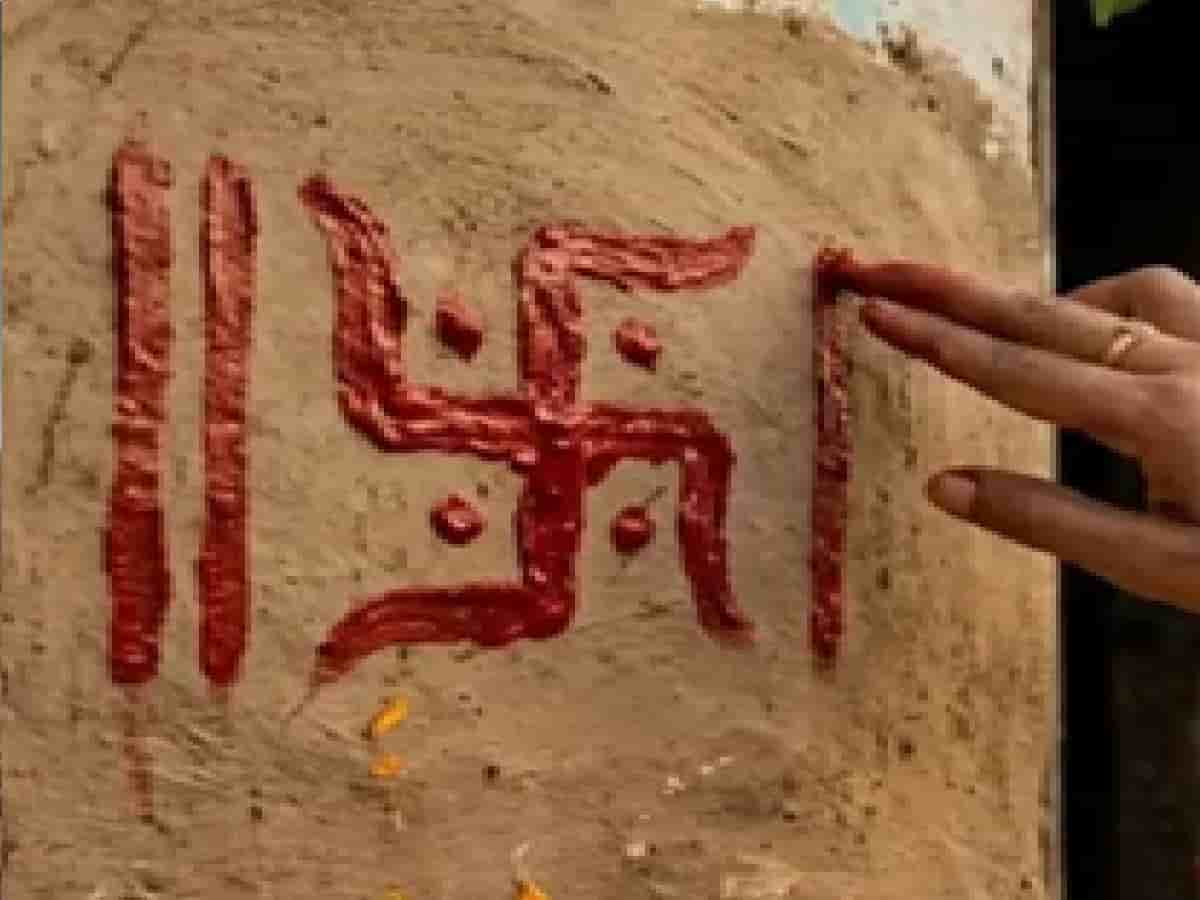
In Sanatan Dharma, the ancient tradition of drawing a Swastika before initiating any auspicious ritual, festival, or worship holds immense cultural and religious sanctity. Universally recognized as a vibrant visual symbol of Lord Ganesha and an enduring harbinger of good fortune, the Swastika is a staple at the main entrance of homes, business lockers, and sacred puja plates. However, observant individuals often notice a specific ritual detail: whenever a Swastika is drawn, two straight vertical lines (known traditionally as paiyas) are consistently marked on either side of it. While casual observers might view these lines as mere artistic completion or decoration, sacred scriptures unveil a profound treasury of religious, energetic, and spiritual meanings behind this timeless practice.
Creating a Protective Energy Shield Against Negativity
One of the primary spiritual reasons for drawing two parallel lines on either side of the Swastika is the creation of a divine energetic barrier. According to traditional Vastu and ritual guidelines, these vertical lines act as a protective shield around the sacred symbol. They function to trap and amplify positive, benevolent frequencies within the household while creating an energetic fence that prevents negative outside forces, malefic influences, or the evil eye from crossing the threshold and entering the family space.
Maintaining Balance, Cosmic Order, and the Four Vedas
Every structural element of the Swastika and its accompanying lines carries deep cosmological significance:
-
Balancing the Center of the Universe: The exact intersection point of the Swastika is spiritually regarded as the eternal abode of Lord Vishnu, serving as the focal point through which universal energy radiates. The straight boundary lines on both sides ensure that this powerful central energy remains balanced, grounded, and stable, fostering domestic peace and tranquility for the family.
-
The Four Vedas of Knowledge: The four distinct arms of the Swastika symbolize the four foundational pillars of ancient wisdom—the Rigveda, Yajurveda, Samaveda, and Atharvaveda—while the surrounding lines signify the vast breadth, discipline, and eternal nature of this sacred knowledge.
-
The Four Directions and Yugas: The symbol simultaneously encompasses the four cardinal directions (East, West, North, South) and the four cosmic eras (Satyuga, Treta Yuga, Dwapara Yuga, and Kaliyuga), with the side lines representing absolute harmony and equilibrium across time and space.
-
The Four Purusharthas (Goals of Life): Hindu philosophy outlines four essential human pursuits—Dharma (righteousness), Artha (wealth), Kama (desires), and Moksha (liberation). The lines drawn alongside the Swastika serve as a daily moral inspiration for humans to pursue these four goals with ethical balance and discipline.
The Significance of 'Shubh' and 'Labh'
In conjunction with these vertical lines, it is customary in Hindu households to write the words "Shubh" (Auspiciousness) and "Labh" (Profit/Gain). This sacred pairing signifies that all life endeavors, professional ventures, and daily duties must be executed through righteous means (Shubh), ensuring that the ultimate outcomes and rewards benefit the household with divine grace (Labh). Consequently, drawing a Swastika with pure intentions, proper geometric precision, and adherence to spiritual traditions invites lasting prosperity, peace, and spiritual protection into the home.