5 Vital Shraddha Rules You Cannot Afford to Overlook This Pitru Paksha
The observance of Pitru Paksha represents one of the most spiritually consequential periods in Hindu heritage, dedicated to expressing reverence, lineage continuity, and gratitude toward departed ancestors. Extending from the Pratipada Tithi of Krishna Paksha following Bhadrapada Purnima down to the sacred new moon day of Ashwin, this fortnight provides an auspicious window for families to perform sacred rites such as Shraddha, Tarpan, and Pind Daan. For individuals undertaking these complex rituals for the very first time, observing precise Vedic prescriptions is essential to ensure that offerings are accepted by the ancestral realm and to prevent unintended spiritual lapses.
Clearing Date Confusions: Pitru Paksha 2026 Timeline
Widespread confusion often surfaces regarding the exact calendar demarcation of the ancestral fortnight, with many debating whether the period begins on the full moon or Pratipada. According to the traditional Hindu Panchang, the ritualistic "Snan-Daan Purnima" falls on Saturday, September 26, 2026, while the formal rites of Pitru Paksha officially commence on Sunday, September 27, 2026. The fortnight spans a continuous 14-day cycle, culminating on Saturday, October 10, 2026, observed as Sarva Pitru Amavasya, Pitru Visarjan, and Mahalaya Samapti, immediately preceding the beginning of Sharadiya Navratri on October 11, 2026.
Identifying the Correct Tithi for Shraddha
Selecting the appropriate lunar day is the foundational rule for conducting a valid Shraddha ceremony. Devotees should perform the rites strictly on the exact Tithi corresponding to the ancestor's departure; however, if the exact lunar date is unrecorded or forgotten, traditions mandate performing the ceremonies on Sarva Pitru Amavasya. A critical exception applies to ancestors who passed away due to accidents, violence, weapon injuries, or sudden unnatural circumstances—their Shraddha must be observed on Chaturdashi Tithi, as performing regular rites on Chaturdashi for individuals who died under natural circumstances is explicitly discouraged in Vedic scriptures.
Strict Lifestyle Restrictions, Sattvic Diet, and Celibacy
Conducting Shraddha demands unwavering physical and mental discipline throughout the sacred fortnight. Households observing the rituals must consume strictly Sattvic meals, completely abstaining from alcohol, non-vegetarian food, and Tamasic ingredients such as garlic, onions, and lentils. Auspicious milestone events—including weddings, engagement ceremonies, and Griha Pravesh (housewarming rites)—must be strictly avoided during this 14-day window to prevent adverse spiritual consequences. Furthermore, observers must practice celibacy, avoid interpersonal conflicts, restrain anger, and maintain a calm, meditative home atmosphere.
Step-by-Step Pind Daan Procedure, Mantras, and Timing Rules
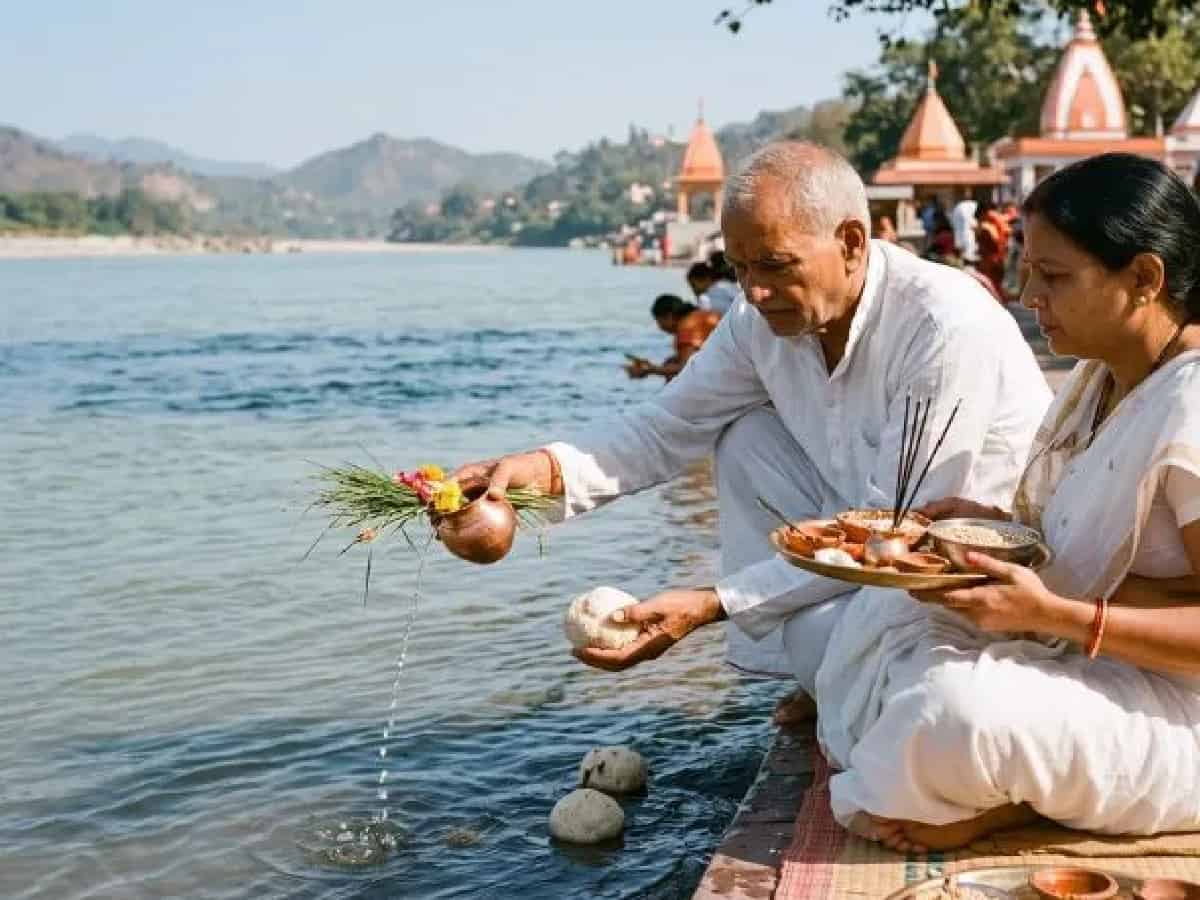
The ceremonial mechanics of Pind Daan require strict adherence to prescribed directions, materials, and symbolic gestures. Devotees must dress in unstitched white clothing and fashion the ceremonial Pinds (spherical offerings) using barley flour. The offerings must be placed upon a sanctified Kusha grass mat and worshipped using raw sacred thread, unbroken rice grains, white flowers, sandalwood paste, dhoop, incenses, sesame seeds, and barley. When offering the Pind, the practitioner must hold the sphere and release it smoothly between the thumb and index finger while chanting the sacred Tarpan mantra: "Idam Pindam (speak the ancestor's name and gotra/clan) Tebhyah Swadha." Following the conclusion of the prayers, the sanctified ball should be immersed in a flowing natural water body or reverently placed at the root base of a sacred Peepal tree.
Directional and Solar Timing Prohibitions
To ensure the rites achieve full efficacy, specific temporal and spatial guidelines must be rigorously maintained. Shraddha ceremonies must always be conducted during the afternoon (Aparahna period), as conducting ancestor rites during early morning or sunset twilight hours is strictly prohibited in traditional texts. During circumambulation and prayer pacing, movement must proceed from left to right rather than the reverse. Most crucially, every stage of the Shraddha and Tarpan rites must be executed facing directly toward the south, universally recognized in Vedic cosmology as the sacred realm governed by Lord Yama.