







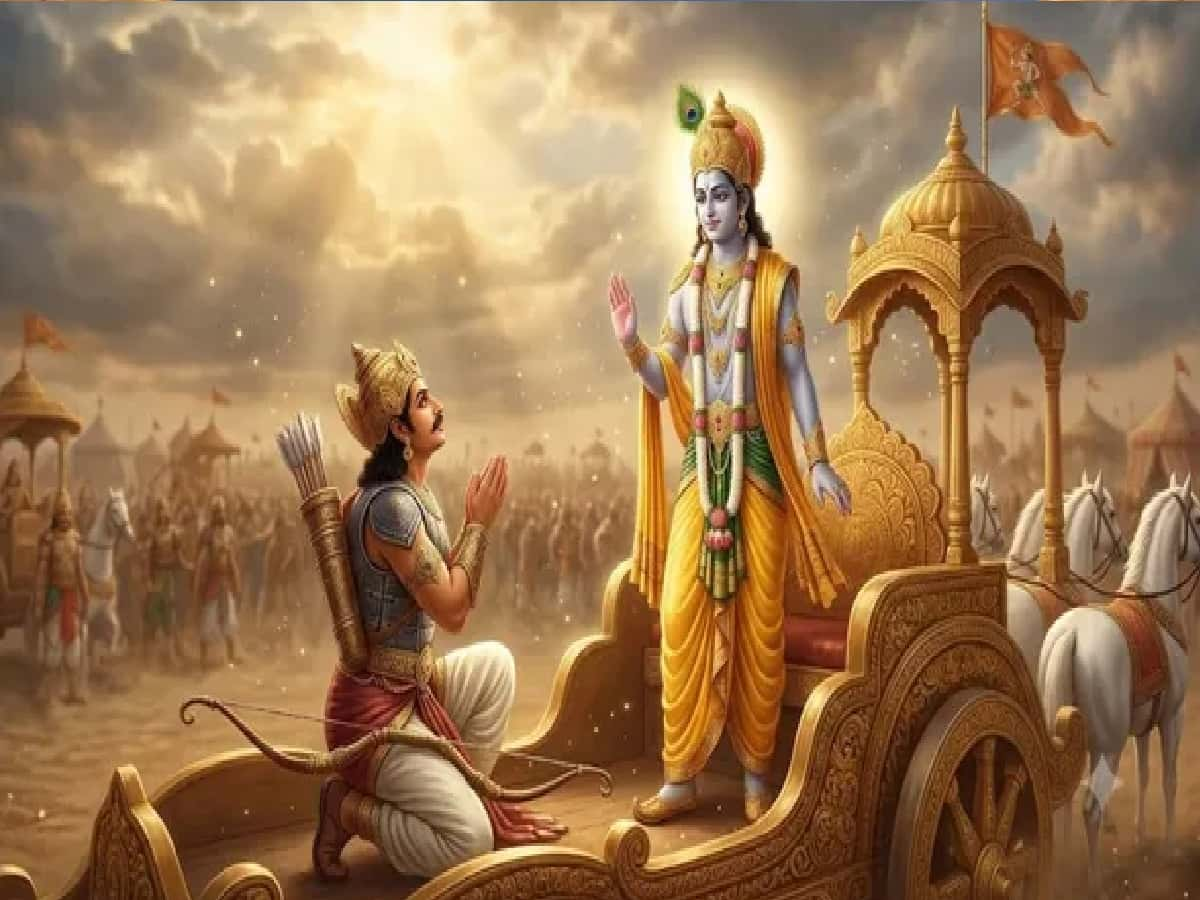
3 Bhagavad Gita Verses Where Lord Krishna Reveals the Secret of the Three Gunas
The sacred verses of the Srimad Bhagavad Gita have long stood as humanity's definitive philosophical guide to navigating the complexities of human psychology, karma, righteous duty, and self-realization. In the epic scripture's pivotal fourteenth chapter, Gunatraya Vibhaga Yoga, Lord Krishna unveils a profound metaphysical truth to the warrior prince Arjuna, answering the age-old dilemma of who truly directs human thought, action, and life outcomes. According to Vedic philosophy, human existence is steered neither by mere coincidence nor by arbitrary fate, but by the relentless play of the three fundamental qualities of primordial nature (Prakriti): Sattva (goodness, harmony, and purity), Rajas (passion, desire, and restless ambition), and Tamas (inertia, darkness, and ignorance). By decoding three core verses from this chapter, spiritual seekers gain an unshakeable perspective on how cosmic creation unfolds and how these energetic forces subtly tether the eternal soul to mortal existence.
The Cosmic Womb of Creation and the Triple Knot Binding the Soul
The metaphysical mechanics of life begin with the interplay between divine consciousness and material energy, as articulated by Lord Krishna in the verse "Mam yonirmahadbrahma tasmin garbham dadhamyaham / Sambhavah sarvabhutanaam tato bhavati bharata." Addressing Arjuna, the Lord reveals that expansive primordial nature (Mahat-Brahma) acts as the cosmic womb of all manifestation, into which the Supreme Being implants the animating seed of conscious life. It is through this perpetual union between inert matter and conscious divinity that every living and non-living entity in the universe takes birth. However, the moment the transcendental soul (Jiva) embodies within the physical realm, it encounters the triple forces of nature detailed in the verse "Sattvam rajastam iti gunaah prakriti sambhavah / Nibadhnanti mahabaho dehe dehinamavyayam." Here, Krishna instructs the mighty-armed Arjuna that although the inner soul is inherently indestructible, immortal, and beyond decay, the three gunas arising from material nature act as invisible ropes, binding the spirit within the physical body and trapping the individual in a relentless cycle of attachment, pleasure, and emotional suffering.
The Golden Shackles of Sattva: How Knowledge and Virtue Form Subtle Bondage
While contemporary society often equates goodness with ultimate freedom, the Bhagavad Gita introduces a striking revelation regarding the highest of the three qualities in the verse "Tatra sattvam nirmalatvat prakashakam anamayam / Sukha-sangena badhnati jnana-sangena chanagha." Lord Krishna clarifies that among the triad of gunas, Sattva is exceptionally pristine, luminous, and free from diseases or inner turbulence, bestowing clarity of mind, intellectual peace, and refined happiness upon the seeker. Yet, even this elevated mode represents a sophisticated form of spiritual entrapment—often described by commentators as "golden handcuffs." When an individual becomes attached to feelings of moral superiority, clings to intellectual pride, or develops an ego around virtuous conduct and serene comforts, Sattva subtly binds the soul to the earthly domain through pride in knowledge and craving for joy. To attain ultimate liberation (Moksha) and reclaim the true reins of one's destiny, the Gita teaches that one must consciously recognize these cosmic forces, maintain equanimity through life's triumphs and trials, and ultimately transcend all three gunas to rest in divine self-realization.




