







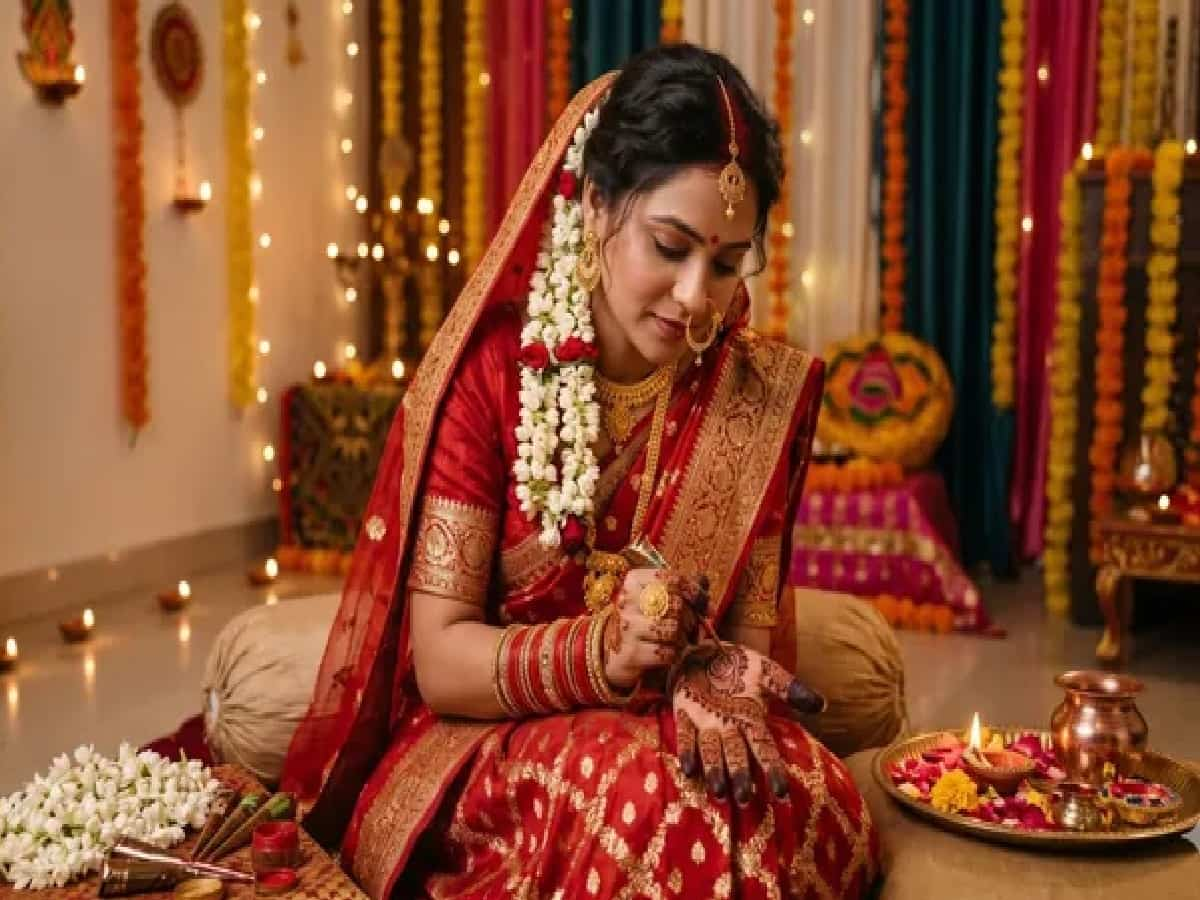
16 Adornments of 'Solah Shringar' Are Essential for Karwa Chauth
In Sanatan tradition, the sacred rite of Solah Shringar (sixteen adornments) observed by married women transcends cosmetic beautification, standing as a profound spiritual invocation of divine grace, domestic harmony, and Akhand Saubhagya (eternal marital fortune). As women across the country prepare for the waterless Karwa Chauth fast on Thursday, October 29, 2026, the ritualistic practice of adorning oneself from head to toe takes on elevated importance. Deeply anchored in ancient scriptures and associated with the divine iconography of Goddess Parvati, each of the sixteen sacred ornaments and cosmetic items functions as a protective shield and an outward expression of devotion. Far from mere vanity, tradition dictates that performing the full Solah Shringar aligns positive planetary energies, honors the sanctity of the matrimonial bond, and channels heartfelt prayers for the health, prosperity, and longevity of one's husband.
Decoding the 16 Sacred Embellishments: From Vermilion and Toe Rings to the Ceremonial Nath
Every component of the sixteen adornments carries distinct metaphysical and marital symbolism, working together to complete the sacred persona of a married woman during the evening puja. At the crown sits the Sindoor (vermilion), applied directly to the parting of the hair as a prime symbol of life force and commitment, followed by the auspicious Bindi placed between the eyebrows at the Ajna chakra to enhance wisdom and mental calm. The application of black Kajal inside the eyes beautifies while historically serving as a protective ward against malevolent energies and the evil eye (Nazar). The forehead is further illuminated by the glittering Maang Tika, while the neck is graced by the Mangalsutra—the sacred thread of black and gold beads embodying matrimonial vows—paired with an elaborate festive Necklace. The ears are adorned with traditional Earrings (Karnaphool), while the waist and arms are wrapped in positive energetic vibrations through the Kamarbandh (waistband) and Bajubandh (armlet).
Moving downward, the hands are dressed in vibrant Glass Bangles, which tinkle to invite prosperity and signal the presence of a happily married woman, while the hair is woven with a fresh floral Gajra to cultivate fragrance, peace, and tenderness in the marital home. The feet receive equal reverence through the application of bright red Alta along the soles and edges, paired with silver Anklets (Payal) that dispel negative domestic vibrations through melodic chime. On the toes, silver Bichhiya (toe rings)—worn traditionally on the second toe—are deemed the ultimate physical emblem of suhaag, with women encouraged to wear a pristine new pair for the occasion. The ensemble is traditionally completed with an auspicious Red Saree or lehenga, the color of passion, fertility, and vitality, alongside the crucial Nath (nose ring), an irreplaceable jewel required when offering the ceremonial Arghya to the moon.
The Sacred Mystery of Mehndi: Why Henna Stains Govern Marital Fortunes and Fulfill the Fast
Among the sixteen essential items, the application of Mehndi (henna) holds an indispensable place, to the extent that Vedic customs consider the Karwa Chauth fast incomplete without hands and feet adorned in rich, intricate patterns. The herbal paste, revered in Ayurvedic wellness for its potent cooling properties, naturally pacifies stress, calms the nervous system, and balances body heat during the rigorous day-long waterless fast. In traditional lore, the eventual color and depth of the dried henna stain are celebrated as a reflection of mutual affection, representing the depth of love between spouses and the affection of maternal in-laws. Serving as an unbroken symbol of devotion and good fortune, the dark herbal dye not only celebrates feminine grace but represents an earnest prayer for the husband's longevity, sealing the completion of the fast with divine blessings of lifelong marital togetherness.




