







14 Divine Gems of Samudra Manthan That Reveal the True Meaning of Dhanteras
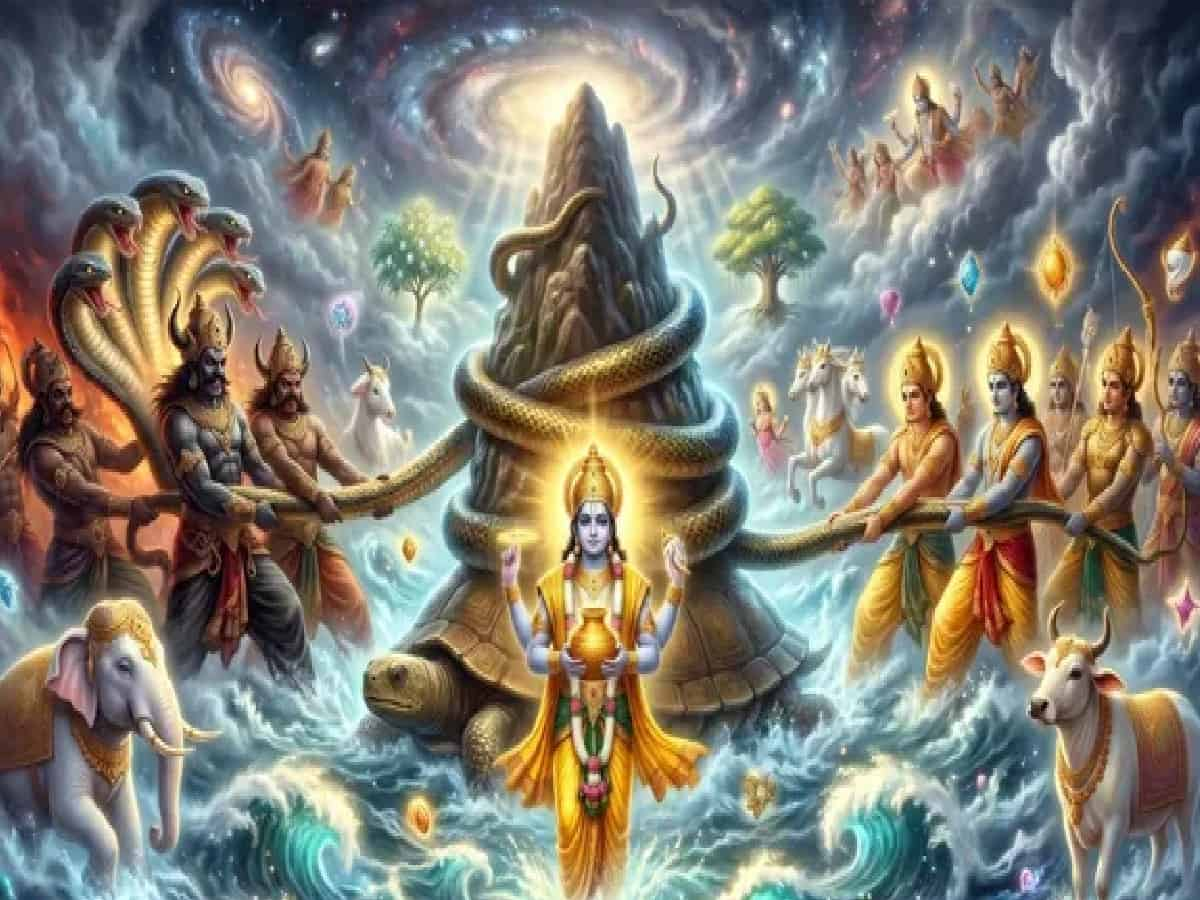
While modern celebrations of Dhanteras—also celebrated as Dhantrayodashi—are frequently marked by crowded jewelry markets and the purchase of gold, silver, and metal utensils, the festival’s foundational origins reside deep within the cosmic annals of Vedic lore. Occurring annually on the Trayodashi Tithi of Krishna Paksha in the holy month of Kartik, Dhanteras primarily commemorates the divine incarnation day of Lord Dhanvantari, the celestial physician and father of Ayurveda. According to the Bhagavata Purana, Vishnu Purana, and ancient Sanatan scriptures, the sacred observance originated during Samudra Manthan (the legendary churning of the cosmic ocean of milk, Ksheer Sagar), undertaken jointly by the Devas (gods) and Asuras (demons) in quest of the elixir of immortality. During this cosmic churning, 14 miraculous gems (Chaturdasha Ratna) emerged sequentially, embedding profound spiritual lessons that illustrate that authentic wealth (Dhan) encompasses physical health, moral fortitude, detachment, and emotional harmony rather than mere financial accumulation.
From Cosmic Poison to Divine Grace: The First Eight Wonders of Ksheer Sagar
The cosmic churning did not begin with gifts of fortune, but with Halahal (or Kalakuta), an all-consuming lethal venom so volatile it threatened to annihilate the three worlds. Terrified deities and demons sought refuge in Lord Shiva, who compassionately consumed the poison and held it in his throat, turning it blue and earning the eternal epithet Neelkanth—a timeless lesson showing that before attaining prosperity, one must cultivate the courage to confront life's hardships and make selfless sacrifices. Following the poison, the ocean yielded the second jewel, Kamadhenu, the divine wish-fulfilling cow, symbolizing abundance, unconditional maternal nourishment, and spiritual purity. Next arrived Uchchaihshravas, the magnificent seven-headed, snow-white celestial stallion of unmatched velocity, claimed by demon king Bali. The churning subsequently brought forth Airavata, the majestic white elephant of divine proportions who became the sacred mount of King Indra. The fifth gem was the blindingly radiant Kaustubha Mani, the most coveted jewel in the cosmos, which found its eternal sanctuary upon the chest of Lord Vishnu. Following this was the divine Kalpavriksha, the wish-granting celestial tree established in the heavens to remind mortals that worldly desires are infinite and demand balanced discernment. The seventh emergence was Apsara Rambha, the celestial enchantress representing supreme artistic grace and aesthetic refinement in Indra's court, immediately followed by the eighth and most venerated manifestation: Goddess Mahalakshmi. Emerging upon a blooming lotus as the supreme goddess of auspiciousness, abundance, and spiritual fortune, she placed the garland of cosmic choice upon Lord Vishnu, sealing her grace upon those who tread the path of righteousness.
Divine Arsenal, Lord Dhanvantari, and the Nectar of Immortality
The later phase of the cosmic churning yielded treasures governing temperament, spiritual discipline, and divine sustenance. The ninth substance was Varuni, the goddess and intoxicating wine accepted by the Asuras, illustrating how inner nature dictates whether one chooses wisdom or distraction. The tenth jewel was Chandra (the Moon), radiating soothing coolness and emotional balance, which Lord Shiva placed upon his matted locks to pacify the cosmic heat of the consumed venom. The ocean then produced divine celestial weaponry, starting with the eleventh gem, the invincible Sharanga (Kodanda) celestial bow bestowed upon Lord Vishnu, followed by the twelfth gem, the auspicious Panchajanya conch shell. Held by Lord Krishna, the resonating blast of Panchajanya signaled the righteous awakening of Dharma at the dawn of the Mahabharata War. Reaching its glorious crescendo on the thirteenth lunar day of Kartik, the thirteenth divine gem materialized in the form of Lord Dhanvantari himself. Emerging with a radiant halo, carrying a pot of sacred herbs and medicine, Lord Dhanvantari appeared as the protector of human vitality, establishing the sacred observance of Dhanteras. Finally, the fourteenth and culminating treasure was the Amrit Kalash, the vessel holding the nectar of immortality, which Lord Vishnu distributed to the righteous Devas by assuming the enchanting Mohini avatar. Together, the 14 gems of Samudra Manthan remind devotees that true festive prosperity is attained only when the body is preserved through health (Arogya via Dhanvantari) and the soul is illuminated by righteousness (Lakshmi).




