







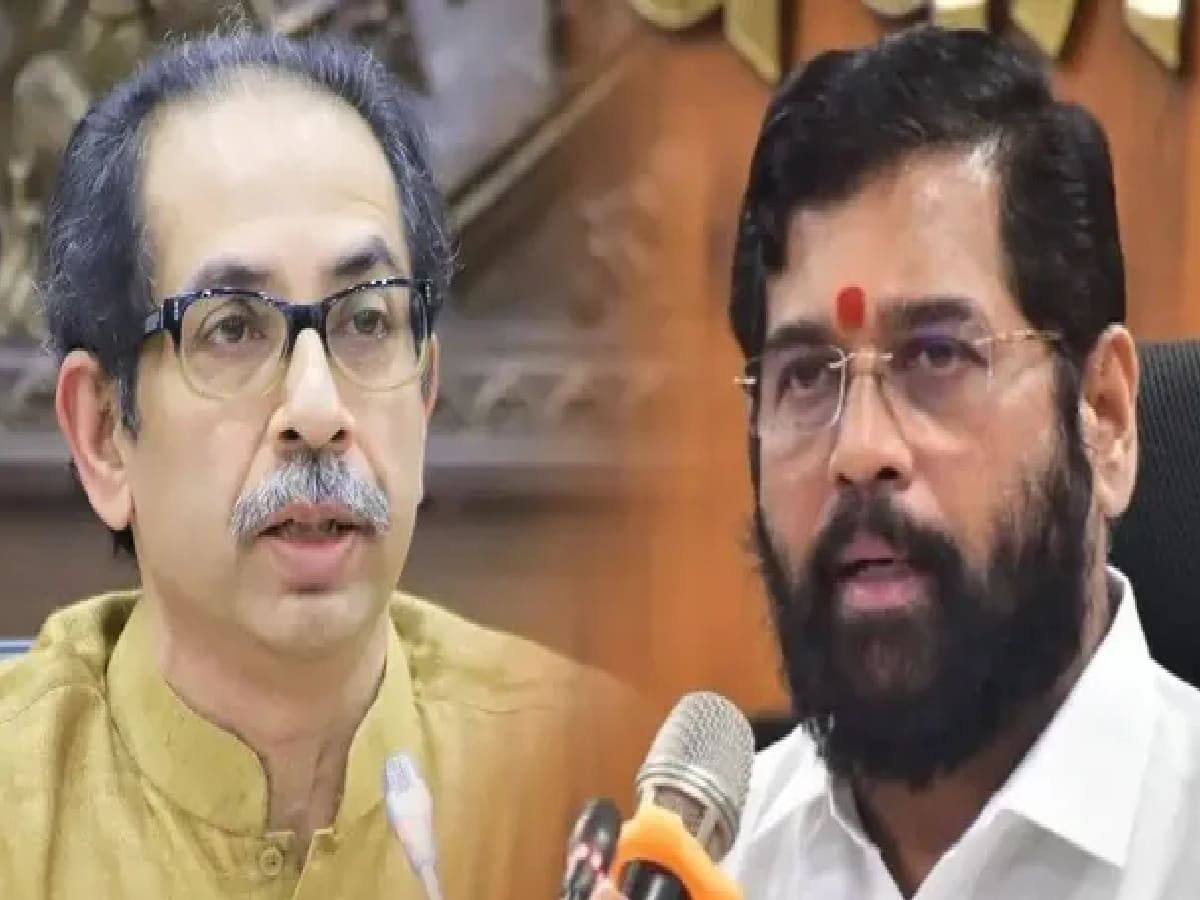
Uddhav's MVA Move Abandoned Sena Ideology, Shinde Camp Tells SC
Framing Maharashtra's historic 2022 political upheaval as an ideological rescue mission rather than an act of constitutional defection, the faction led by Maharashtra Deputy Chief Minister Eknath Shinde submitted a pivotal constitutional argument before the Supreme Court of India. Appearing on Wednesday, November 18, 2026, before a three-judge bench comprising Chief Justice of India Surya Kant, Justice Joymalya Bagchi, and Justice V. Mohana, senior advocate Dhruv Mehta asserted on behalf of the Shinde camp that former Chief Minister Uddhav Thackeray's decision in November 2019 to snap ties with the Bharatiya Janata Party (BJP) and form the Maha Vikas Aghadi (MVA) coalition with the Congress and the Nationalist Congress Party (NCP) constituted a sharp departure from the foundational ideology on which the Shiv Sena had sought votes. According to the Shinde faction's submissions, the legislators who revolted against Thackeray's leadership in June 2022 never abandoned the Shiv Sena; instead, they acted to reclaim the party's original Hindutva identity envisioned by founder Balasaheb Thackeray and honor the pre-poll electoral mandate. With arguments remaining inconclusive at the close of Wednesday's session, the high-stakes constitutional debate is scheduled to resume on Thursday, November 19, 2026. For constitutional scholars, legal observers, and voters across Mumbai, Thane, Pune, Nagpur, Nashik, Aurangabad (Chhatrapati Sambhajinagar), Kolhapur, and New Delhi, the apex court's examination of intra-party dissent versus the Tenth Schedule (Anti-Defection Law) carries profound consequences for parliamentary democracy in India.
Inside the Supreme Court Hearing: Core Constitutional Arguments by the Shinde Faction
To clarify the intricate legal questions surrounding the Tenth Schedule, Speaker autonomy, and the Election Commission's symbol order currently under judicial review, the table below summarizes the key arguments and background petitions before the Supreme Court bench:
| Legal & Political Dimension | Verified Submissions & Case Details (November 2026) | Constitutional & Electoral Significance |
| Bench & Lead Counsel | Heard by CJI Surya Kant, Justice Joymalya Bagchi, and Justice V. Mohana; Senior Advocate Dhruv Mehta (and earlier NK Kaul) argued for Eknath Shinde's faction. | Directly shapes how Indian courts interpret internal party splits under the Tenth Schedule of the Constitution. |
| The 2019 Pre-Poll Mandate Argument | Shiv Sena fought the 2019 Maharashtra polls alongside the BJP, winning 56 seats while the BJP won 105 seats (a combined majority of 161 in the 288-member House). | Argues that joining the ideological rivals (Congress-NCP) betrayed the voter mandate that the Tenth Schedule is fundamentally designed to protect. |
| Scope of the Tenth Schedule | Submitted that the Tenth Schedule is not an instrument to enforce internal party discipline or suppress collective dissent by threatening MLAs with disqualification. | Distinguishes legitimate internal leadership challenges from defection to another political party. |
| Pending Petitions Under Review |
• Sunil Prabhu's lead plea (Uddhav camp): Challenges Maharashtra Speaker's January 10, 2024 order refusing to disqualify Shinde faction MLAs. • Uddhav Thackeray's connected plea: Challenges Election Commission's order granting the real Shiv Sena name and 'bow and arrow' symbol to the Shinde faction. |
Determines the ultimate legal validity of both the Assembly Speaker's disqualification ruling and the Election Commission's symbol allocation. |
'Dissent Is Not Defection': Reclaiming the 2019 Pre-Poll Mandate
Anchoring his submissions in the political chronology following the 2019 Maharashtra Legislative Assembly elections, senior advocate Dhruv Mehta emphasized that voters had delivered a decisive mandate—161 out of 288 seats—specifically to the pre-poll Shiv Sena-BJP alliance. He contended that when Uddhav Thackeray unilaterally severed ties with the BJP to align with the Congress and NCP, widespread discontent erupted among grassroots Shiv Sainiks and elected legislators who felt the leadership had forsaken Balasaheb Thackeray's core Hindutva principles.
Addressing the constitutional framework of the Tenth Schedule, Mehta argued that anti-defection provisions cannot be weaponized by a party president to stifle collective protest or silence internal democratic dissent. Defending the Maharashtra Assembly Speaker's January 10, 2024 ruling, he stressed that a leadership struggle between rival factions remains an internal organizational affair in which the Speaker holds no mandate to police intra-party discipline. Accordingly, the Shinde camp's June 21, 2022 resolution—reaffirming Eknath Shinde as leader of the Shiv Sena Legislature Party and appointing Bharat Gogavale as chief whip—was presented to the court as a constitutional assertion of the party's authentic ideological identity rather than an act of defection.
The Road Ahead: Parallel Battles Over Speaker's Order and 'Bow and Arrow' Symbol
Earlier in the proceedings, senior advocate N.K. Kaul, also representing the Shinde camp, robustly defended the Election Commission of India's decision recognizing Eknath Shinde's group as the legitimate Shiv Sena and awarding it the coveted 'bow and arrow' election symbol. As the three-judge bench led by Chief Justice Surya Kant reconvenes on Thursday to hear continuing submissions in Sunil Prabhu v. Eknath Shinde and connected petitions, the court's eventual verdict will establish a landmark precedent on where internal political dissent ends and constitutional defection begins.




