







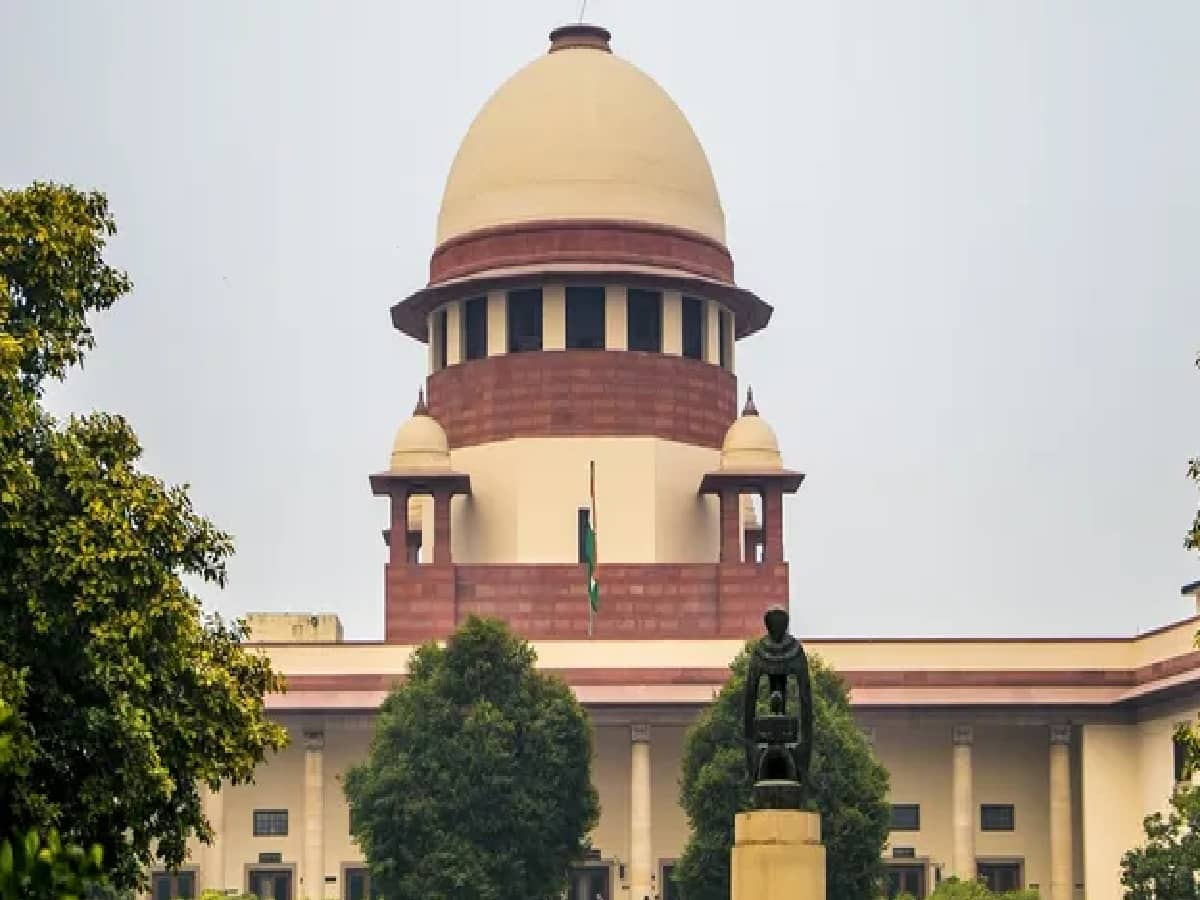
Supreme Court Quashes Banda CJM's 70-Page Summons Order Against Woman
In a sharp reminder to trial courts across the country that volume cannot substitute for statutory procedure, the Supreme Court of India has set aside a 70-page summoning order issued by the Chief Judicial Magistrate (CJM) of Banda in Uttar Pradesh, reprimanding the judicial officer for what it termed an "astonishing exercise of power" and a "sheer waste of judicial time". Highlighted across legal, judicial, and governance desks on Thursday, November 26, 2026, a division bench comprising Justice Prashant Kumar Mishra and Justice Shree Chandrashekhar allowed a criminal appeal filed by Deepti Singh (Deepti Singh vs. State of U.P. & Anr.), quashing both the Banda CJM's March 25, 2025 cognizance order and the Allahabad High Court's February 18, 2026 order that had declined to interfere with the summons. The underlying dispute began with a June 19, 2022 FIR registered by complainant Pratima Singh following an altercation over drainage flow in Banda that led to the death of her brother, Abhishek Singh. After investigating the incident and reviewing CCTV footage indicating the deceased had fallen on his own, Uttar Pradesh Police filed a chargesheet against Deepti Singh's husband, Gaurav Singh, while exonerating Deepti Singh in the final report. Nearly a year later, however, Pratima Singh filed a protest petition—prompting the Banda CJM to author a sprawling 70-page order that quoted dozens of precedents, lectured the police on investigative lapses, and summoned Deepti Singh to face trial for murder and criminal conspiracy without first recording sworn statements of the complainant and witnesses under oath as mandated by Chapter XV (Section 200) of the Code of Criminal Procedure (CrPC). For legal practitioners, trial judges, and citizens across Banda, Prayagraj, Lucknow, Kanpur, Varanasi, and New Delhi, the ruling draws a crisp constitutional boundary protecting individuals cleared in police investigations from arbitrary summoning.
Supreme Court Reprimands Banda CJM: Case Timeline & Procedural Law
To bring together the exact chronology from the June 2022 Banda FIR to the Supreme Court's November 2026 judgment, why Justices Prashant Kumar Mishra and Shree Chandrashekhar faulted the CJM's 70-page order and the Allahabad High Court's February 2026 ruling, and the mandatory legal steps a Magistrate must follow when handling a protest petition, the tables below organize all verified judicial details:
Chronology of 'Deepti Singh vs. State of U.P. & Anr.' (2022–2026)
| Date / Stage | Legal & Factual Development | Judicial & Procedural Significance |
| June 19, 2022 | FIR (Crime No. 487 of 2022) registered in Banda, Uttar Pradesh on informant Pratima Singh's complaint following a neighborhood drainage altercation that resulted in her brother Abhishek Singh's death. | Initiated criminal investigation against neighbor Gaurav Singh and his wife Deepti Singh. |
| Police Investigation & Final Report | Police filed a chargesheet against husband Gaurav Singh, but cleared and excluded Deepti Singh after CCTV footage showed the deceased fell on his own. | Legally placed Deepti Singh outside the list of charge-sheeted accused sent up for trial. |
| March 25, 2025 | Acting on a protest petition filed nearly 12 months later by Pratima Singh, the Chief Judicial Magistrate (CJM), Banda authored a 70-page order picking holes in the police probe and summoning Deepti Singh to face trial under serious charges including murder and criminal conspiracy. | Bypassed mandatory pre-summoning sworn examination of the complainant and witnesses under Section 200 CrPC. |
| February 18, 2026 | Allahabad High Court dismissed Deepti Singh's quashing application (Application u/s 528 BNSS No. 13044 of 2025), leaving the Banda CJM's summoning order intact. | Prompted Deepti Singh to challenge the High Court ruling before the Supreme Court. |
| November 25–26, 2026 | Supreme Court bench of Justices Prashant Kumar Mishra and Shree Chandrashekhar set aside both the Allahabad High Court's February 18, 2026 order and the Banda CJM's March 25, 2025 cognizance order, quashing all criminal proceedings against Deepti Singh. | Reaffirmed that High Courts must exercise inherent jurisdiction (Section 482 CrPC / Section 528 BNSS) to halt illegal, jurisdictionally flawed summons. |
Mandatory Legal Procedure on a Protest Petition vs. What Banda CJM Did
| Procedural Requirement | Correct Legal Route Laid Down by Supreme Court | Error Committed by Banda CJM |
| 1. Evaluating the Police Report | Upon receiving a police closure or partial chargesheet, a Magistrate must first decide whether to accept the final report, order further investigation, or treat the informant's protest petition as a private complaint. | Treated fault-finding in the police investigation and quoting dozens of case laws as a substitute for a valid complaint. |
| 2. Chapter XV / Section 200 CrPC Safeguard | If proceeding on a protest petition treated as a complaint, the Magistrate must examine the complainant and witnesses on oath and verify whether the petition satisfies every ingredient of a complaint under Section 2(d) CrPC before issuing summons. | Issued summons directly to an exonerated citizen without recording sworn pre-summoning statements. |
| 3. Brevity vs. Jurisdiction in Cognizance Orders | A cognizance order need not be overly long or elaborately reasoned, provided mandatory statutory procedures are strictly respected. | Wrote an exhaustive 70-page order that the Supreme Court called "an astonishing exercise of power" and a "sheer waste of judicial time". |
Why This Ruling Strengthens Citizen Safeguards Across District Courts
Across Banda, Prayagraj, Lucknow, Kanpur, Varanasi, and judicial districts across Uttar Pradesh and India, criminal-law practitioners view the Supreme Court's ruling in Deepti Singh vs. State of U.P. as a vital check against mechanical or overzealous summoning. Summoning a citizen to face a murder trial carries severe reputational, emotional, and personal-liberty consequences; requiring Magistrates to record sworn statements under oath ensures accountability on the complainant before the coercive machinery of a criminal trial is set in motion.
Key Takeaways for Trial Courts, High Courts & Litigants
The bench also reminded High Courts that inherent powers preserved under Section 528 of the Bharatiya Nagarik Suraksha Sanhita (BNSS)—corresponding to Section 482 CrPC—transcend technical barriers and must be exercised decisively whenever a subordinate court acts without jurisdiction or bypasses mandatory statutory safeguards.




