







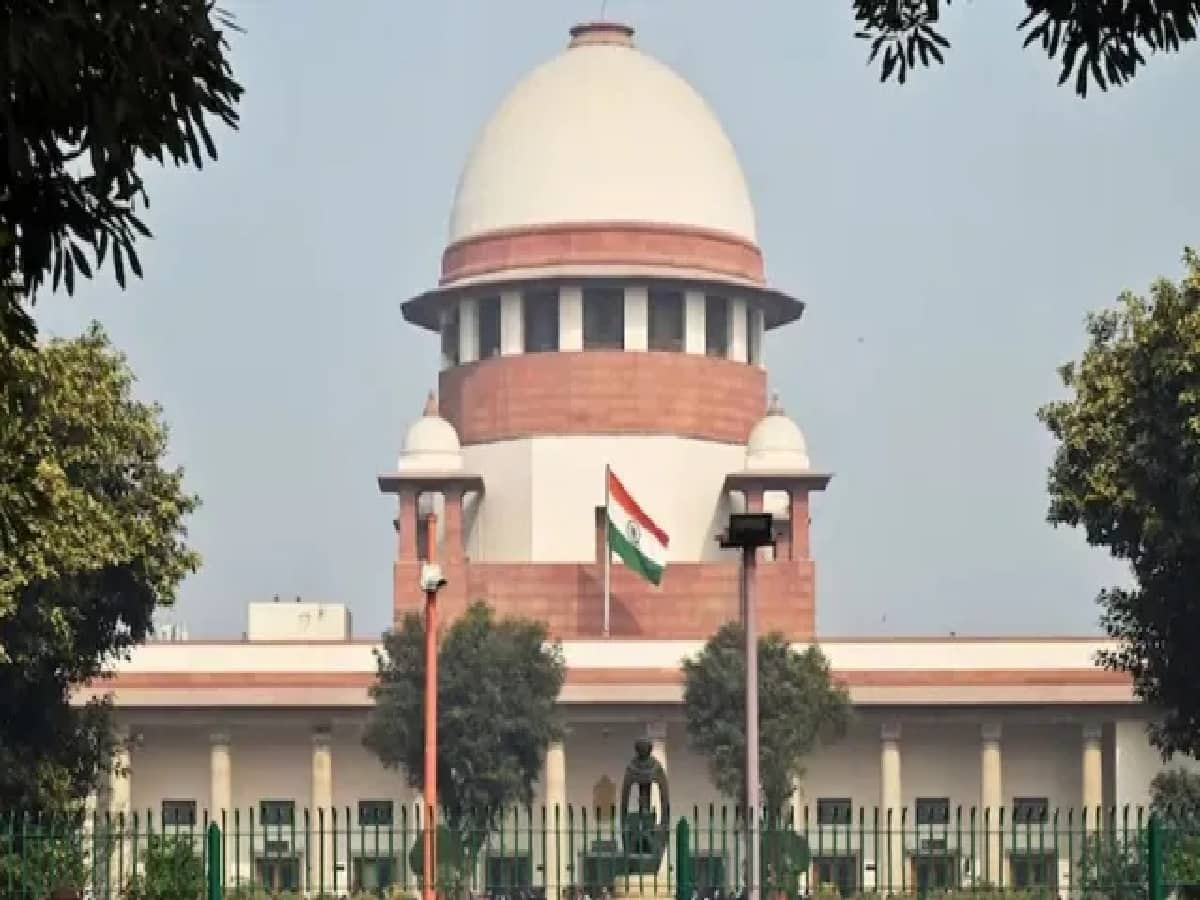
Supreme Court Grants Bail in ₹6,210-Cr PMLA Case Over Trial Delays
The Supreme Court on Wednesday reinforced constitutional limits on prolonged pretrial detention under anti-money laundering laws, declaring unequivocally that the legal process itself cannot be weaponized as a form of punishment. A bench comprising Justices Arvind Kumar and Vipul M. Pancholi held that stringent statutory bail thresholds under special statutes like the Prevention of Money Laundering Act (PMLA) cannot supersede the fundamental right to personal liberty and a speedy trial enshrined under Article 21 of the Constitution of India. Granting bail to an accused detained since December 2024 in connection with an alleged ₹6,210-crore financial fraud, the apex court observed that keeping undertrials behind bars indefinitely while courts sift through mountain-loads of documentary evidence and examine dozens of witnesses strips citizens of their constitutional protections before guilt has even been established.
Section 45 Twin Conditions Subservient to Article 21: Supreme Court Invokes Sisodia Precedent
Under Section 45 of the PMLA, an accused faces a formidable statutory bar requiring courts to provide public prosecutors the opportunity to oppose bail and arrive at a prima facie satisfaction that the petitioner is not guilty and unlikely to commit further offenses while on release. However, the bench ruled that this statutory twin-condition test cannot act as an insurmountable barrier when judicial proceedings suffer protracted delays. Invoking the constitutional precedent established in Manish Sisodia vs Enforcement Directorate, the judges clarified that prolonged pretrial incarceration hollows out constitutional protections, turning procedural delays into de facto punishment without conviction. The court cautioned that while Parliament intentionally drafted strict bail parameters to deter sophisticated economic crimes that sabotage national financial structures, investigative agencies hold a reciprocal obligation to expedite trials, ensuring justice is neither stalled nor circumvented through institutional inertia.
98 Witnesses and Massive Paper Trail: Why the ₹6,210-Crore Accused Was Granted Relief
In the case before the bench, the Enforcement Directorate alleged that the petitioner orchestrated a complex web of 62 shell companies, installed 34 dummy directors, and operated 20 entities through familial conduits to launder illicit capital exceeding ₹6,210 crore. Acknowledging the severe gravity of white-collar offenses and their ripple effect across public economic stability, the Supreme Court stressed that the judicial mandate requires maintaining an equitable balance between the state's prosecuting authority and the human rights of the accused. Observing that the trial court would need considerable time to adjudicate thousands of pages of documentary exhibits and cross-examine approximately 98 prosecution witnesses, the bench deemed further custodial confinement unjustified. The court directed the immediate release of the appellant on bail, subject to furnishing a satisfactory bail bond and adhering strictly to conditions imposed by the trial court to ensure ongoing compliance without sacrificing personal freedom.




