







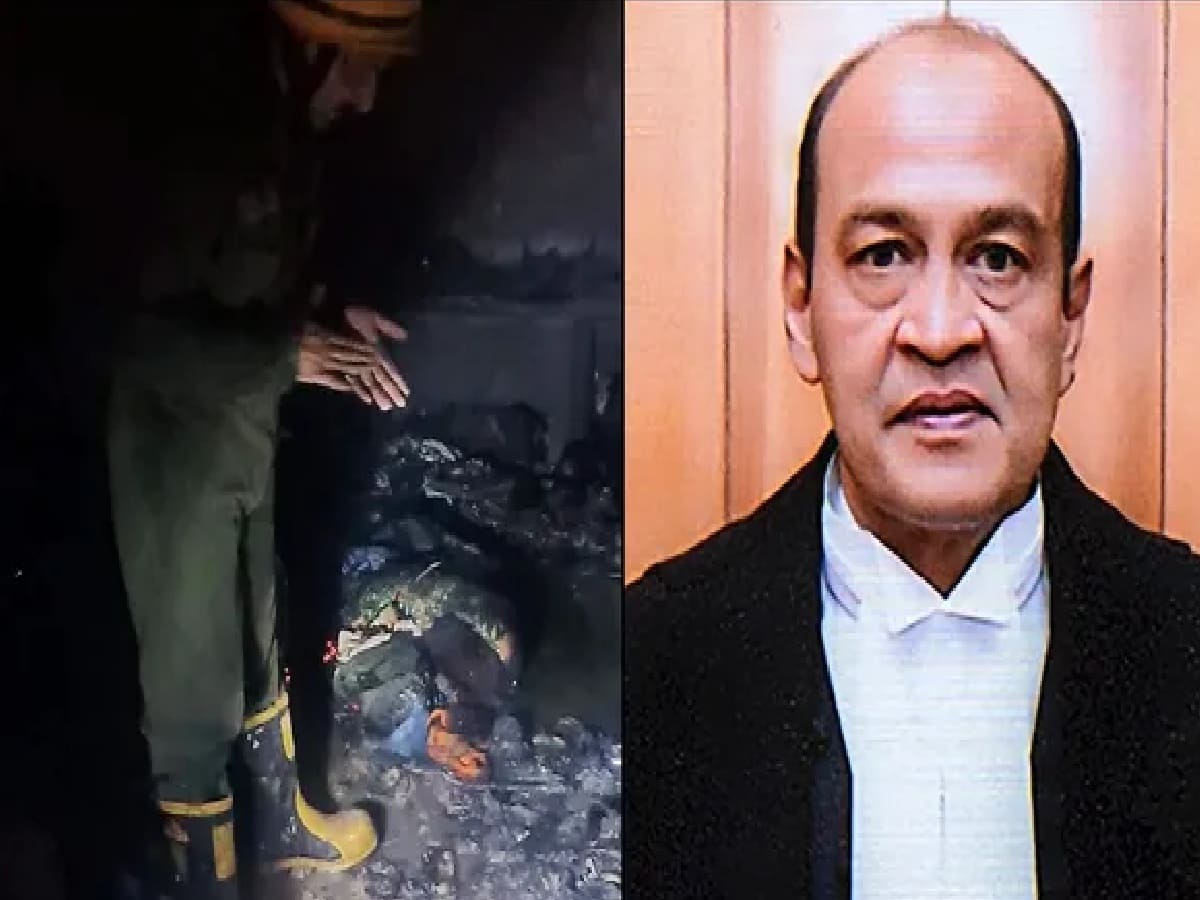
Resignation Not Admission of Guilt: Justice Yashwant Varma to Parliament
Former High Court judge Justice Yashwant Varma has formally informed Parliament that proceedings initiated to remove him from judicial office have lost all constitutional basis following his resignation, maintaining that stepping down cannot be construed as an admission of guilt and asserting complete innocence in the controversy surrounding the recovery of burnt currency notes at his former official residence in New Delhi. In a detailed letter dated September 10, 2026, addressed to Lok Sabha Secretary General Utpal Kumar Singh—which was circulated among Members of Parliament on Thursday, November 19, 2026—Justice Varma responded to the findings of the three-member Judges Inquiry Committee constituted by Lok Sabha Speaker Om Birla under the Judges (Inquiry) Act, 1968. Emphasizing that he tendered his resignation with immediate effect to the President on April 9, 2026, while the inquiry was underway, he contended that constitutional provisions governing the removal of a High Court judge apply strictly to sitting judges and cannot survive once an incumbent has ceased to hold office. Rejecting all accusations—including suggestions of possessing unaccounted wealth, failing to explain the presence or disappearance of cash, or offering evasive responses—Justice Varma stated that he never accepted the committee's adverse findings, raised procedural objections over the conduct of the probe while reserving his right to challenge them, and requested that his communication be placed before members of both Houses of Parliament and the matter closed. For legal observers, lawmakers, and readers across Unnao, Lucknow, Kanpur, Prayagraj, Varanasi, Gorakhpur, New Delhi, and Mumbai, the development highlights a recurring constitutional question over judicial accountability when a judge resigns prior to a parliamentary vote.
Justice Yashwant Varma Case & Letter to Lok Sabha Secretariat: Timeline & Key Facts
To bring together the sequence of events from the March 2025 residence fire to the August 2026 inquiry report and the circulation of Justice Yashwant Varma's reply among MPs in November 2026, the table below summarizes the key milestones:
| Milestone / Stage | Verified Dates & Details | Constitutional & Legal Significance |
| Origin of the Controversy | March 14–15, 2025: Following a fire in a storeroom at Justice Yashwant Varma's official residence in New Delhi (while he was a Delhi High Court judge), fire and police personnel reported discovering burnt and partially burnt currency notes. | Triggered a Supreme Court in-house inquiry, his repatriation to his parent Allahabad High Court (where he took oath on April 5, 2025, without judicial work), and a removal notice moved by nearly 150 MPs. |
| Parliamentary Inquiry & Resignation | Lok Sabha Speaker Om Birla constituted a three-member inquiry committee under the Judges (Inquiry) Act, 1968. After the Supreme Court dismissed his challenges to the panel, Justice Varma tendered his resignation to the President on April 9, 2026, and withdrew from the inquiry. | Under Article 217(1)(a) of the Constitution, a High Court judge's resignation addressed to the President takes effect unilaterally, creating a well-known constitutional debate over pending removal motions. |
| Inquiry Committee Report Tabled | August 12, 2026: Despite his resignation, the three-member inquiry committee completed its proceedings and presented its report to Parliament, holding all three articles of charge proved. | The three charges covered failure to explain the cash's presence, source, or ownership; failure to preserve material evidence amid its disappearance; and giving evasive, unsatisfactory explanations. |
| Reply to Lok Sabha Secretariat | Written on September 10, 2026, to Lok Sabha Secretary General Utpal Kumar Singh and circulated to MPs on November 19, 2026. | Asserts complete innocence, clarifies that resignation is not an admission of wrongdoing, declines further participation, and asks Parliament to close the removal proceedings. |
Why Justice Varma Argues Removal Proceedings Cannot Continue Post-Resignation
In his communication to Lok Sabha Secretary General Utpal Kumar Singh, Justice Yashwant Varma anchored his legal objection in the constitutional architecture governing superior court judges. Explaining that he had participated in the inquiry until April 9, 2026, when he submitted his resignation to the President with immediate effect, he contended that a High Court judge's resignation operates on its own force without requiring formal approval or notification to end judicial tenure. Consequently, he argued, proceedings aimed solely at removing a sitting judge from office became legally infructuous upon his exit and cannot be pursued further. At the same time, Justice Varma pushed back strongly against any inference that stepping down amounted to conceding guilt, writing that his resignation must not be treated as an acceptance of the allegations or of the panel's August 12 findings.
Procedural Objections, Denied Charges, and the Constitutional Accountability Debate
Beyond the threshold constitutional objection, Justice Yashwant Varma reiterated his denial of every charge examined by the three-member panel—maintaining that neither he nor his family owned or knew of any cash in the storeroom, that he was not in Delhi when the March 2025 fire broke out, and that he neither tampered with evidence nor misled investigators. In his representation, he also questioned the fairness of the inquiry process—pointing to the dropping of several witnesses after cross-examination—and stated that while he was declining to submit further comments on the report or join additional proceedings, he reserved his right to challenge the findings. Constitutional scholars note that the episode mirrors earlier parliamentary stalemates involving former judges who resigned before a final vote in both Houses, reviving debate over how Parliament should conclude or record findings once a judge leaves office mid-inquiry.




