







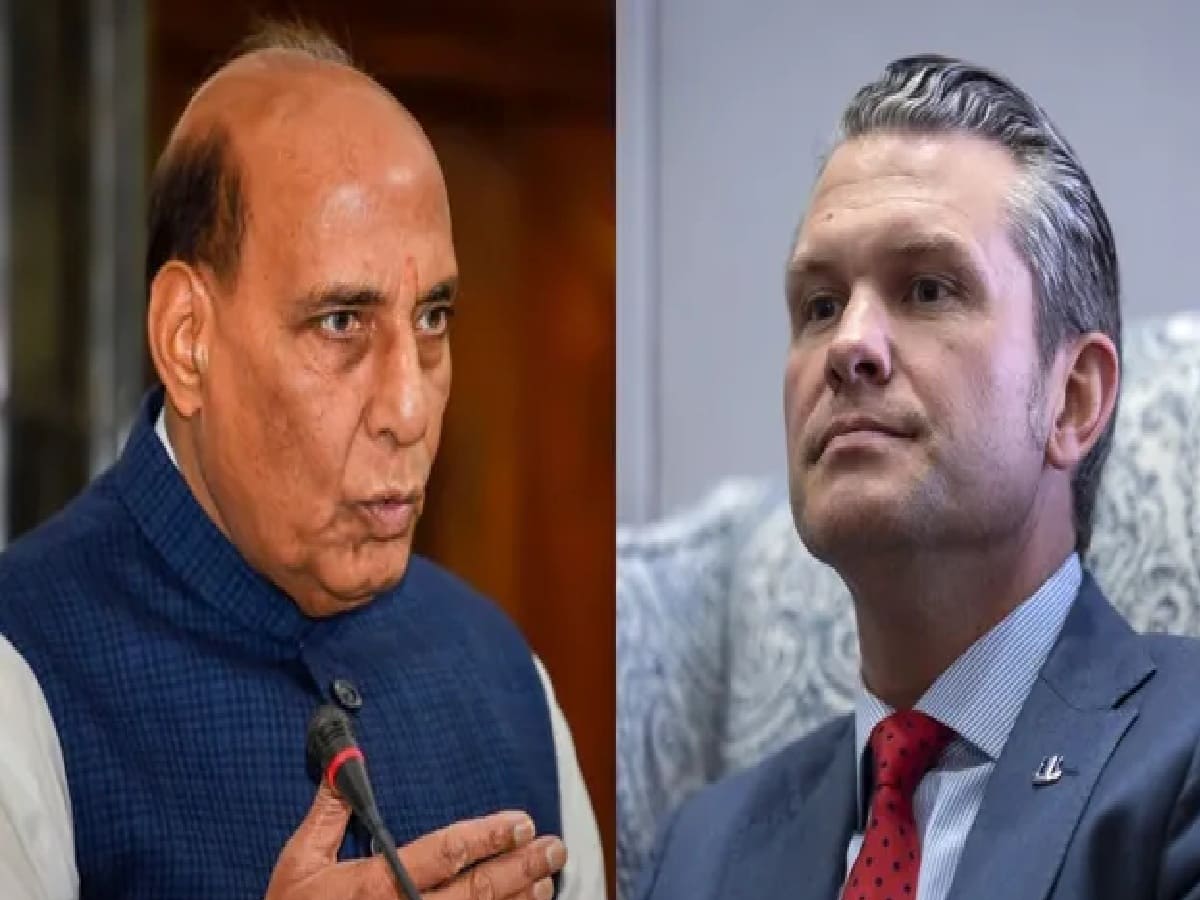
Rajnath Warns US at Cebu: $649M F-16 Tech to Pakistan Risks Leaking
In a candid diplomatic intervention on the global stage, Indian Defence Minister Rajnath Singh delivered a sharp and unequivocal warning to United States Secretary Pete Hegseth regarding Washington's continued military assistance to Islamabad. Meeting on the sidelines of the 13th ASEAN Defence Ministers' Meeting-Plus (ADMM-Plus) in Cebu, Philippines, the Indian Defence Minister registered New Delhi’s vehement opposition to the latest American sustainment and modernization package approved for the Pakistan Air Force’s F-16 fighter jet fleet. Rajnath Singh underscored the grave geopolitical risks inherent in transferring advanced defense platforms to Islamabad, cautioning his American counterpart that sensitive military systems provided to Pakistan could easily fall into the hands of a third country—a veiled reference to Islamabad’s close strategic alliances with regimes such as China and Iran. The high-level bilateral dialogue in Cebu highlighted India's unyielding stance that bolstering Pakistan’s frontline aerial warfare capabilities directly disturbs the strategic security balance across South Asia and compromises sensitive defense hardware.
Proliferation Alarms Over $649M F-16 Deal: Avionics and Cryptographic Tech at Risk
At the core of India’s strategic objections is the United States government's decision to greenlight a massive $649 million sustainment and upgrade contract for Pakistan’s existing F-16 operational fleet. The multimillion-dollar defense package incorporates advanced airborne radar and avionics upgrades, high-security cryptographic communications modules, specialized mission-planning software tools, engine spare components, pilot flight simulators, comprehensive technical training, and extended logistics support. Indian defense authorities have repeatedly warned that transferring state-of-the-art cryptographic hardware and tactical electronic warfare infrastructure to a state with deep military ties to Beijing creates immediate vulnerabilities, raising the likelihood of reverse engineering and illicit technological proliferation. During the closed-door bilateral session, Rajnath Singh pressed the point that such military lifelines run completely counter to shared Indo-Pacific security interests, urging Washington to reassess the long-term strategic fallout of feeding Pakistan's military apparatus with advanced hardware under the guise of counter-insurgency maintenance.
Zero Tolerance on State-Sponsored Terror: India Calls Out Dual Standards
Broadening the strategic dialogue, Rajnath Singh confronted the American leadership on the persistent issue of cross-border terrorism and Pakistan’s institutional patronage of extremist networks operating against India. Addressing Hegseth directly, the Indian Defence Minister asserted that the international community, particularly democratic powers like the United States, must resolutely reject duplicity and double standards when tackling terrorism. Singh emphasized that global counter-terrorism doctrines must maintain an uncompromising zero-tolerance policy against nation-states that finance, harbor, train, or grant safe passage to terrorist syndicates targeting sovereign neighbors. In response to India's concerns, Pete Hegseth reiterated the United States' commitment to standing shoulder-to-shoulder with New Delhi in its ongoing campaign to eradicate cross-border terrorism, with both defense leaders reaffirming a joint resolve to counter regional extremism while India maintained its firm boundary regarding military aid to Islamabad.




