







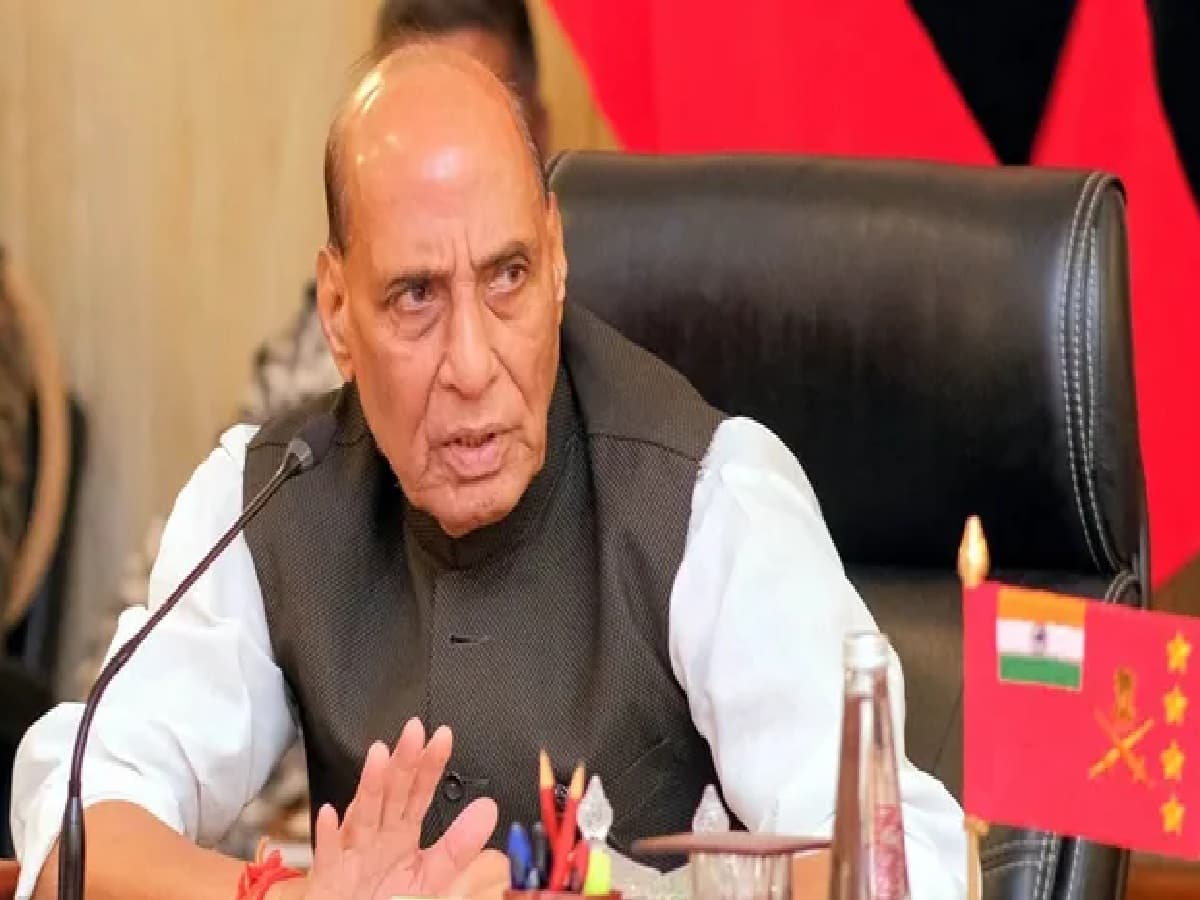
Rajnath Singh Arrives in Japan for 4th India-Japan 2+2 Dialogue
Strengthening one of Asia's most consequential strategic partnerships, Defence Minister Rajnath Singh arrived in Tokyo on Wednesday, November 18, 2026, to participate in the fourth India-Japan Foreign and Defence Ministers' Dialogue (2+2) alongside External Affairs Minister Dr. S. Jaishankar. Held over November 18 and 19, 2026, the high-level ministerial conclave brings the Indian delegation together with Japanese Defense Minister Shinjiro Koizumi and Japanese Foreign Minister Toshimitsu Motegi to chart the next phase of bilateral security, diplomatic, and industrial cooperation. Upon arrival at Japan's Ministry of Defense in Tokyo, Rajnath Singh was accorded a ceremonial guard of honour, setting the tone for substantive bilateral talks with Shinjiro Koizumi—marking the third face-to-face meeting between the two defence ministers in 2026. Building directly on the momentum forged during their earlier interactions in New Delhi in August 2026 and on the sidelines of the 13th ASEAN Defence Ministers' Meeting-Plus (ADMM-Plus) in Cebu, the Philippines, in October 2026, the two leaders are focusing on accelerating defence equipment and technology co-development, maritime domain security, tri-service military exercises of greater scale and complexity, and deeper defence-industrial partnerships. Concurrently, External Affairs Minister S. Jaishankar—welcomed in Tokyo by India's Ambassador to Japan Nagma Mallick—is co-chairing the 19th India-Japan Foreign Ministers' Strategic Dialogue with Toshimitsu Motegi and participating in the third edition of Raisina Tokyo. Coming more than two years after the third 2+2 dialogue held in New Delhi in August 2024, the Tokyo talks reaffirm both democracies' shared resolve to uphold a free, open, inclusive, and rules-based Indo-Pacific. For strategic affairs analysts, defence professionals, UPSC aspirants, and readers across New Delhi, Lucknow, Kanpur, Varanasi, Prayagraj, Mumbai, Bengaluru, Hyderabad, Chennai, and Kolkata, the Tokyo 2+2 dialogue underscores India and Japan's growing operational synergy across the Indo-Pacific.
Key Agenda and Participants at the 4th India-Japan 2+2 Dialogue in Tokyo
Anchored in the India-Japan Special Strategic and Global Partnership, the November 18–19 engagements in Tokyo integrate defence, foreign policy, and economic security reviews following the 15th and 16th India-Japan Annual Summits held in August 2025 and July 2026:
| Engagement / Dialogue Track | Participating Ministers & Venues | Core Strategic Objectives |
| 4th India-Japan 2+2 Ministerial Dialogue | Rajnath Singh (Defence) & Dr. S. Jaishankar (External Affairs) with Shinjiro Koizumi (Defense) & Toshimitsu Motegi (Foreign Affairs) — Tokyo (Nov 18–19, 2026) | Review full spectrum of bilateral strategic and defence ties, assess regional and global security challenges, and reinforce a free, open, inclusive, rules-based Indo-Pacific. |
| India-Japan Defence Ministerial Meeting | Rajnath Singh & Shinjiro Koizumi (3rd bilateral meeting in 2026, following New Delhi in Aug and Cebu in Oct) | Advance defence equipment and technology collaboration, expand tri-service joint military exercises, enhance maritime security, and deepen defence-industrial synergy. |
| 19th Foreign Ministers' Strategic Dialogue & Raisina Tokyo | Dr. S. Jaishankar & Toshimitsu Motegi | Coordinate diplomacy across economic security, supply-chain resilience, regional stability, and multilateral forums alongside the 3rd Raisina Tokyo dialogue. |
Building Tri-Service Operational Synergy and Defence-Industrial Co-Production
Ahead of his departure from New Delhi, Defence Minister Rajnath Singh noted that India and Japan's partnership is rooted in mutual trust, democratic values, and converging strategic interests across the Indo-Pacific. Over recent years, operational coordination between the armed forces of both countries has expanded rapidly across land, sea, and air—spanning bilateral exercises such as Dharma Guardian, JIMEX, and Veer Guardian, alongside multilateral naval drills like Malabar.
During their third bilateral interaction of 2026, Rajnath Singh and Shinjiro Koizumi are prioritizing concrete pathways to transition from buyer-seller transactions toward joint research, defence technology transfer, and industrial co-production, leveraging Japan's advanced manufacturing strengths alongside India's rapidly growing Atmanirbhar defence ecosystem.
Why the Tokyo 2+2 Format Matters for Indo-Pacific Stability
India conducts the 2+2 Ministerial Dialogue—bringing together foreign and defence ministers simultaneously—with only a select group of closest strategic partners, including the United States, Australia, Japan, Russia, and the United Kingdom. By aligning diplomatic strategy with military preparedness at a time of evolving maritime and geopolitical dynamics across Asia, the fourth India-Japan 2+2 Dialogue in Tokyo reinforces deterrence, protects vital sea lanes of communication, and deepens long-term regional stability.




