







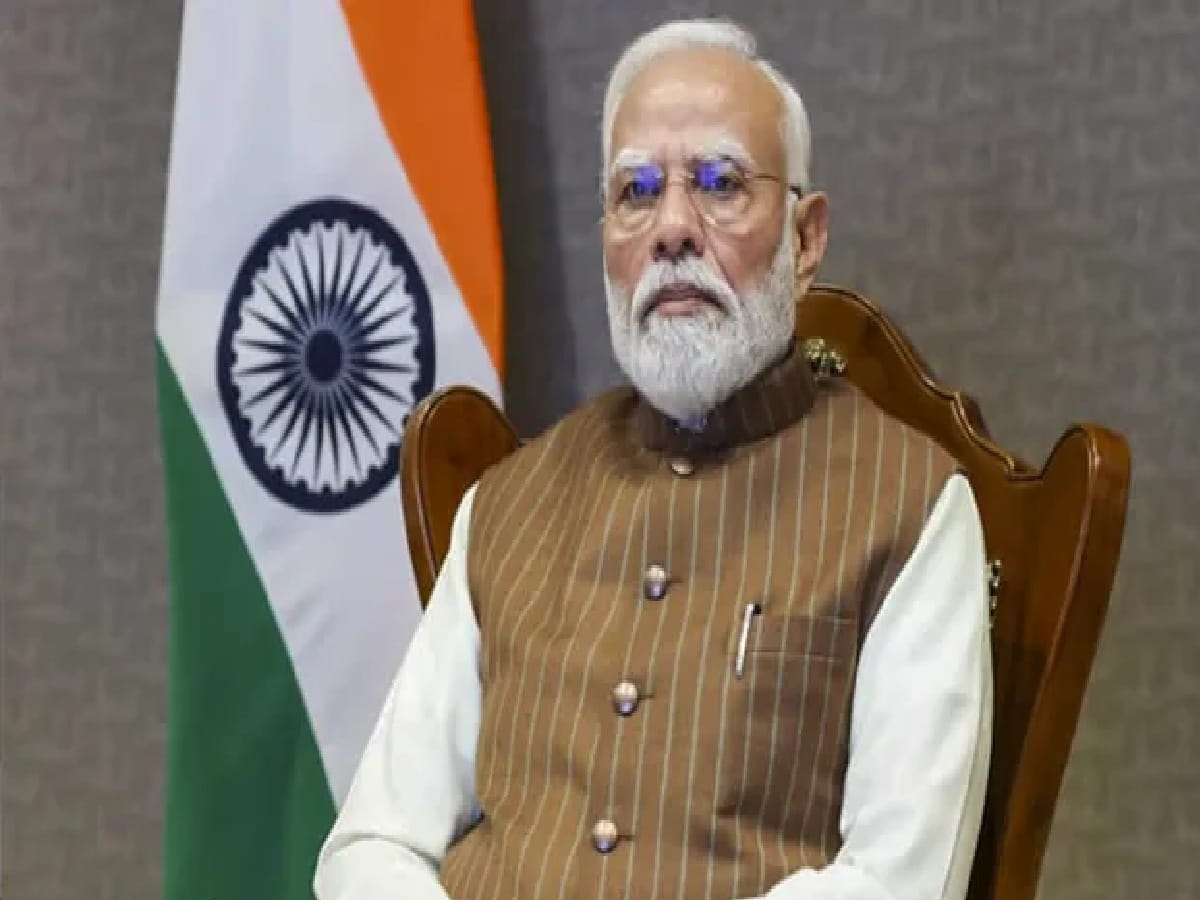
PM Modi on Constitution Day: Opposition Wants to Cut OBC Quota for Muslims
Marking Constitution Day (Samvidhan Divas) on Thursday, November 26, 2026—the anniversary of the Constituent Assembly's adoption of India's founding charter on November 26, 1949—Prime Minister Narendra Modi delivered a sweeping, hard-hitting political and constitutional critique aimed squarely at the country's largest opposition party without naming it directly. Published on his official portal and carried across major newspapers under the title "The Constitution – Our guiding force," the Prime Minister's signed essay accused the leading opposition party of attempting to carve out religious reservations for Muslims by reducing existing quotas meant for Other Backward Classes (OBCs)—an agenda he described as "most appalling" and fundamentally contrary to the ideals of the Constitution's framers, particularly Dr. Babasaheb Ambedkar. Alongside the reservation flashpoint, PM Modi held the opposition responsible for blocking the delimitation-linked Constitution Amendment Bill in the Lok Sabha earlier in April 2026, which sought to expand Lok Sabha strength from 543 to a maximum of 850 seats and clear the legislative path for implementing 33 percent reservation for women in Parliament and state assemblies ahead of the 2029 general elections. Reassuring India's 'Nari Shakti' that "no power can stop us from getting them justice," the Prime Minister also contrasted decades of past constitutional distortions—citing nearly 100 instances of Article 356 misuse, half a century of rule by a single Prime Minister's family, and over 70 years of denied SC, ST, OBC, and women's rights in Jammu and Kashmir under Articles 370 and 35A—with recent milestones such as granting constitutional status to the National Commission for Backward Classes (102nd Amendment), 10 percent EWS reservation (103rd Amendment), and the 2026 elimination of armed Maoism across tribal regions, while warning citizens against "mental Naxalites" determined to stall national development.
PM Modi's Constitution Day 2026 Essay: Quota Row, Women's Bill & Key Points
To bring together the central allegations Prime Minister Narendra Modi leveled against the opposition on November 26, 2026, the legislative mechanics behind the April 2026 delimitation and 33% Women's Reservation Constitution Amendment Bill, and the constitutional amendments and security milestones highlighted in his signed article, the tables below organize all verified details:
Major Political & Constitutional Themes in PM Modi's Essay (November 26, 2026)
| Key Issue | PM Modi's Statement & Argument | Constitutional & Political Context |
| OBC Quota vs. Muslim Reservation | Accused the largest opposition party of seeking to cut OBC reservations to introduce Muslim reservations, calling the move "most appalling" and contrary to Dr. B.R. Ambedkar and the Constituent Assembly's explicit rejection of religion-based quotas. | Directly targets opposition quota politics across Hindi-belt states (Uttar Pradesh, Bihar, Madhya Pradesh, Rajasthan) and southern states. |
| Defeat of Women's Reservation Amendment | Said what transpired in Parliament earlier in 2026 "fills our hearts with shame," blaming one opposition party for preventing passage of the legislation meant to ensure 33% representation for women in legislatures—while pledging that no force can stop justice for Nari Shakti. | Refers to the April 2026 defeat of the delimitation-linked constitutional amendment in Lok Sabha for lack of a two-thirds majority. |
| 'Avrodh Paksh' vs. 'Virodh Paksh' | Lamented that the principal opposition party has morphed from a constructive 'Virodh Paksh' (opposition) into an 'Avrodh Paksh' (obstructionist force), reminding lawmakers that disrupting democratic proceedings is no substitute for constitutional duty. | Sets the tone ahead of the upcoming Winter Session of Parliament. |
| Article 356 & Articles 370 / 35A | Pointed out that Article 356 was misused nearly 100 times to dismiss elected state governments—including roughly half a century under a single former Prime Minister—and noted that Articles 370 and 35A deprived SCs, STs, OBCs, and women in Jammu & Kashmir of full constitutional rights for over 70 years until 2019. | Contrasts historical constitutional centralized overreach with post-2019 full integration of Jammu & Kashmir. |
| End of Maoism & 'Mental Naxalites' | Hailed the elimination of armed Naxalism in 2026 as deeply heartening because the poorest tribal citizens can now exercise constitutional rights without fear at gunpoint, while warning against "mental Naxalites" detached from modern reality trying to derail development. | Links internal security gains in tribal belts with ideological battles in national discourse. |
Legislative Breakdown: The April 2026 Delimitation & Women's Reservation Bill
| Legislative Parameter | Verified Details | Current Parliamentary Status (Nov 2026) |
| Core Objective | Expand Lok Sabha strength from 543 to a maximum of 850 seats via delimitation and amend Article 82 so 33% reservation for women in Lok Sabha and state assemblies could take effect before the 2029 general elections. | Introduced in April 2026 to operationalize the 106th Constitutional Amendment (Nari Shakti Vandan Adhiniyam) ahead of 2029. |
| Voting Threshold & April Outcome | Required a two-thirds majority in the Lok Sabha; fell short of numbers and was defeated in April 2026. | Attention now turns to whether the government reintroduces the bill during the upcoming Parliament session. |
| Key Constitutional Amendments Cited by PM | Highlighted the 101st Amendment (GST), 102nd Amendment (constitutional status for NCBC), 103rd Amendment (10% EWS quota), and release of an updated Indian Constitution in all 22 Eighth Schedule languages. | Anchors the government's narrative of social inclusion and institutional reform. |
Why Quota Politics and Delimitation Will Dominate the Next Parliament Session
Across New Delhi, Lucknow, Patna, Bhopal, Jaipur, Mumbai, Bengaluru, and Hyderabad, political analysts view PM Modi's Constitution Day 2026 essay as a clear strategic roadmap ahead of the upcoming Winter Session of Parliament. By pairing an uncompromising defense of OBC, SC, ST, and EWS quotas with a direct challenge to the opposition over the 33 percent Women's Reservation Bill, the Prime Minister has framed the legislative battle around social justice, Babasaheb Ambedkar's constitutional framework, and women's political empowerment.
What Political Watchers and Citizens Should Track Next
With Parliament expected to convene ahead of mid-December, all eyes in New Delhi and state capitals nationwide will be on opposition responses to PM Modi's OBC-quota and 'Avrodh Paksh' remarks, whether the government brings back the delimitation-linked Women's Reservation Constitutional Amendment, and how floor numbers in the 543-member Lok Sabha shape the next phase of India's constitutional debate.




