







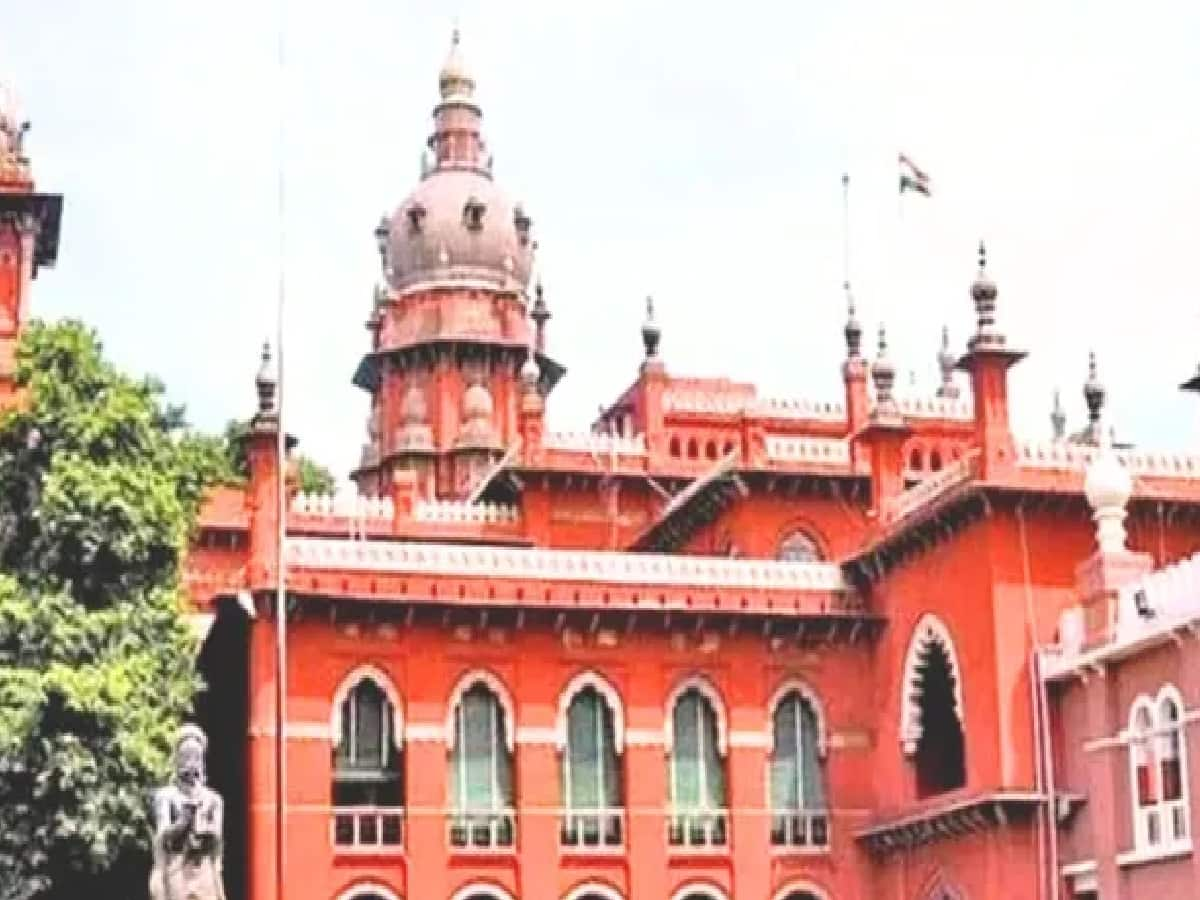
No Entry Past Flagpole Without Affidavit: Madras HC Rules on Temples
In a landmark judicial verdict safeguarding ancient temple traditions and Agamic jurisprudence across Tamil Nadu, the Madurai Bench of the Madras High Court has ruled that non-Hindus cannot proceed beyond the sacred flagpole (Dwajasthambham or Kodimaram) of Agamic Hindu shrines without submitting a prior sworn affidavit. Adjudicating a Public Interest Litigation (PIL) filed by Madurai resident K. Thangam Venkatesh, a division bench comprising Justice G.R. Swaminathan and Justice P. Murugan affirmed that practicing Hindu devotees possess the constitutional right to demand that temple trustees strictly enforce Agamic prescriptions to preserve temple sanctity. The bench underscored that individuals who do not profess reverence for the presiding deity—particularly those overtly sporting external religious symbols of other faiths without spiritual devotion—must not be permitted onto temple premises, emphasizing that allowing unauthorized entry without solemn adherence to Agamic canons directly breaches the spiritual and ritual purity of consecrated shrines.
Preserving Agama Sanctity and Halting Unauthorized Inspections: Court Cites Madurai MLA Episode
Taking strong exception to recent high-profile controversies and lapses by temple administrations, the High Court bench delivered a stern critique of political figures exploiting sacred spaces under the guise of official authority. The judges specifically pulled up Badruddin Mustafa, the Tamilaga Vettri Kazhagam (TVK) MLA representing the Madurai Central constituency, who reportedly entered the sanctified inner precincts of the historic Arulmigu Meenakshi Sundareswarar Temple to conduct an "inspection" immediately after winning the legislative assembly elections. The court pointed out the sharp irony of an elected representative climbing atop the sacred temple spire (gopuram) during the auspicious Kumbhabhishekam and Prana-Pratishtha ceremony despite having publicly advocated for the abolition of Sanatan Dharma. Broadening their judicial scrutiny, the judges took judicial notice of a viral social media clip showing individuals sporting skullcaps attempting to force their way into the sacred Tiruvannamalai Arunachaleswara Temple while officials from the Hindu Religious and Charitable Endowments (HR&CE) Department stood by as mute spectators, alongside another documented instance where a Christian cabinet minister entered the holy Tiruchendur Subramanya Swamy temple without furnishing the mandatory undertaking required under established regulations.
CM Vijay's 'Inclusive Approach' Commended as the Benchmark for Devotional Reverence
Balancing ritual sanctity with pluralistic accessibility, the Madras High Court highlighted the devotional conduct of Tamil Nadu Chief Minister C. Joseph Vijay as the gold standard of constitutional propriety and mutual religious respect. Commending Chief Minister Vijay, the bench noted that when he visited the Sri Meenakshi Temple, he willingly submitted a signed declaration affirming his faith and deep personal devotion to Goddess Meenakshi before entering the sanctum to offer worship. The judges observed that the Chief Minister, who is a practicing Christian, was never asked to renounce his personal faith or convert to Hinduism; rather, he was merely requested to express genuine reverence for the deity whose sacred abode he was visiting. Terming Chief Minister Vijay's willing adherence the true definition of an "inclusive approach," the High Court concluded that such voluntary demonstrations of faith and mutual deference uphold communal harmony, protect sacred rituals, and ensure that temple customs are respected by all citizens irrespective of political or personal standing.




